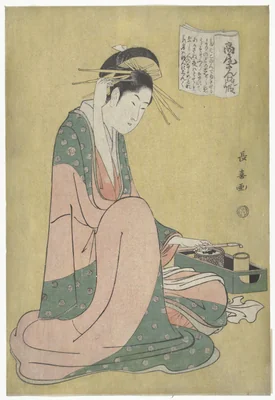
Eishōsai Chōki
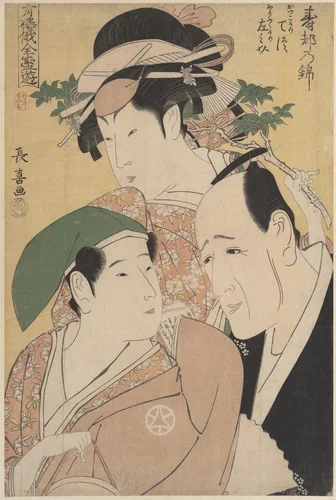
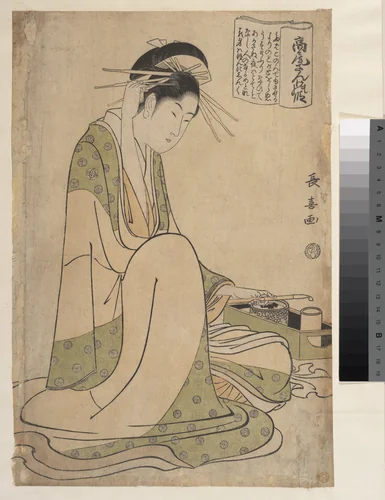
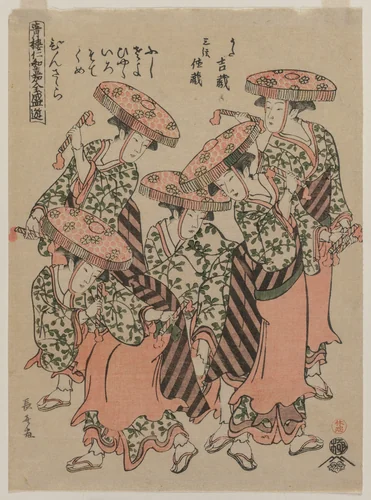
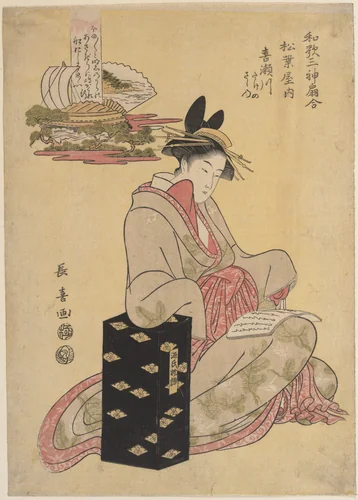
Eishōsai Chōki stands as a distinguished, if often under-analyzed, figure in the golden age of ukiyo-e woodblock printing. Active primarily between 1786 and 1808, he worked during a crucial period preceding the great stylistic shifts of the nineteenth century. Chōki, also known as Momokawa Chōki, inherited a notable lineage, having studied alongside the renowned Utamaro under the master Toriyama Sekien (1712-1788). This schooling grounded his approach to figure drawing, though Chōki soon developed a highly refined and specific style, centering almost exclusively on the celebrated bijin-ga genre, the depiction of beautiful women.
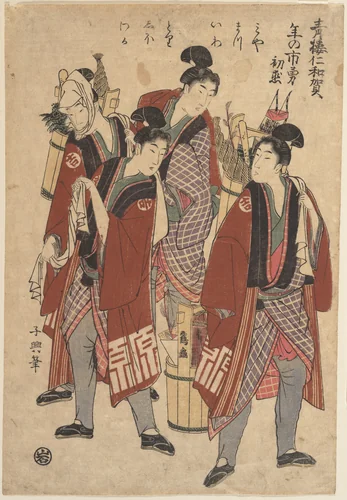
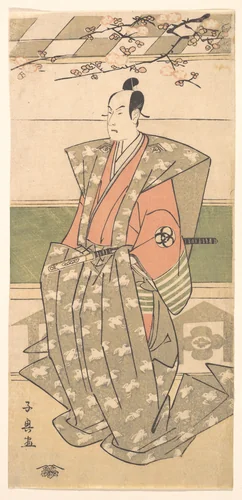
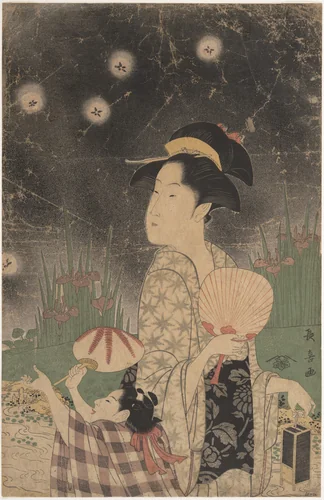
Chōki differentiated himself through a remarkable attention to mood and environment. While many contemporaries focused purely on the facial beauty or elaborate fashion of their subjects, Chōki frequently integrated complex, atmospheric backdrops. Works such as Woman and Child Catching Fireflies or End of the Year capture women caught in specific, fleeting moments, often illuminated by unusual lighting or set against subtly darkening skies. His figures, characterized by an exceptionally slender and graceful silhouette, are imbued with a sense of quiet introspection, providing a subtle contrast to the more overtly glamorous and histrionic models favored by his contemporary and colleague, Utamaro. This quiet complexity in his backgrounds suggests an artist fascinated not merely by beauty itself, but by the precise circumstances and ephemeral settings under which that beauty is observed. His versatility also extended to portraiture, as seen in the imposing The Actor Bando Mitsugoro II in Ceremonial Robes with Kamishimo, demonstrating the requisite formalized elegance necessary for contemporary Kabuki prints.
Despite a relatively brief period of documented activity, Chōki's contribution to the evolution of high-quality prints remains significant. His works are highly prized for their technical refinement and delicate palettes and are now held in major international institutions, including the Metropolitan Museum of Art and the Cleveland Museum of Art. For scholars and admirers seeking closer study, many Eishōsai Chōki prints have entered the public domain, making downloadable artwork widely accessible. This guarantees that his distinct artistic sensibility and mastery of atmospheric detail endure as museum-quality examples of late eighteenth-century ukiyo-e.
Source: Wikipedia · CC BY-SA 4.0