Egbert van Drielst
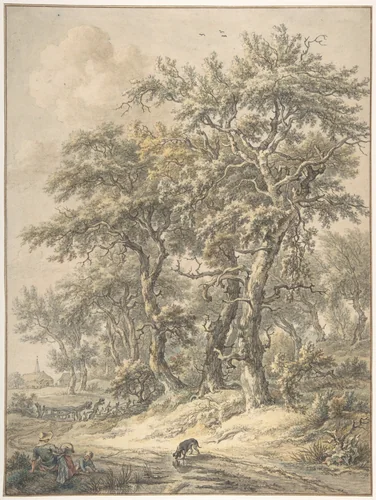
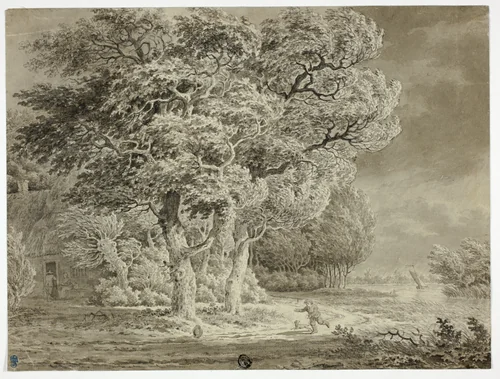
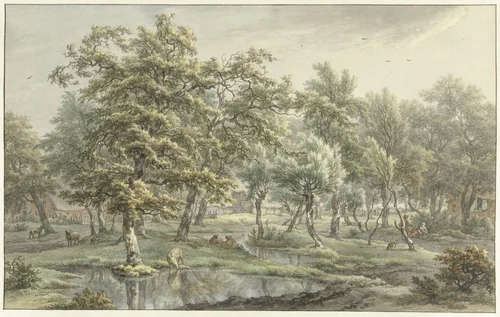
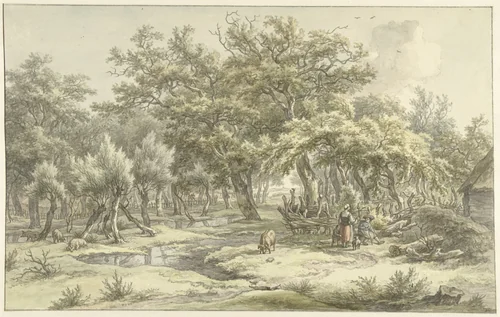
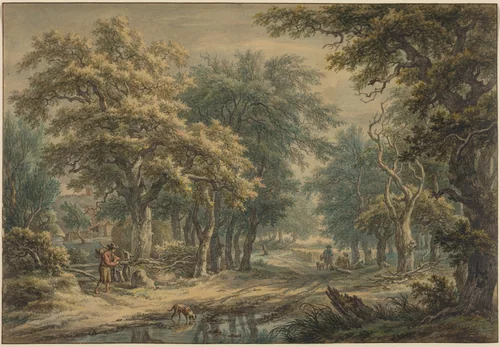
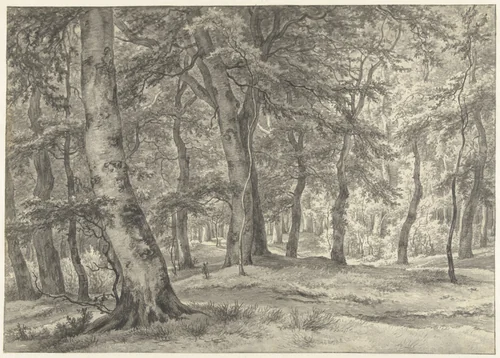
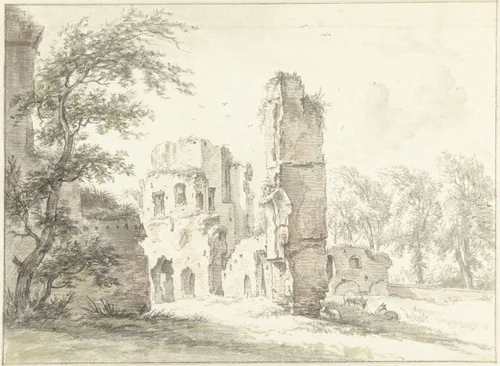
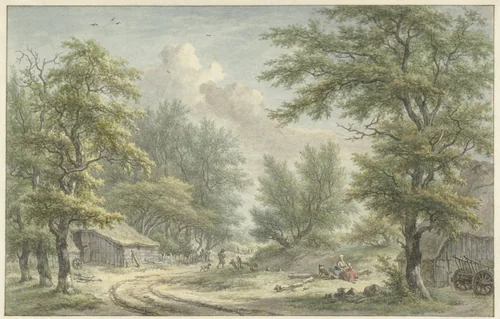
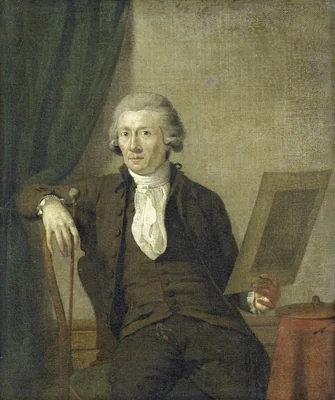
Egbert van Drielst (1745-1818) was a crucial Dutch draftsman whose detailed and atmospheric studies bridged the high formal traditions of the seventeenth century and the emerging focus on observational naturalism in the late eighteenth century.
Van Drielst’s early exposure to draftsmanship was highly unconventional, beginning not in an academy but in the industrial arts. He first trained in a factory in his native Groningen which specialized in the production of lacquered objects. This early practice in precise, applied decoration quickly transitioned to a specialization in scenic representation when he moved to Haarlem, undertaking an apprenticeship in the significant wallpaper factory of Jan Augustini.
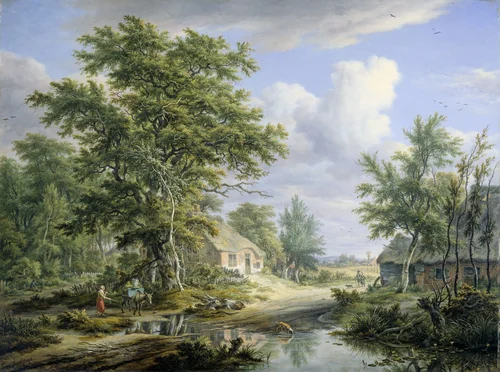
His professional development accelerated in Amsterdam’s bustling wallpaper studios, where he established important artistic connections, notably forging a friendship with the accomplished portraitist Adriaan de Lelie. Yet, the core of Van Drielst’s artistic maturation lay in his systematic engagement with the old masters. He dedicated himself to studying the foundational Dutch landscape painters: Salomon van Ruysdael, Jan Wijnants, and the celebrated Jacob van Ruisdael. His deepest affinity, however, was reserved for Meindert Hobbema, whose techniques of spatial organization and woodland representation he actively sought to integrate into his own contemporary "nature studies." It is a subtle but interesting fact that an artist focused on rendering repeatable scenes for wallpaper ultimately became one of the period’s most diligent interpreters of the unique atmosphere of rural farmsteads.
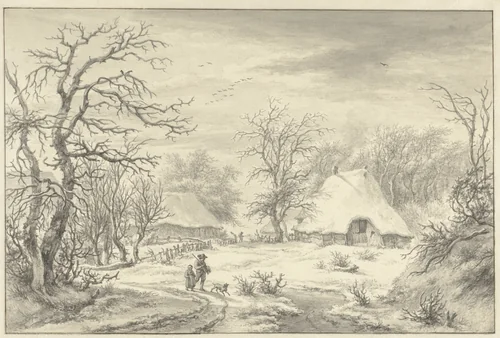
Van Drielst achieved formal professional recognition in 1768 when he became a member of the Guild of Saint Luke in Amsterdam. His surviving corpus, encompassing approximately fifteen known drawings, is characterized by its intimate focus on the rural architecture of Drenthe. Works such as Boerderij in De Wijk in Drenthe and Boerderij te Westenesch in Drenthe reveal a dedication to documenting vernacular structures with documentary clarity and lyrical light. Today, his output confirms its institutional significance, residing in major collections including the Rijksmuseum and the Metropolitan Museum of Art. For historians and students, access to Egbert van Drielst prints is increasingly streamlined, as several key works are available as high-quality prints within the public domain.
Source: Wikipedia · CC BY-SA 4.0