Edwin Scharff
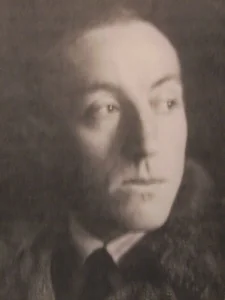
Edwin Scharff (1887-1955) was a highly regarded German sculptor whose practice centered on modern figuration and monumental portraiture. Born in Neu-Ulm and later settling in Hamburg, Scharff navigated the volatile currents of early twentieth-century German art, establishing a reputation for compositions marked by simplified yet robust forms.
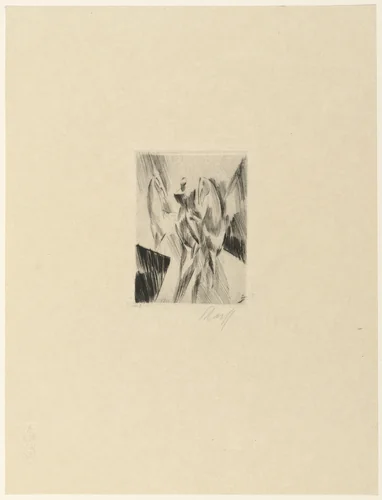
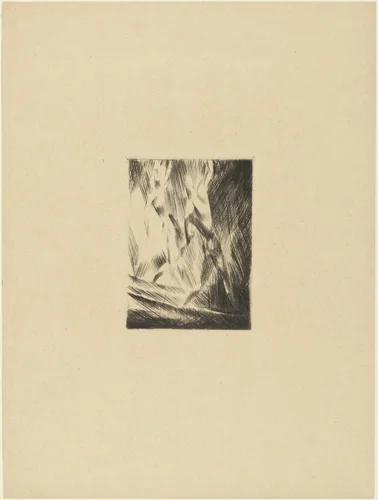
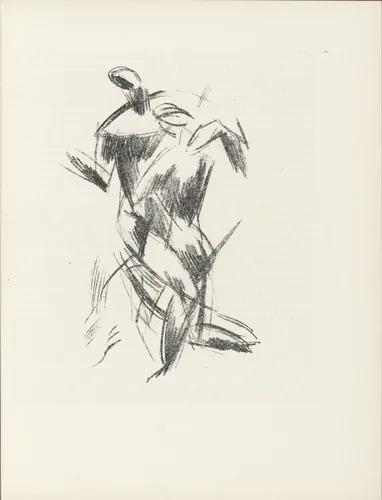
While his core identity rested upon the execution of sculpture in bronze and stone, a critically important period immediately following the First World War saw Scharff dedicate focused energy to graphic production. Spanning 1918 and 1919, this brief but intense output resulted in a series of powerful prints disseminated through leading avant-garde journals. Scharff’s inclusion in portfolio-periodicals such as Die Schaffenden, Das Kunstblatt, and the Münchner Blätter für Dichtung und Graphik placed his work alongside the defining Expressionist and Secessionist voices of the era.
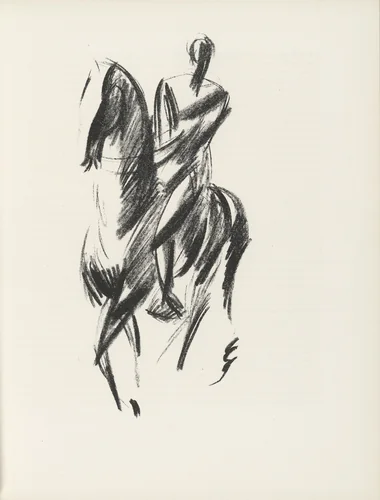
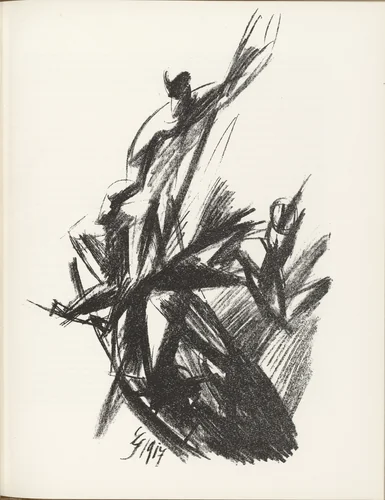
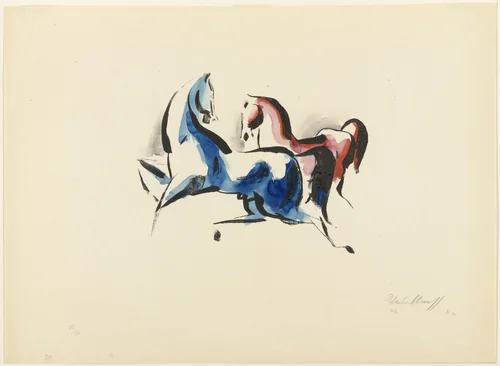
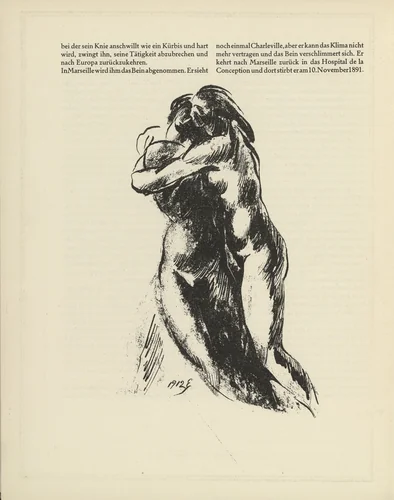
His prints from this period demonstrate an active engagement with themes of human connection, movement, and elemental forms. Works such as Two Men On a Boat (1918) and the compelling image Rider showcase Scharff’s ability to imbue simplified lines with dynamic weight and narrative force. The emotional intensity often inherent in the post-war German aesthetic is clearly visible in the striking composition Embrace (1919). It is intriguing to note that for an artist primarily recognized for the solidity of his sculptural media, his graphic works reveal an exceptional mastery of negative space and the expressive potency of the printmaking medium.
These compositions, including later works like Sailboat (1919), serve as crucial documentation of his stylistic evolution during a period of intense artistic experimentation. Scharff’s graphic works are held in institutional collections, including the Museum of Modern Art, confirming their significance. Today, many Edwin Scharff prints fall within the public domain, allowing institutions and enthusiasts to access high-quality prints and downloadable artwork, thereby extending the accessibility and study of this concentrated phase of his output.
Source: Wikipedia · CC BY-SA 4.0