Edwin Henry Landseer
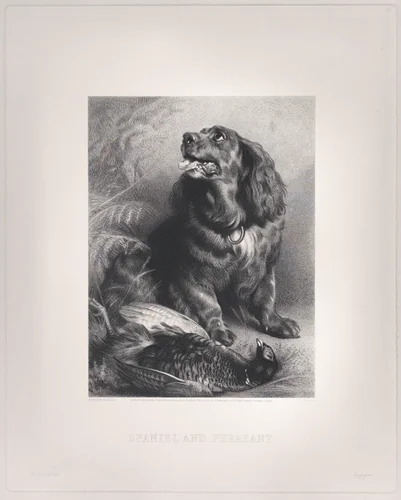
Sir Edwin Henry Landseer (1802-1873) remains one of the most recognizable figures in nineteenth-century English art, bridging academic painting and monumental public sculpture. His lasting impact on London’s civic landscape is immediately evident in the majestic bronze lions guarding the base of Nelson’s Column in Trafalgar Square. Though celebrated internationally for these formidable beasts, Landseer’s primary artistic output lay in painting, where he virtually invented the sophisticated, emotionally charged animal portrait, or animalier, genre. He was particularly renowned for his depictions of the British natural world, mastering the rendering of horses, stags, and, most frequently, dogs.
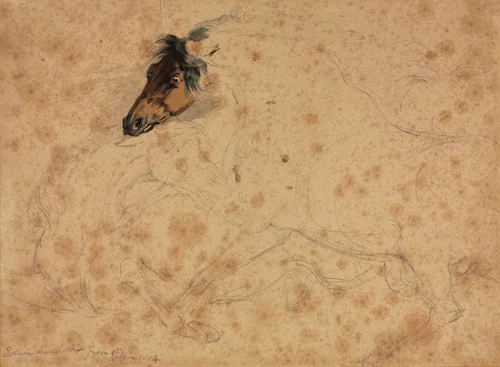
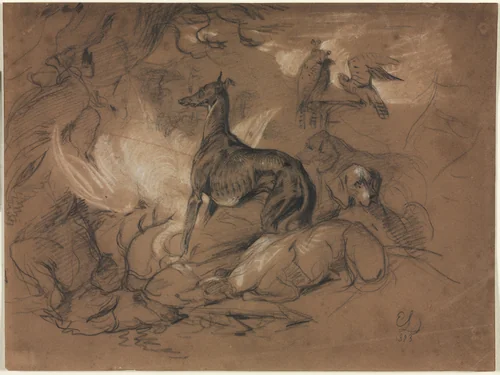
Landseer’s success stemmed from an intense, almost scientific, dedication to anatomical accuracy, developed during his remarkably early years of active study. The foundational sketches from this period, which includes works such as Study of a feathered saluki, facing left and Reclining Lion, demonstrate a rigorous command of form and musculature. Unlike earlier artists who treated animals merely as visual accessories, Landseer was instrumental in imbuing his subjects with distinct, human-like personalities, often lending them a dignity that bordered on narrative pathos. It is perhaps telling that this artist, who spent his career granting nobility to dogs and stags, received a knighthood in 1850 for his efforts, cementing his status in the British artistic establishment.
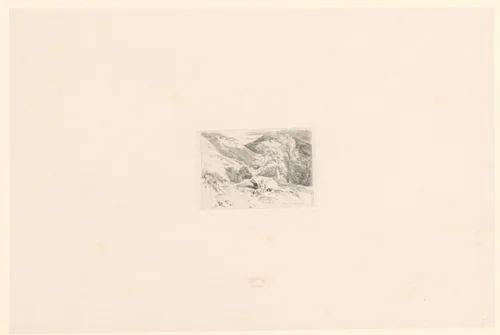
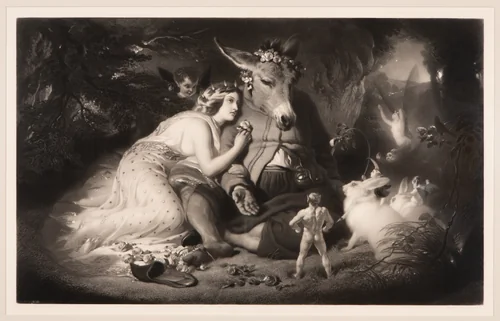
His prolific practice included detailed chalk and graphite studies, essential steps toward the final, highly polished canvases that characterized his exhibitions at the Royal Academy. Landseer's works proved immensely popular during his lifetime, appealing directly to the Victorian sensibility that valued both sentimentality and technical precision. Today, these works continue to command attention in major international institutions, including the Art Institute of Chicago, the Metropolitan Museum of Art, and the Cleveland Museum of Art. The careful draftsmanship seen in his preliminary work provides valuable insight into the preparation required for creating museum-quality finished pieces. Fortunately, much of Landseer’s detailed study material is now in the public domain, allowing access to high-quality prints and downloadable artwork, ensuring that the precision and personality captured by the most significant British animalier remains widely accessible for study and enjoyment.
Source: Wikipedia · CC BY-SA 4.0