Edward Unger
Edward Unger was an artist active between 1938 and 1941, exclusively documented through his association with the Index of American Design (IAD). The IAD was a significant research component of the Federal Art Project (FAP) of the Works Progress Administration (WPA), established during the Great Depression to systematically document American material culture and decorative arts from the colonial period through the nineteenth century.
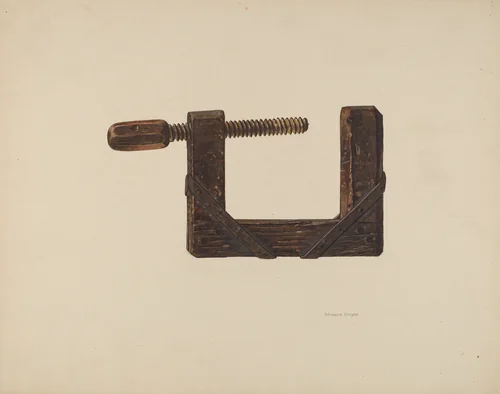
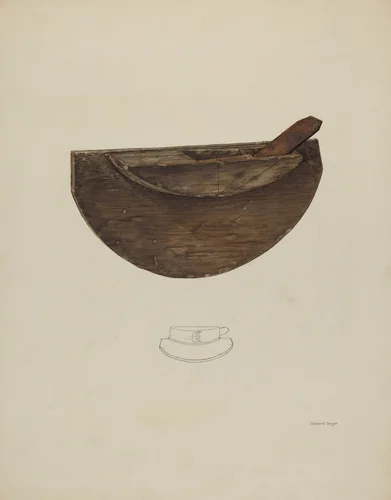
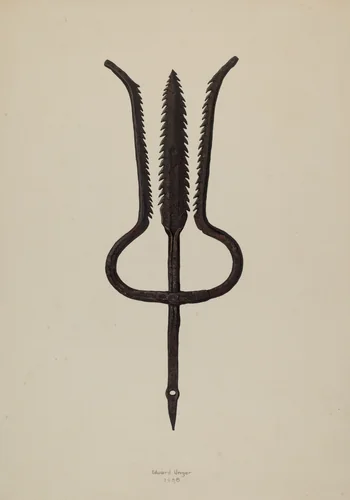
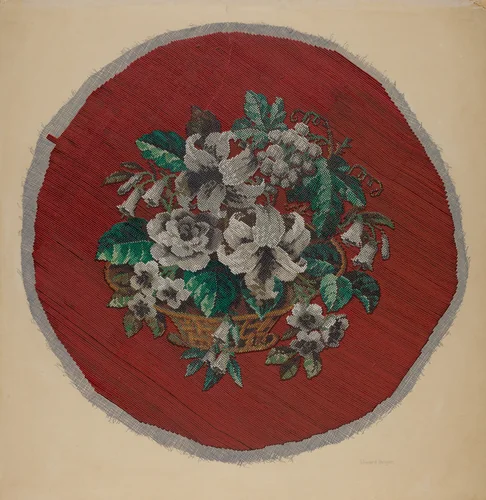
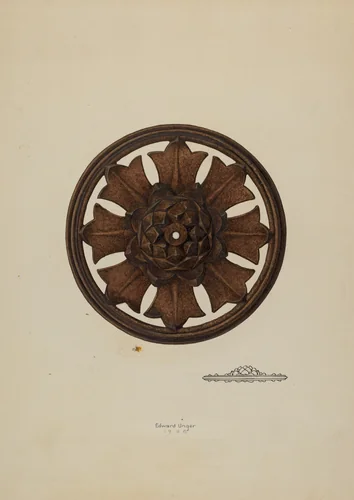
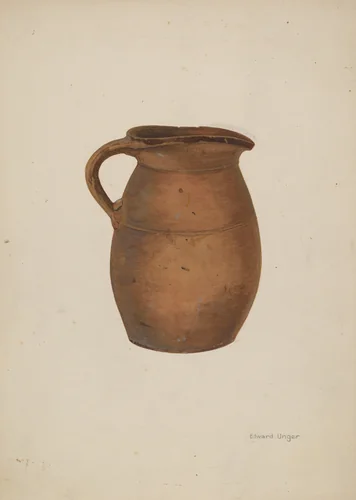
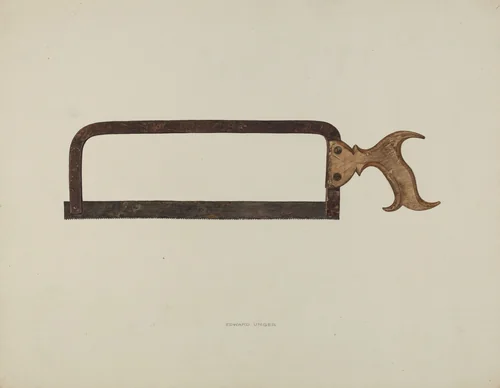
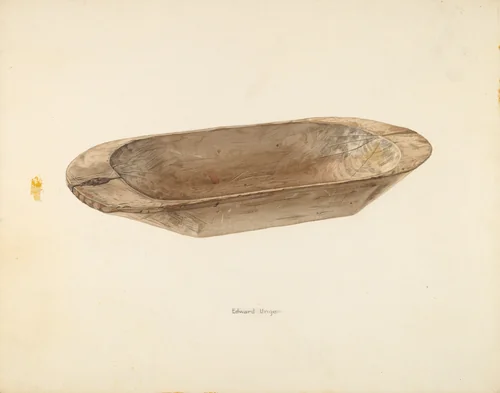
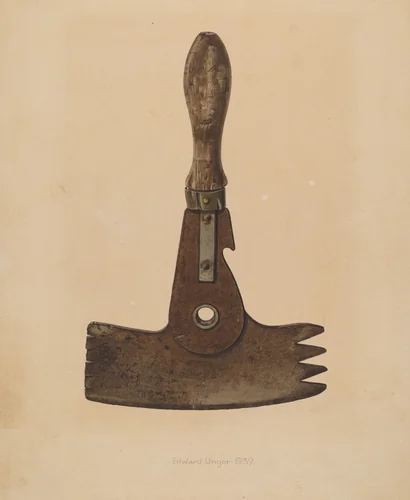
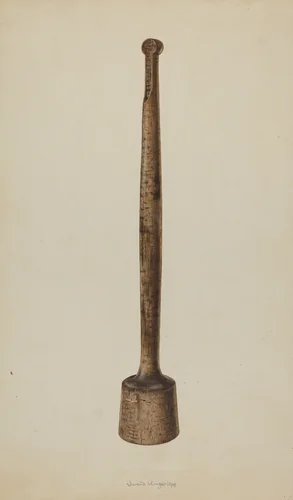
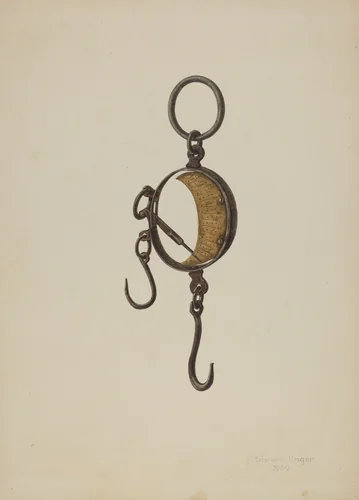
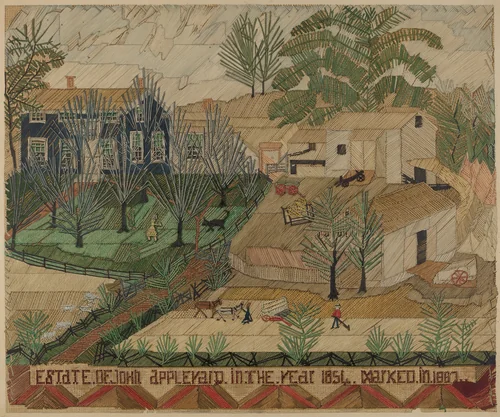
Unger’s practice within the IAD involved the meticulous creation of documentary plates, often executed in watercolor or graphite, detailing historical tools, functional objects, and domestic ornamentation. This output prioritized factual representation and accurate recording of historical artifacts. Twelve of his works from the Index are represented in museum collections, confirming his contribution to this vast cataloging effort.
His documented subjects illustrate the range of the IAD’s focus, covering both industrial and decorative forms. Notable works preserved in institutional collections include the documentation of tools such as a Clamp and a Cooper Plane, as well as specialized implements like the Eel Spear. His contribution also includes renderings of domestic objects, such as the studies titled Perforated Rosette and Embroidered Footstool Cover.
Today, Edward Unger’s comprehensive documentation is maintained within major institutions. A core collection of his IAD plates is held by the National Gallery of Art. Due to their origin in a federal project, these records often enter the public domain, making high-quality prints and downloadable artwork widely accessible for researchers and historical study.