Edward Steichen
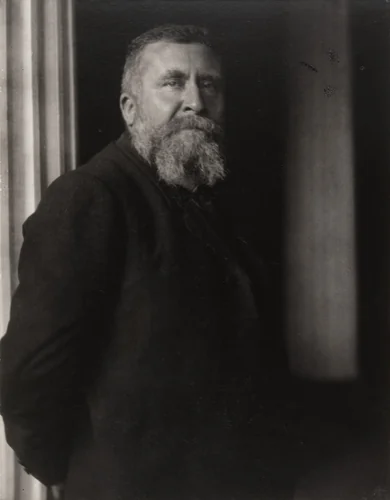
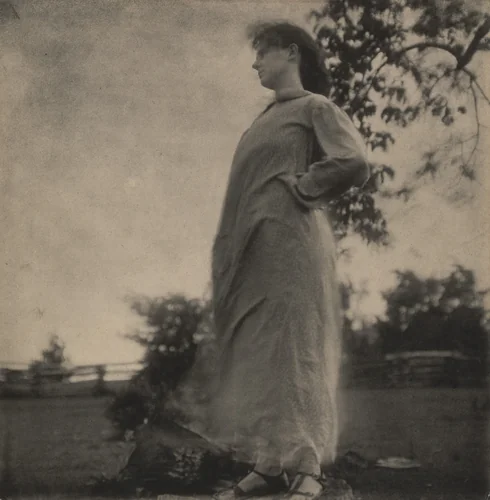
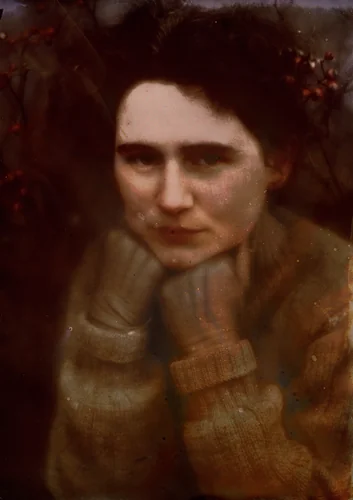
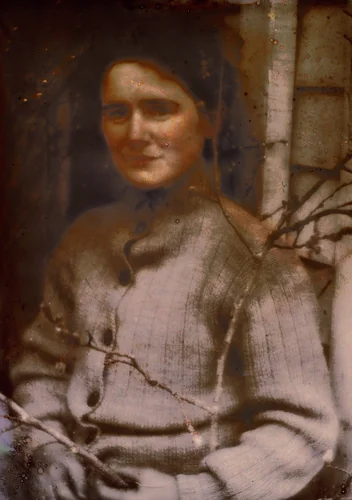
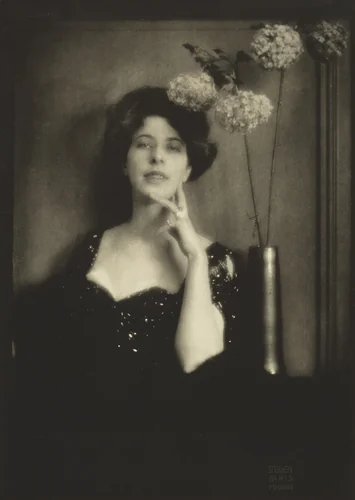
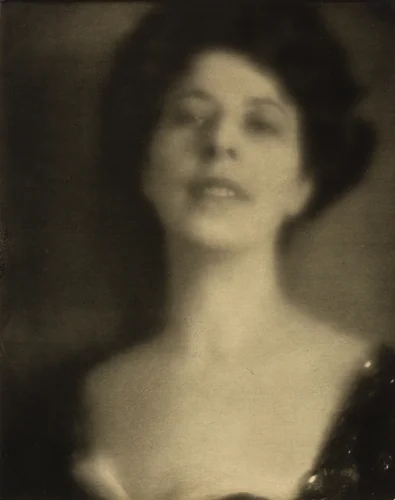
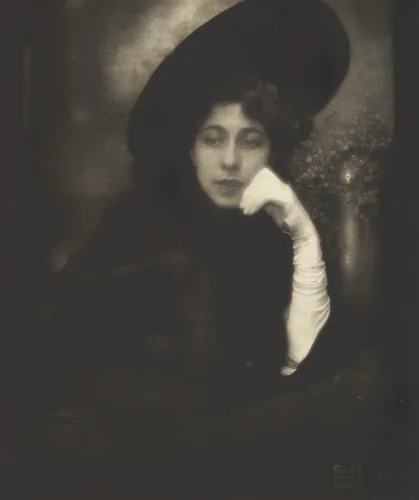
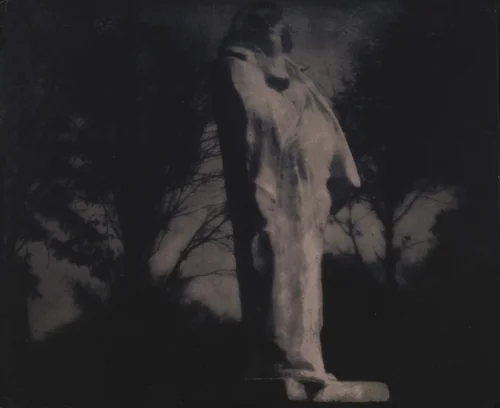
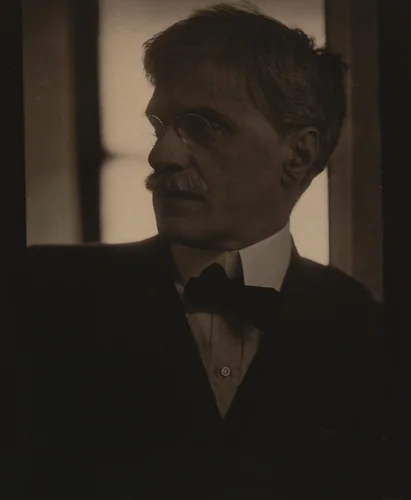
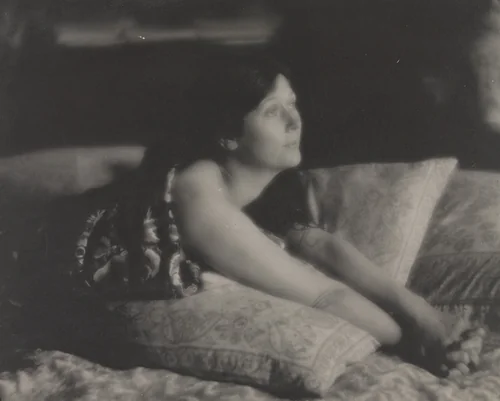
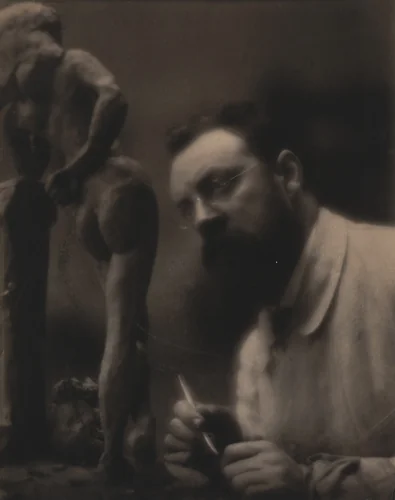
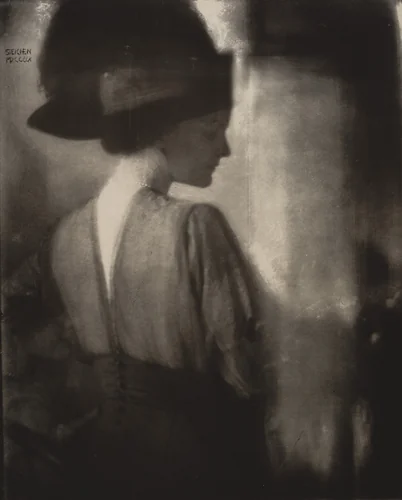
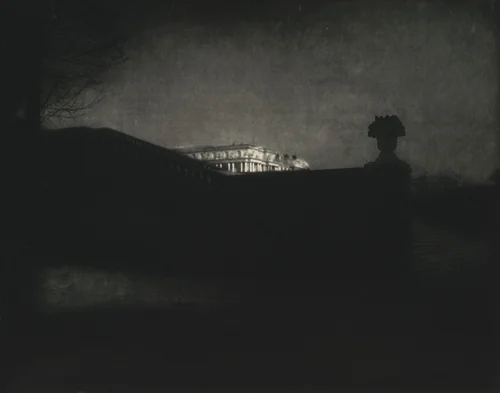
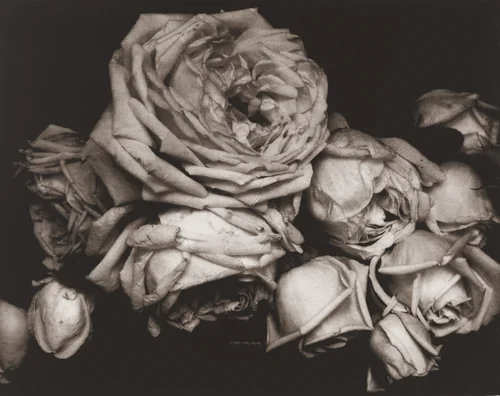
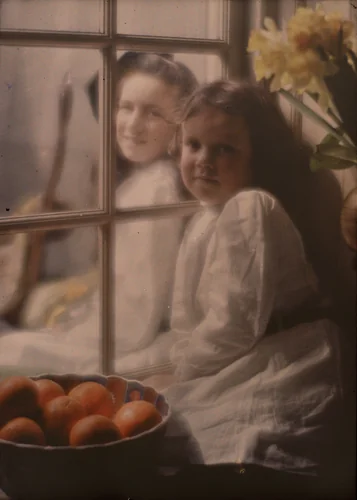
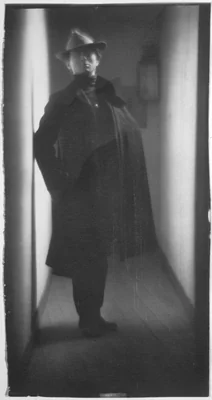
Edward Steichen (1879-1973) stands as a foundational figure in American modernism, distinguishing himself across several artistic roles as a photographer, painter, and influential museum curator. His early career, spanning the turn of the 20th century, involved a delicate synthesis of Pictorialism with emerging modernist sensibilities. Early photographs such as My Little Sister, Lady in the Doorway, and the multiple studies of Farmer's Wood Lot (including the Milwaukee iteration), demonstrate his mastery of atmosphere and tone during the period 1895-1901. These works, held in major institutions like the Museum of Modern Art, highlight his dedication to crafting evocative, hand-printed images that blurred the lines between painting and photography.
Steichen’s lasting impact rests significantly on his pioneering work in transforming commercial imagery. In 1911, he effectively invented the genre of modern fashion photography with a critical series of gown images published in the French magazine Art et Décoration. This innovation marked a decisive pivot toward defining high-end lifestyle documentation using the camera. This success led to his appointment in 1923 as chief photographer for the powerful Condé Nast publications, Vogue and Vanity Fair. For fifteen years until 1938, Steichen defined the visual culture of sophistication in the inter-war period, simultaneously servicing major advertising accounts like J. Walter Thompson. It is a striking indication of his commercial dominance that during this peak era, Steichen was widely considered the most sought-after and highest-paid photographer globally—a figure who commanded market rates seldom associated with artistic practice until much later in the century.
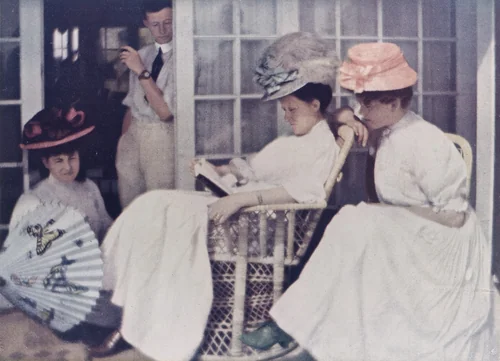
Steichen’s disciplined vision expertly bridged the romantic soft focus of the 1900s with the crisp precision required by modern commerce. His innovative approach ensured that his body of work is studied today not merely for historical value, but for its enduring museum-quality prints. Many of his early images, including Girl Reading Keats, are now in the public domain, allowing enthusiasts access to downloadable artwork for educational and appreciation purposes. The scope of Steichen’s influence, from Pictorialism to magazine design, firmly establishes him as one of the twentieth century’s most versatile and defining visual practitioners.
Source: Wikipedia · CC BY-SA 4.0