Edward Savage
Edward Savage (1761–1817) holds a distinctive position within American art history as a pivotal portrait painter and engraver working during the critical formation of the United States. Active primarily between 1785 and 1799, Savage was not merely documenting faces, but establishing the visual iconography of the nascent Republic. His significance rests not just on his original oil paintings, but on his mastery of reproductive prints, a mechanism that disseminated these crucial images to a wide public and defined how Americans visualized their founding figures.
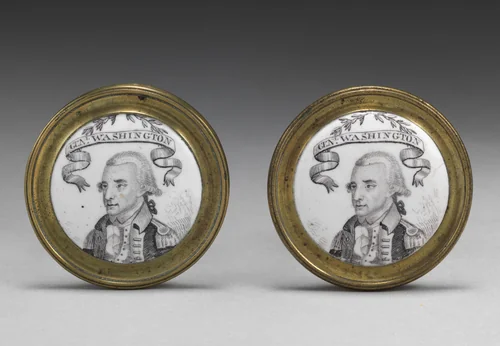
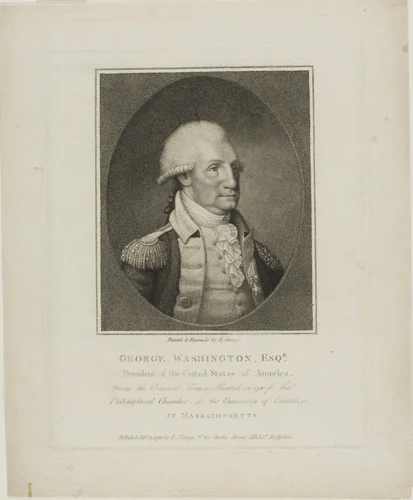
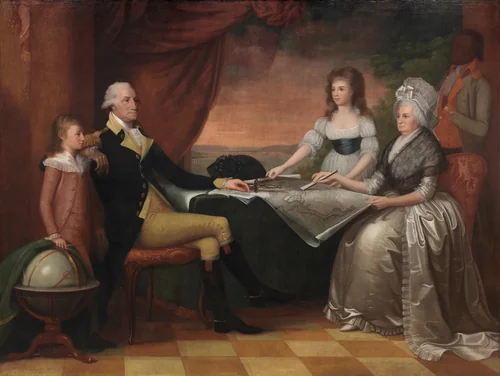
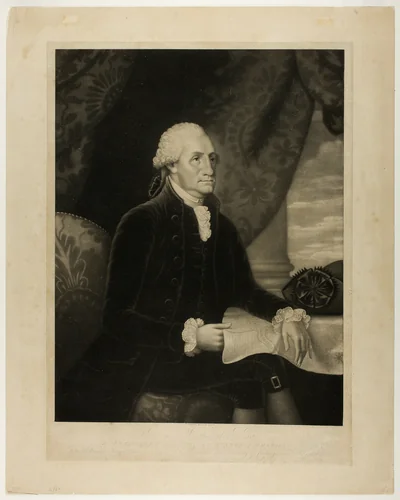
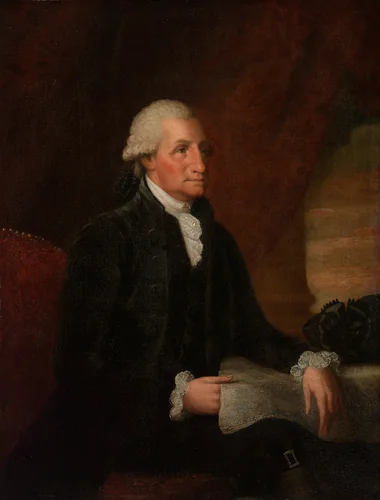
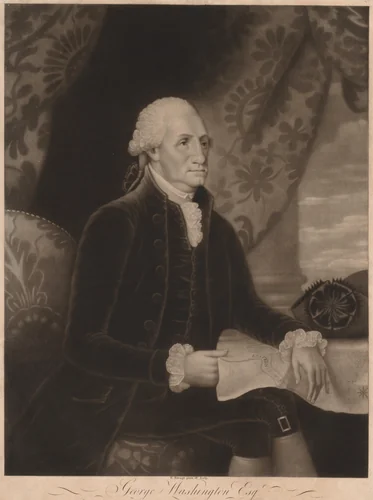
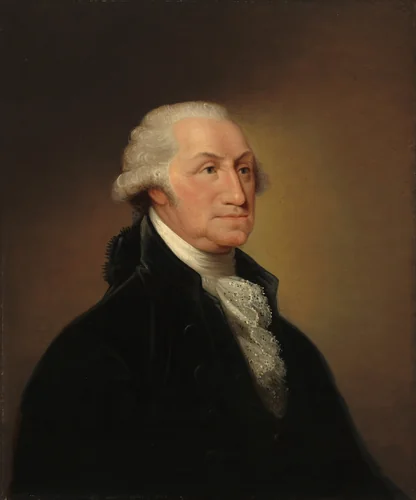
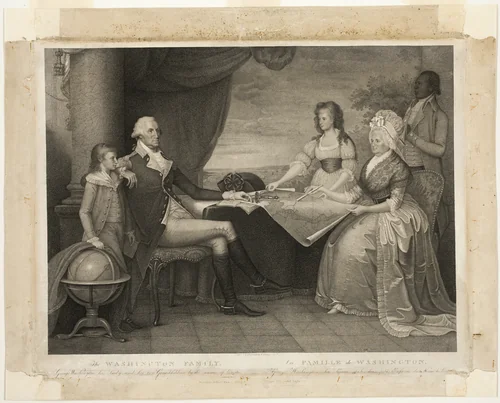
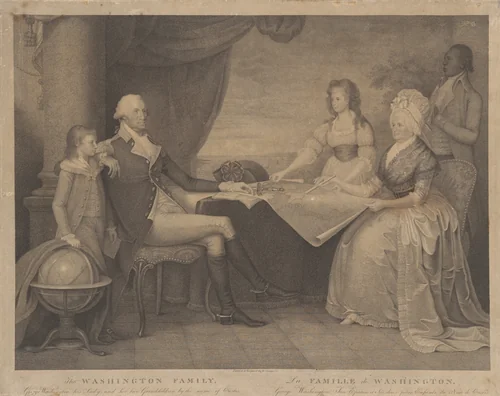
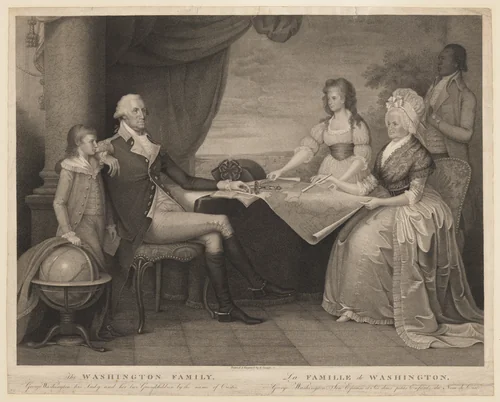
Savage’s most celebrated achievement is arguably The Washington Family, a key work he executed and later transformed into a hugely successful print edition. This composition went beyond the standard individual portrait, offering a complex, allegorical representation of domestic tranquility and stable leadership, featuring George and Martha Washington alongside members of their extended household. The painting and subsequent Edward Savage prints provided the fledgling nation with some of its earliest and most enduring depictions of its first family, and his standalone portrait of George Washington remains foundational to the visual lexicon of the first president.
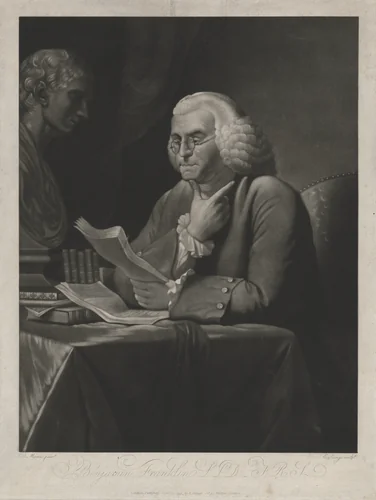
As a working artist, Savage understood the commercial and political power of the reproducible medium. His technical skill as an engraver allowed him to produce highly detailed plates, exemplified by works like his noted portrait of Benjamine Franklin. These mass-produced images were vital instruments for circulating political and cultural identities across the young country, confirming that accessibility was often the true measure of a portraitist's lasting impact.
Due to the era of their creation, many of these influential works, including important Edward Savage paintings and high-quality prints derived from them, are today recognized as museum-quality artifacts held in major collections, including the Metropolitan Museum of Art and the National Gallery of Art. They are frequently available in the public domain for research and appreciation. Savage’s productive career, documented by eight known prints and three paintings active in scholarly databases, confirms his strategic focus on efficiency and broad market reach. It is perhaps ironic that one of the most widely seen representations of the stoic Father of the Nation owes its continued legacy not just to the initial brushstroke, but to the industrious application of the etching needle.
Source: Wikipedia · CC BY-SA 4.0