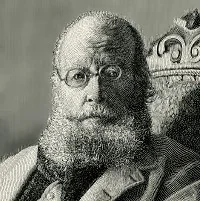
Edward Lear
Edward Lear (1812-1841) occupies a unique and significant niche in 19th-century English cultural history, defined by the astonishing duality between disciplined scientific illustration and exuberant literary humor. While perhaps most widely celebrated as the popularizer of the limerick and a pioneer of literary nonsense, Lear's foundational career was rooted firmly in the visual arts, specifically meticulous illustration and topographical drawing.
His early professional life demonstrated an exacting commitment to scientific accuracy. This is powerfully evidenced by works from his ornithological period, such as the precise zoological studies White Headed Eagle (Haliaetus leucocephalus) and Eclectus Roratus Polychloros. These illustrations showcase a command of technical detail that secured his early reputation within natural history circles long before his comic verse achieved popular acclaim. The nine extant prints and six drawings produced during his active period demonstrate a subsequent transition from rigorous scientific plate-making to expansive landscape studies.
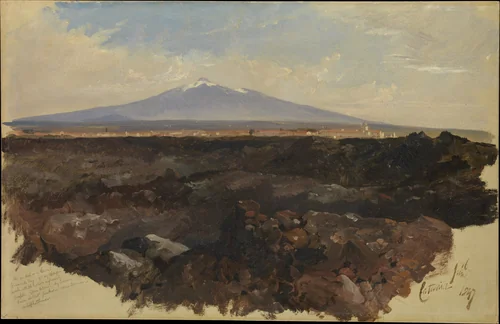
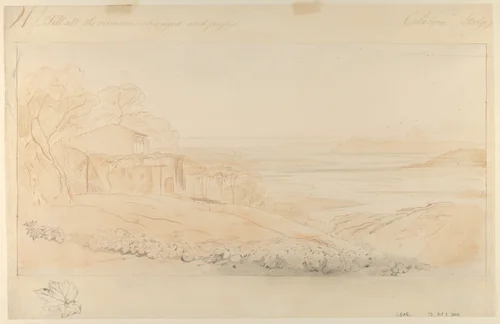
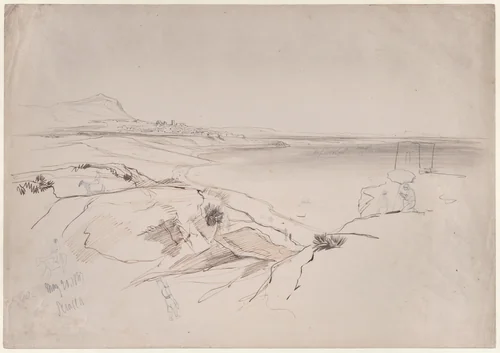
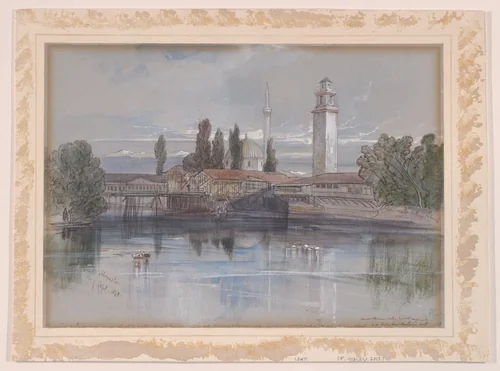
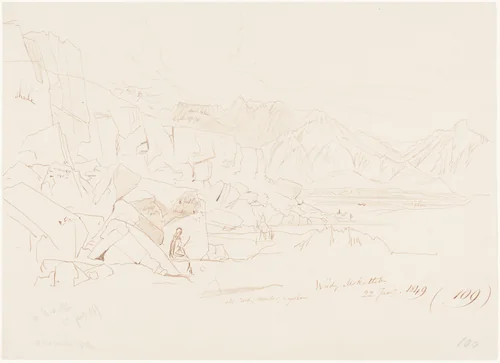
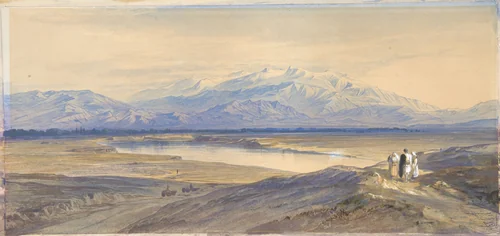
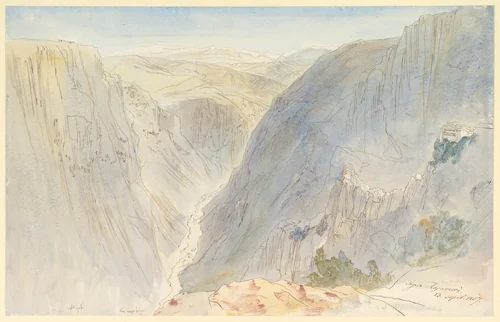
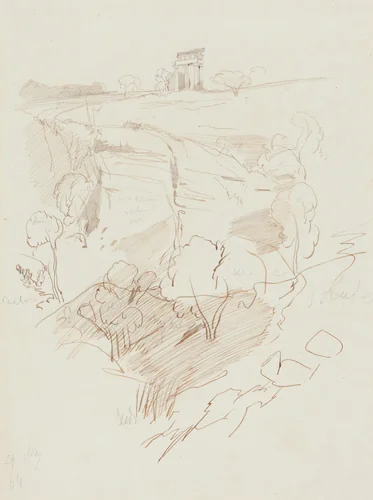
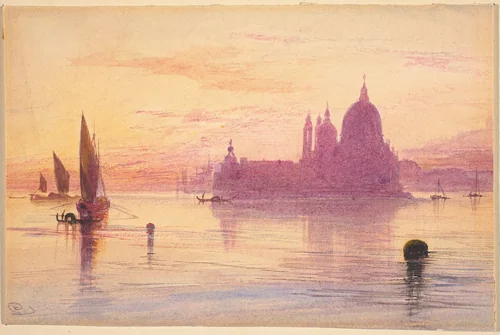
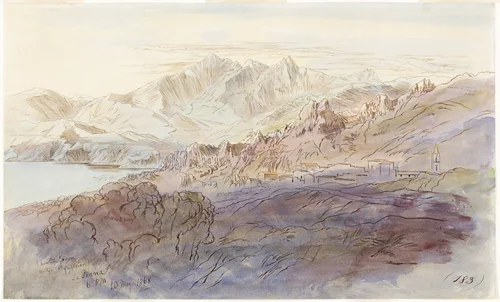
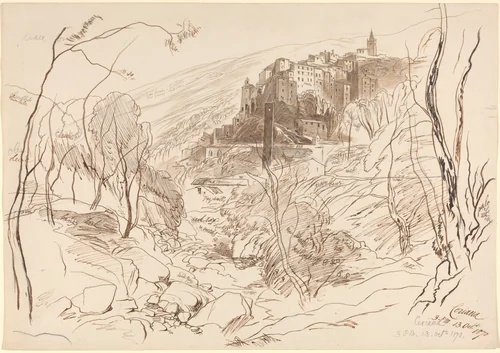
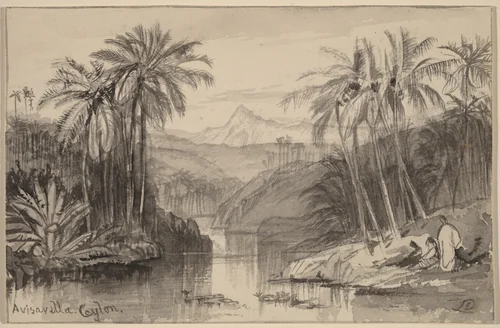
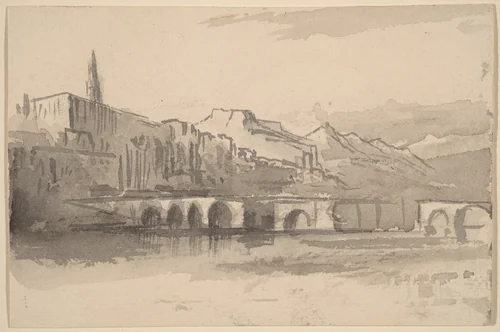
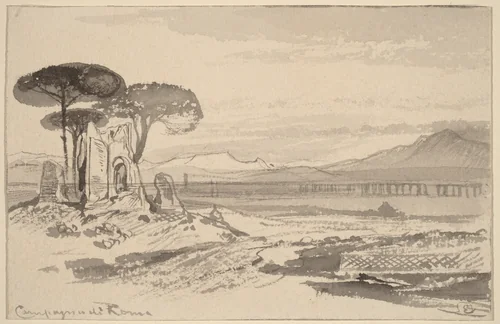
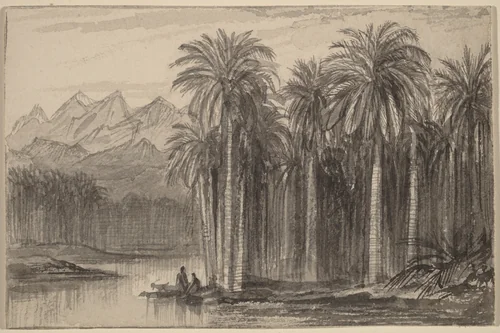
Lear’s matured style utilized fine pen and wash to capture the atmospheric qualities of the Mediterranean and Italian countryside, creating works that resonate with clarity and light. Topographical drawings like Civitella di Subiaco and the Roman view Via Porta Pinciana, Rome provide evocative records of early 19th-century travel and architecture. The enduring quality of these studies ensures that Edward Lear prints remain sought after by collectors interested in the intersection of scientific observation and nascent Romantic landscape sensibilities.
Lear’s oeuvre is distinctive not merely for its quality but for the intellectual rigor underlying both his art and his literature. It is fascinating to note that the very hand capable of illustrating a highly precise Eclectus Roratus Polychloros was also responsible for creating the delightful absurdity of the ‘Jumblies.’ This duality offers a subtle commentary on the Victorian spirit, bridging the scientific zeal of the age with its underlying current of joyful eccentricity. Today, Lear’s artistic legacy is preserved in major institutions, including the Metropolitan Museum of Art, the Art Institute of Chicago, and the Cleveland Museum of Art. Much of his work is now in the public domain, allowing access to high-quality prints and downloadable artwork that attest to his multifaceted contribution to illustration and topographical sketching.
Source: Wikipedia · CC BY-SA 4.0