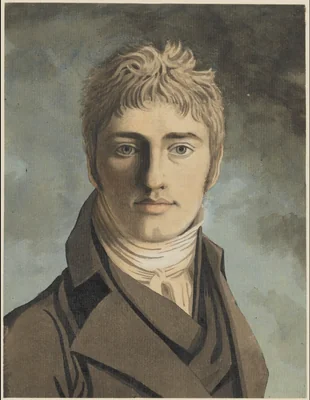
Edward Francis Burney
Edward Francis Burney was an English painter and draughtsman whose concise period of activity, documented primarily between 1780 and 1790, centered on the production of meticulous mythological and historical compositions. Curiously, records concerning his formal identity are not always uniform; his middle name is occasionally recorded as "Francisco" or "Francesco," a minor ambiguity suggesting either confusion in transcription or perhaps a nod to continental artistic influences, a common affectation among eighteenth-century painters.
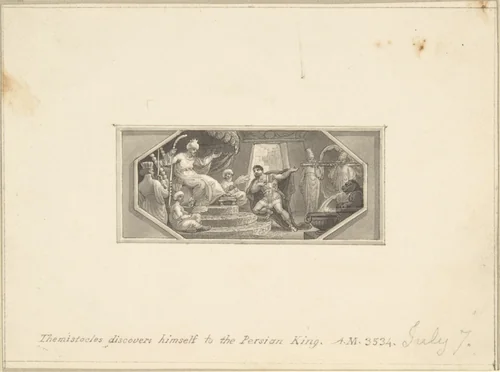
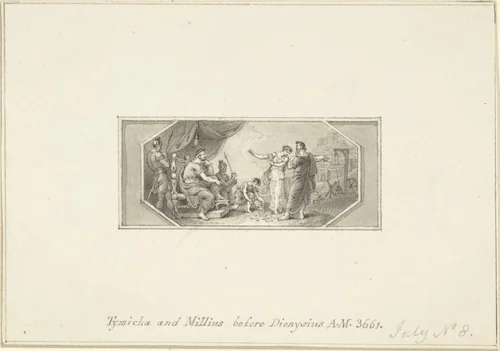
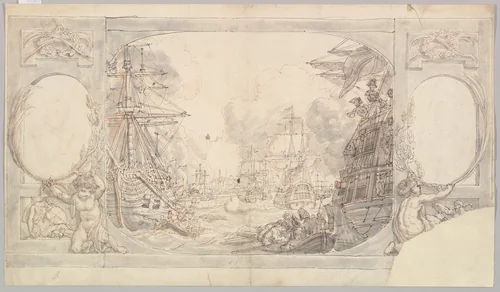
Burney’s surviving output, encompassing at least fifteen documented works, reveals an artist deeply engaged with classical academic traditions and complex narrative illustration. He favored subjects drawn from antiquity, mythology, and Roman history, often treating moments of high drama or ceremonial significance. This commitment to ambitious subject matter is evident in compositions such as Bacchus returning in Triumph from India and the detailed historical scene Berenice prevents Ptolemy judging Condemned Persons while playing at Dice. Although his work resides predominantly in the realm of highly finished drawings and preparatory studies, they showcase the dramatic staging and skill necessary for major Edward Francis Burney paintings.
His draughtsmanship is distinguished by precision and a talent for articulating complex human interactions, whether depicting vulnerability or political tension. The composition Danae and Perseus Exposed, for instance, captures a moment of stark classical pathos, utilizing figures and setting to heighten the emotional stakes. Similarly, Berenice, wife of Antiochus Theos, and her son take refuge in Daphne demonstrates Burney's ability to render historical crisis with dramatic clarity.
Burney’s focus on the illustrative arts secured his place among the era’s influential narrativists. Today, his works are maintained in major institutions, including a collection at the Metropolitan Museum of Art. Fortunately for enthusiasts of late-Georgian drawing, many of his striking designs have transitioned into the public domain. This accessibility allows for the creation of high-quality prints and detailed study of his precise, evocative line work, ensuring his legacy as a skillful storyteller remains vital centuries after his brief active period concluded.
Source: Wikipedia · CC BY-SA 4.0