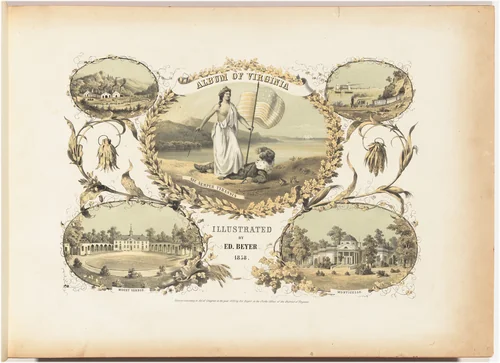
Edward Beyer
Edward Beyer (1820-1865) was a German landscape painter whose focused output provides one of the most comprehensive visual surveys of the American Antebellum South just years before its landscapes were fundamentally altered by conflict. Active for a concentrated period in the late 1850s, Beyer’s work is essential for understanding the topography and developing industrial infrastructure of the upper South immediately prior to the Civil War.
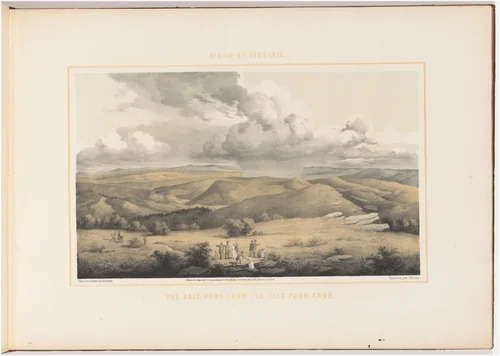
His professional legacy rests almost entirely on a series of lithographic prints produced during 1857 and 1858, documenting key sites, especially in Virginia (now West Virginia). These works moved beyond simple topographical renderings, applying European romantic sensibilities to the unique grandeur of the American highlands and emerging resort communities. The resulting series features carefully constructed compositions that combine natural scenery with detailed depictions of local activity.
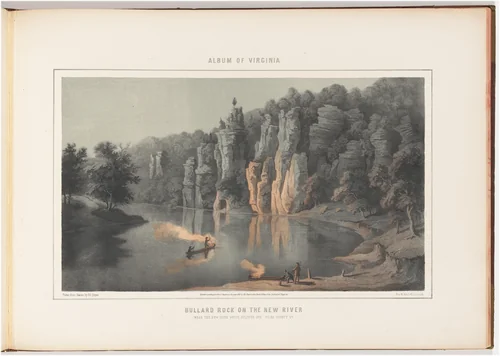
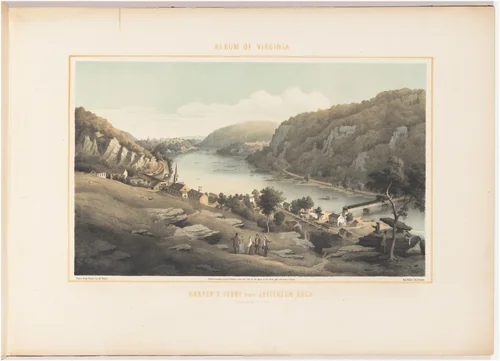
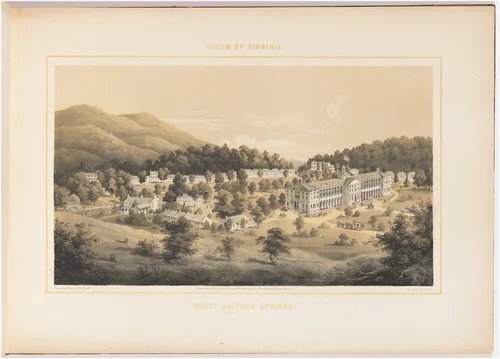
Beyer executed only a small handful of known works, but their influence is disproportionately large. The five surviving large-format prints catalogue locations of both picturesque and growing strategic importance. They include the dramatic scene Bullard Rock on the New River, the bustling resort view White Sulphur Springs, and the geographically significant Harpers Ferry from Jefferson Rock. His work, which was clearly intended for distribution, successfully marketed both the scenery and the growing accessibility of the region to a wider audience.
What is perhaps most intriguing about Beyer's contribution is the speed and economy with which he established his definitive legacy. His active career in American visual culture spans barely twenty-four months, yet the resulting suite of Edward Beyer prints remains a paramount pictorial record.
Today, these works are recognized for their historical accuracy and artistic merit, forming part of the permanent collections of major institutions such as the National Gallery of Art. Given the widespread availability of these materials, museum-quality images and high-quality prints are often available through the public domain, ensuring that this crucial documentation of the Antebellum South remains accessible for continued study and enjoyment.
Source: Wikipedia · CC BY-SA 4.0