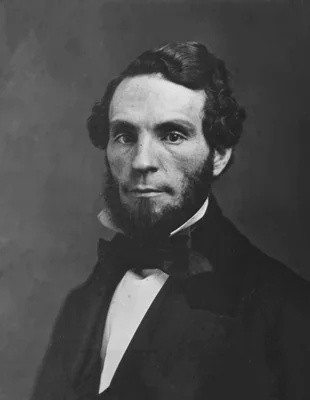
Edward Anthony
Edward Anthony (1819–1888) is recognized as a seminal figure in the early history of American photography, whose influence extended equally across artistic production, technological innovation, and commercial enterprise. As a practicing photographer, his technical skill allowed him to capture the rapidly changing urban dynamism of the mid-nineteenth century; as the co-founder of E. & H. T. Anthony & Company, he fundamentally shaped the apparatus through which the American public came to view the world.
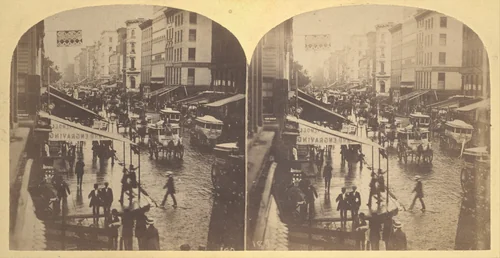
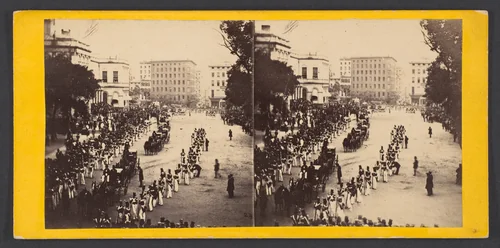
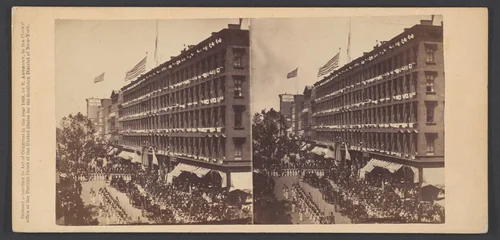
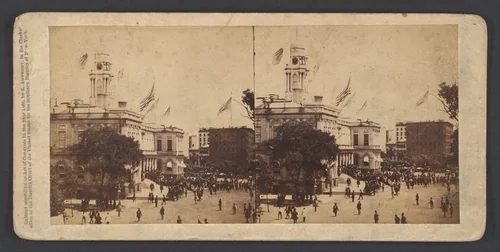
Anthony first gained prominence through governmental commissions, applying his expertise in cartography to the then-emerging photographic sciences. However, it is his documentary work of New York City that remains most compelling. Plates such as Broadway in the Rain and Broadway with horse-drawn carriages display a remarkable ability to manage the lengthy exposures required by early processes while maintaining the feeling of genuine street chaos. His image Return of the Japanese Embassy from City Hall provides a detailed historical record of a pivotal cultural event, demonstrating an early inclination toward photojournalistic significance. His capacity to capture genuine movement amid the visual clamor of the period suggests he possessed the patience of a sniper, waiting for the perfect exposure amid the ever-present flux of horses and crowds.
The lasting impact of Anthony is inseparable from his commercial ambition. Established in 1850, E. & H. T. Anthony & Company rapidly evolved into the dominant national supplier of photographic equipment, chemicals, and paper, effectively fueling the boom in both amateur and professional photography across the United States. Anthony’s shift from master artisan to industrial supplier placed him at the core of the photographic revolution, ensuring that technical advances in the medium were immediately accessible to American practitioners. This dual role makes Anthony a distinctive example of the American artist whose entrepreneurial drive defined the very structure of his chosen medium.
Today, Anthony’s historically vital images are held in major institutions, including the National Gallery of Art, the Art Institute of Chicago, and the Metropolitan Museum of Art. His early photographic work serves as definitive museum-quality documentation of the period. Since many of these seminal works have entered the public domain, his legacy continues to be studied and admired through accessible, high-quality prints and downloadable artwork, solidifying his stature as a foundational commercial artist.
Source: Wikipedia · CC BY-SA 4.0
![[Broadway in the Rain, likely taken from 308 or 310 Broadway, New York City] by Edward Anthony, photograph, 1858-1862](https://img.artbee.org/f3746cf7-6d99-45f7-a2ca-6a035a7c35c0/small.webp)
![[Broadway with horse-drawn carriages] by Edward Anthony, photograph, 1858-1862](https://img.artbee.org/4e64c9ca-1475-4879-93b1-530da617e9e5/small.webp)
![[Stereographic View of Statue of Simon Bolivar by R. de la Cora, Central Park, New York] by Edward Anthony, photograph, 1884-1898](https://img.artbee.org/e29e0f24-0d06-440a-b9d4-9520b2ffd5a1/small.webp)