Eduard Julius Friedrich Bendemann
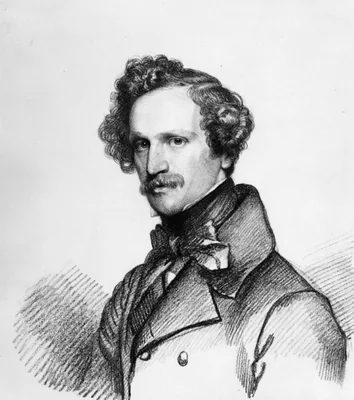
Eduard Julius Friedrich Bendemann (1811-1882) was a distinguished German-Jewish painter and draughtsman whose meticulous practice served as a cornerstone of the Düsseldorf School during the 19th century. Active across the Biedermeier and Romantic periods, Bendemann adhered rigorously to Neoclassical ideals, positioning him as a critical figure in establishing the technical standards for academic history painting in Central Europe. His institutional legacy is cemented by the inclusion of his graphic work in major international collections, including the Metropolitan Museum of Art and the National Gallery of Art.
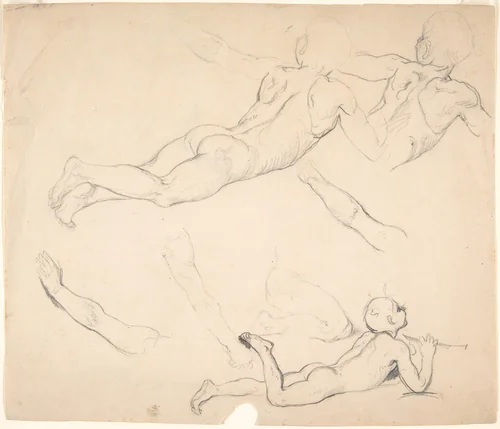
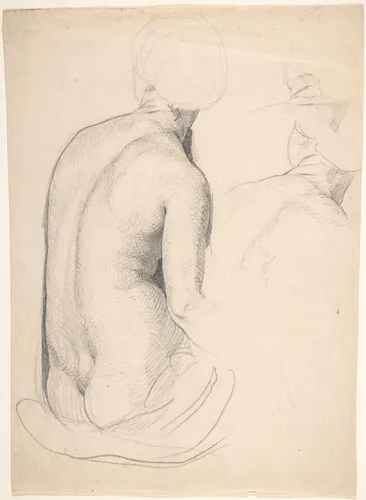
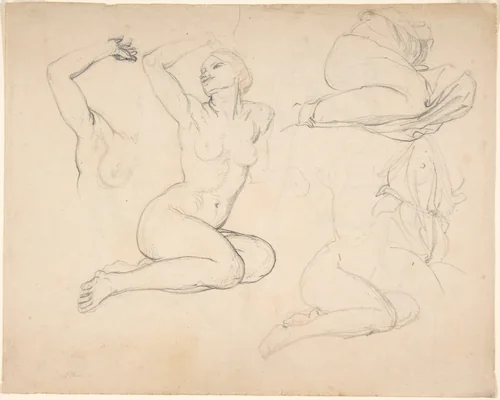
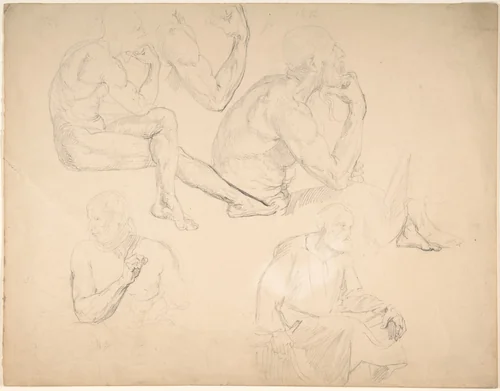
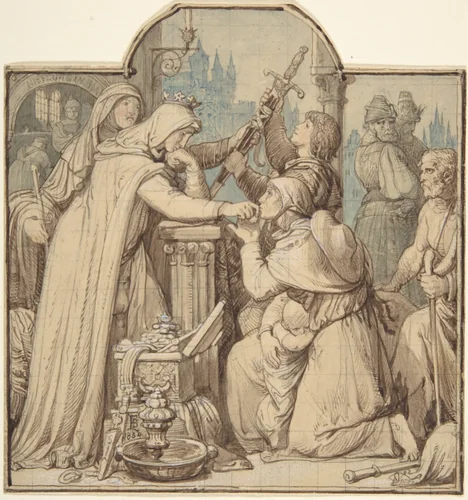
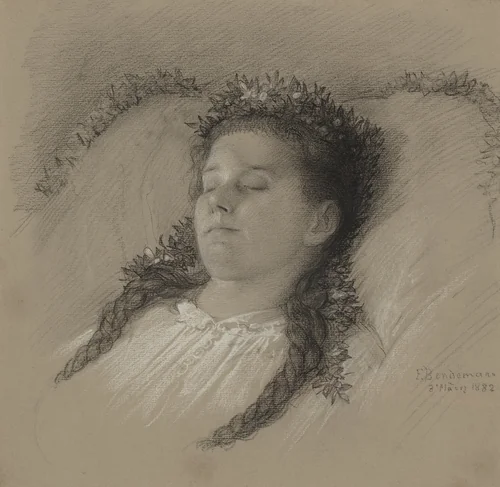
The surviving corpus of his work provides an invaluable look into the preparatory stages of major compositions. Unlike the grand, finished canvases that defined public perception during his lifetime, works such as Studies of a Boy Playing the Flute and Studies of a Seated Woman from Behind reveal the artist’s intense engagement with fundamental artistic challenges: namely, the mastery of the human figure, proportion, and expressive posture. These drawings, often featuring detailed figure studies or repeated attempts to resolve composition, emphasize the demanding academic training that underpinned his prolific career.
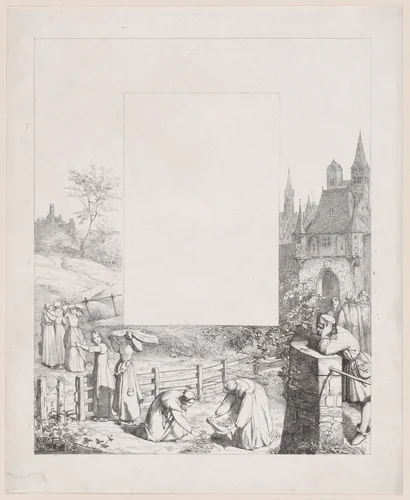
Bendemann’s commitment to graphic media extended into illustration and collaboration. This is evident in his contribution to the collaborative publication Lieder eines Malers mit Randzeichnungen seiner Freunde (Songs of a Painter with Marginal Drawings by His Friends). His intricate Plate 5, which depicts women collecting plants beneath the gaze of a static male observer, shows a delightful engagement with specific literary or folk narratives. This particular print suggests that even within the seriousness of 19th-century academic art, Bendemann possessed an aptitude for the visually curious or slightly odd narrative moment.
While large-scale Eduard Julius Friedrich Bendemann paintings secured his reputation, these preparatory sketches and fine Bendemann prints offer the most immediate and intimate connection to the artist’s technique. Today, a significant portion of his oeuvre resides in the public domain, facilitating wider access to his foundational work. Researchers and enthusiasts seeking to explore this heritage can acquire high-quality prints or downloadable artwork, ensuring that Bendemann’s profound influence on 19th-century German draughtsmanship continues to be recognized and studied globally.
Source: Wikipedia · CC BY-SA 4.0