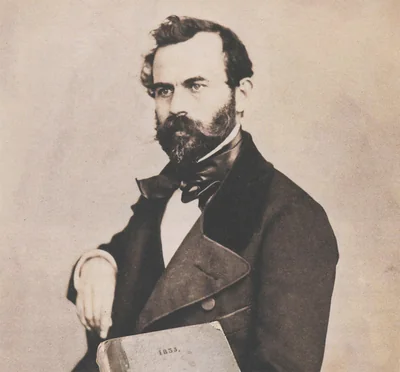
Edouard Baldus
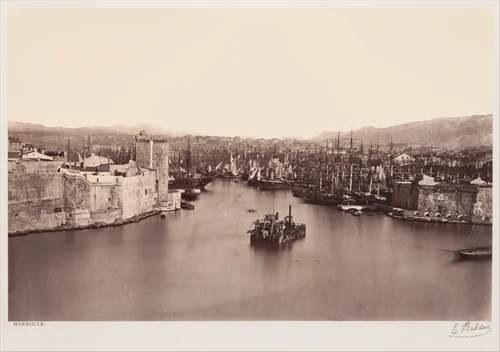
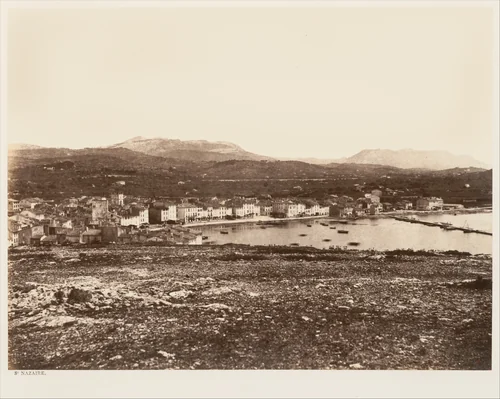
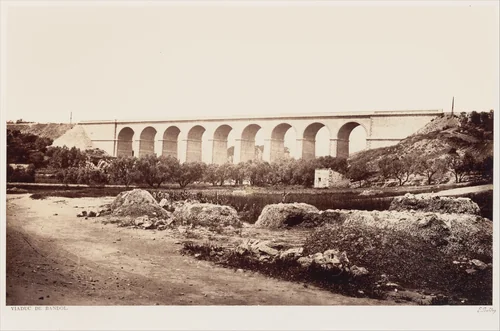
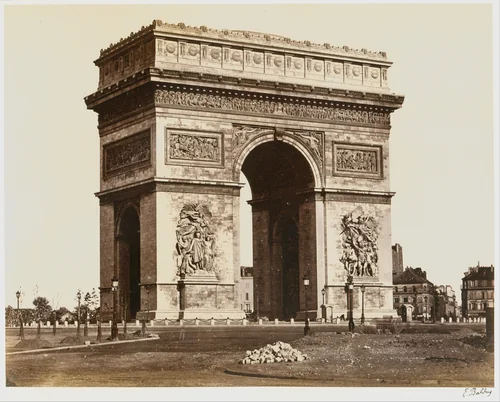
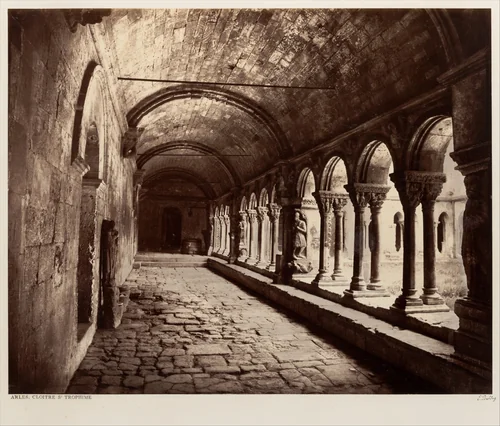
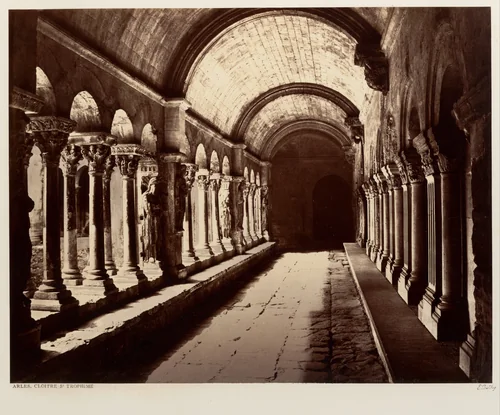
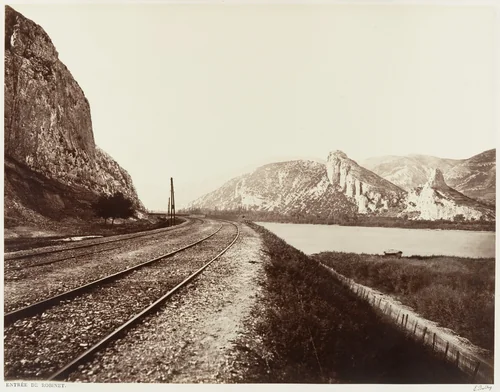
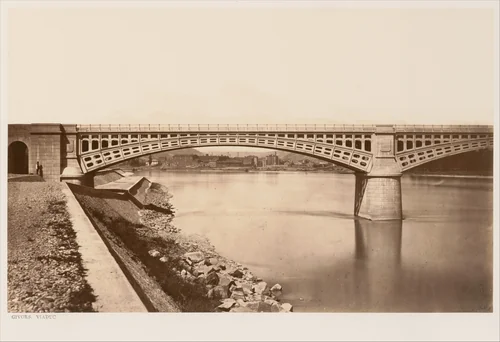
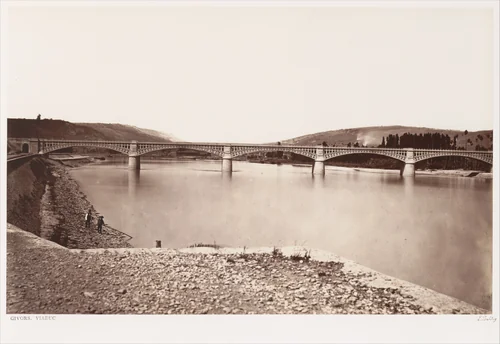
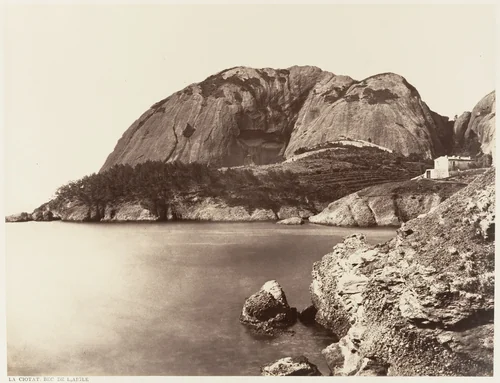
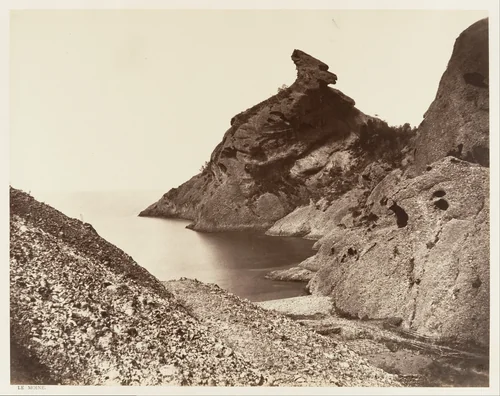
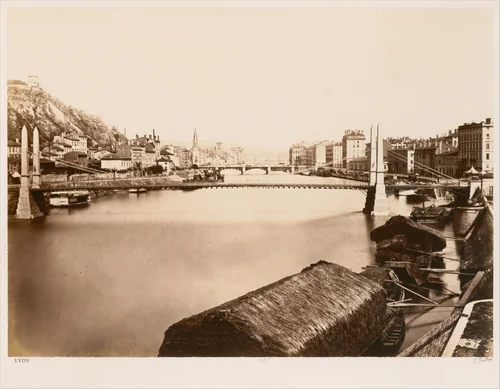
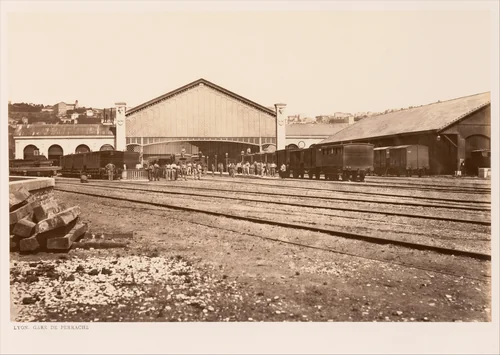
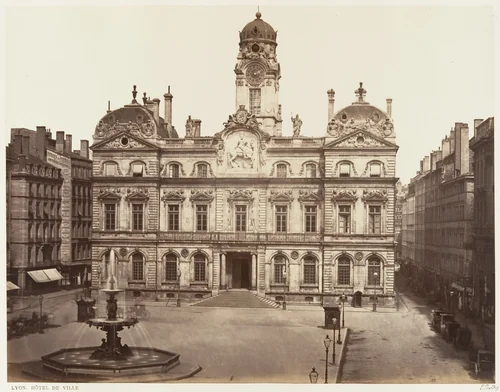
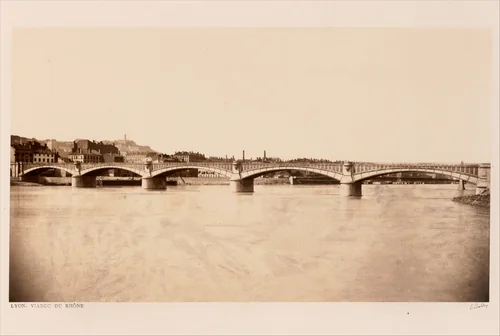
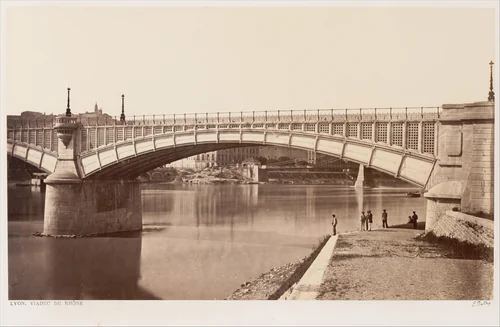
Édouard Baldus (1813-1889) was a highly influential French photographer who defined the artistic and technical standards for architectural and landscape documentation during the mid-nineteenth century. Active professionally from 1848, Baldus was instrumental in chronicling the modernization of France, functioning simultaneously as a fine art practitioner and a critical government record keeper. His work centered on three major themes: grand architectural structures, Roman monuments, and the rapidly expanding railway infrastructure.
Baldus’s exceptional technical skill, particularly his command of large-format negative processes like the collodion wet plate and the subsequent refinement of printing techniques, allowed him to capture vast subjects with unprecedented sharpness and scale. This precision secured him important state commissions under the Second Empire. He meticulously documented crucial projects, including the construction of the Palais de l'Industrie and the extensive rebuilding campaign led by Baron Haussmann. His comprehensive two-volume photographic book, Palais du Louvre et des Tuileries, motifs de décorations tirés des constructions éxécutées au nouveau Louvre et au palais des Tuileries, remains a landmark achievement in published architectural photography, offering detailed views of key elements such as the Pavillon de l'Horloge, Louvre.
Unlike many of his contemporaries who favored the picturesque and romantic, Baldus approached his subjects with a formal, almost archaeological rigor, focusing on the geometry and sheer materiality of stone and iron. His commitment to structured realism is evident in his masterful documentation of ancient Roman heritage in France, including the powerful perspectives found in Amphitheater, Nîmes and the [Roman Arch at Orange]. This dedication to formal composition occasionally required innovation; Baldus was known to skillfully combine elements from multiple negatives to construct a single, idealized and structurally coherent scene, revealing that the resulting photographic truth was sometimes prioritized over strict literal depiction.
Baldus’s enduring legacy is recognized today in major collections, including the Metropolitan Museum of Art, reflecting the enduring museum-quality of his prints. His highly detailed views of 19th-century France offer indispensable historical records. Fortunately, much of his significant catalogue is now in the public domain, allowing modern institutions and researchers access to these foundational works, often available as high-quality prints for scholarly use.
Source: Wikipedia · CC BY-SA 4.0