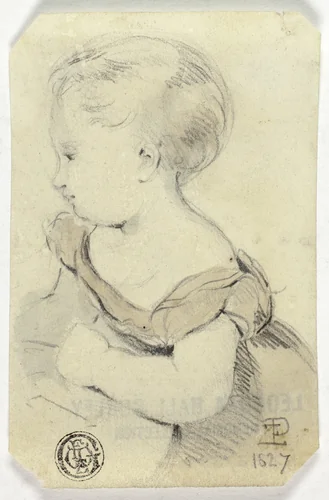
Edmund Thomas Parris
Edmund Thomas Parris (1793-1873) commanded a highly unusual breadth of artistic disciplines during the 19th century, functioning simultaneously as a history painter, portraitist, subject painter, and book illustrator. His technical versatility and capacity for complex visual narratives secured him significant official appointments, culminating in his designation as history painter to Queen Adelaide, Queen Consort of William IV.
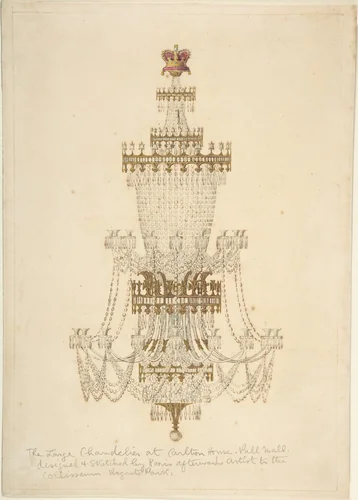
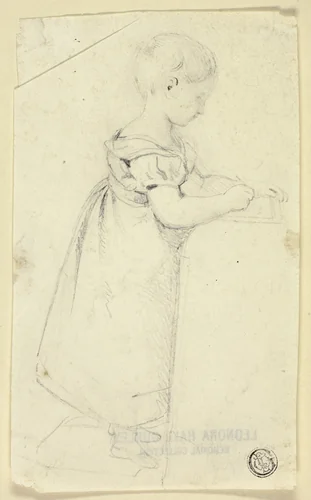
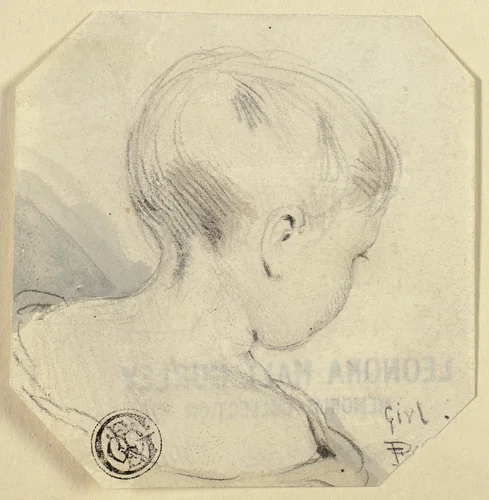
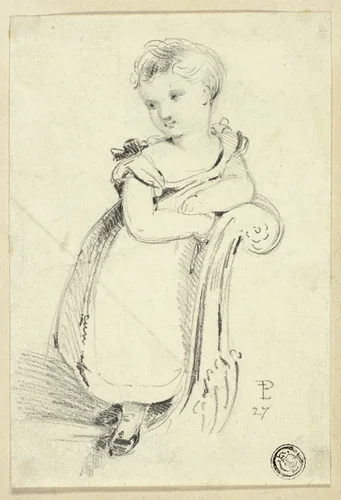
Parris’s enduring significance rests in his role as a visual chronicler of pivotal national moments. He documented the scale and pageantry of the Victorian era through monumental public commissions, most notably painting the 1838 coronation of Queen Victoria and later capturing the massive historical spectacle of the Duke of Wellington’s funeral procession in 1852. Yet, alongside these large-format Edmund Thomas Parris paintings, his intimate studies provide an invaluable look into early 19th-century life and decorative arts. The Metropolitan Museum of Art and the Art Institute of Chicago hold important examples of his draughtsmanship. Works such as Large Chandelier at Carlton House, Pall Mall showcase his meticulous skill in rendering architectural and design details, while the observational sketch Little Girl Standing at Desk and Writing emphasizes his delicate handling of domestic subjects.
Beyond the traditional studio, Parris was deeply engaged in technological innovation. He supervised the painting and installation of the huge panorama housed within the London Colosseum in Regent’s Park, London, a feat of scale and logistical management that defined early 19th-century public visual entertainment. Furthermore, Parris was an inventor, credited with the creation of "Parris’s medium." That a prominent history painter would develop a specialized chemical compound for use in restoration confirms his deep, practical engagement with the material science of his craft.
The duality of his output- spanning both grand, sweeping historical scenes and quiet, meticulous drawings- offers rich material for scholars. Today, the integrity of Parris’s preparatory studies ensures their continued relevance for researchers of British history and the decorative arts. The detailed nature of his known works means that many Parris drawings and designs are now available as royalty-free downloadable artwork, contributing significantly to the pool of museum-quality public domain images available worldwide. The accessibility of high-quality prints ensures that Parris’s comprehensive contributions remain a key component of the early Victorian visual record.
Source: Wikipedia · CC BY-SA 4.0