Edgar Chahine
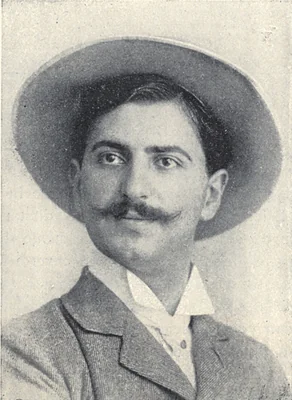
Edgar Chahine (1874-1947) established a significant reputation in the Parisian art world at the turn of the twentieth century as an innovative French engraver, painter, and illustrator of Armenian descent. His technical facility, particularly in etching and drypoint, allowed him to capture the nuanced psychological complexity of Belle Époque society with precision and grace. Chahine’s importance is reflected in his presence within major international collections, including the Art Institute of Chicago, demonstrating the lasting museum-quality appeal of his graphic work.
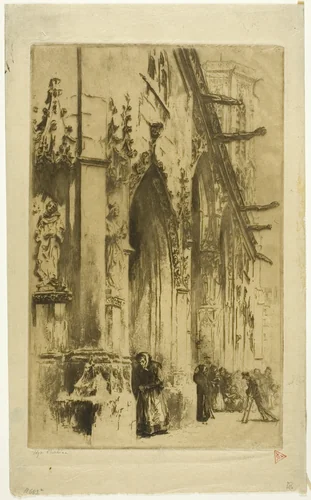
Between 1900 and 1903, a period of remarkable productivity, Chahine solidified his command over printmaking, focusing on dynamic portraits and specific urban scenes that eschewed the merely topographical for the deeply atmospheric. His etching A Side Street in the Grandes Carridres Quarter exemplifies this approach, utilizing deep shadow and sharp line to evoke a sense of lived experience rather than simple observation. Similarly, works like Entrance to Saint-Germain-l'Auxerrois, Paris are not merely architectural records, but studies in the interaction between stone, light, and the fleeting presence of the populace.
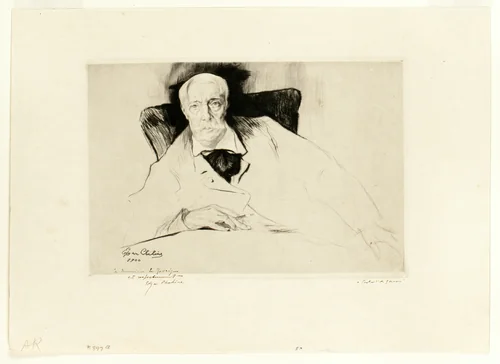
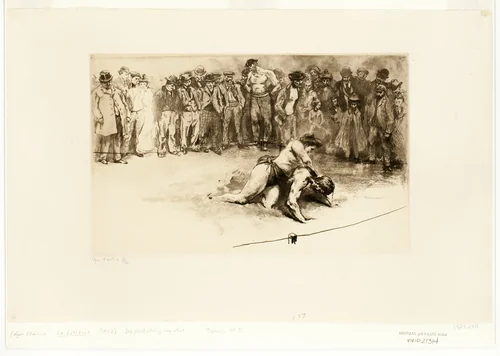
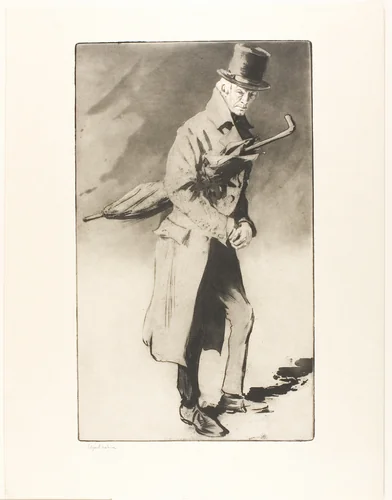
Chahine was particularly skilled at portraying individuals occupying the margins of fashionable society. His subjects often possessed an arresting interiority. A compelling example is the rare print Female Wrestler, a work that offers a robust and unvarnished glimpse into professional sport at a time when such subjects were seldom treated with seriousness in fine art. Another notable portrait, Alfred Stevens, showcases his ability to move effortlessly between genre scenes and formal character studies, always prioritizing the sitter’s defining attitude.
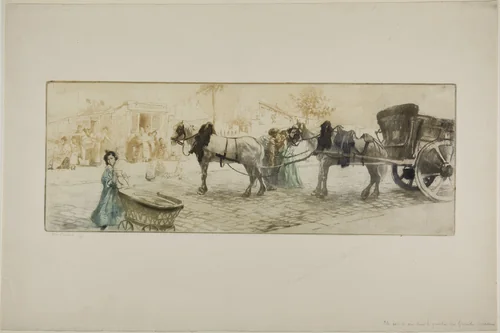
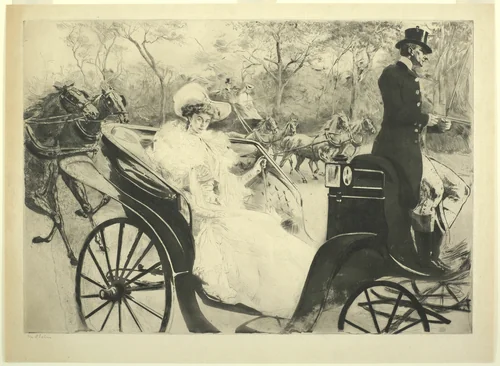
It is worth noting that Chahine’s meticulous draftsmanship and attention to detail ensured his continued appeal long after his contemporary period. The legacy of his graphic output endures, providing exceptional subjects for those seeking high-quality prints today. The activity recorded in the prints, such as Promenade, offers viewers a direct, compelling window into the sophisticated, sometimes melancholic rhythm of early 20th-century Parisian life. Thanks to the status of much of his material as public domain, many Edgar Chahine prints are widely accessible as royalty-free downloadable artwork, preserving his contribution to the graphic arts.
Source: Wikipedia · CC BY-SA 4.0