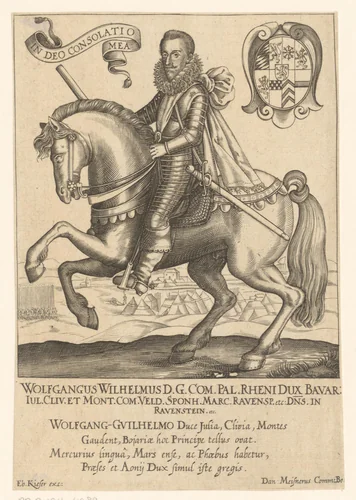
Eberhard Kieser
Eberhard Kieser was a German engraver and publisher, active in the late sixteenth century, whose work provides vital insight into the political iconography disseminated through print media during the transition to the Baroque era. While his surviving oeuvre is concise, comprising approximately nine known prints, these highly detailed engravings established a visual language of power for Central European nobility.
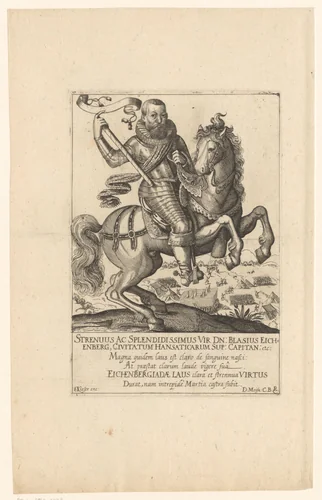
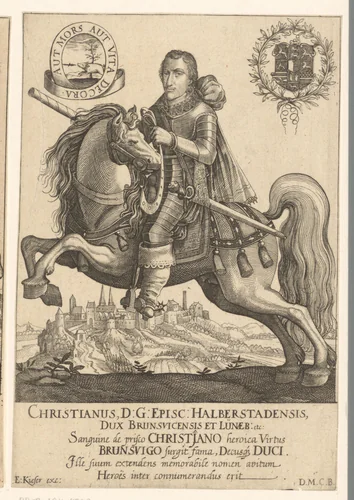
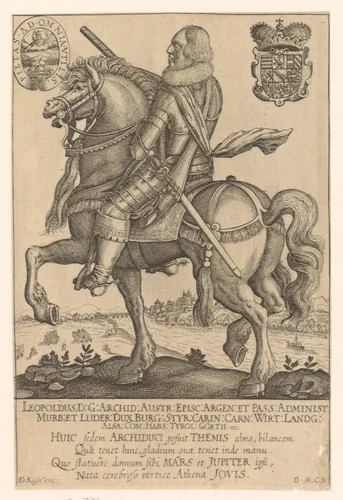
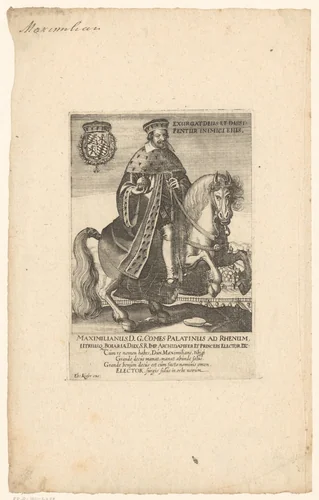
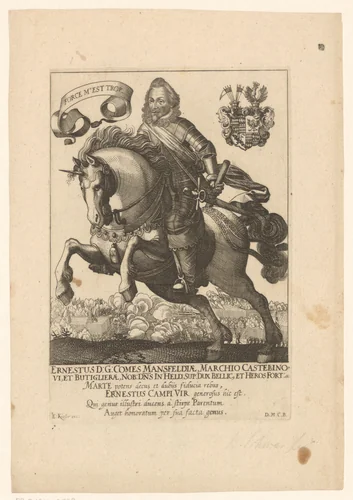
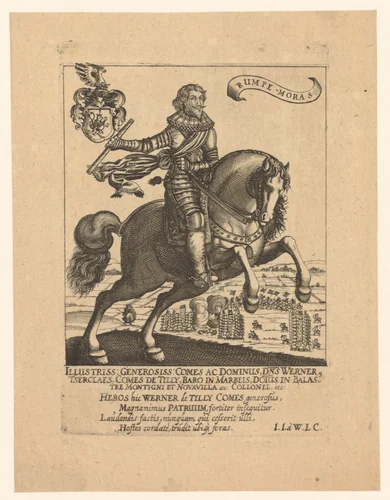
Kieser’s specialty lay in the grand equestrian portrait, arguably the highest technical challenge facing printmakers and painters of the period, demanding absolute mastery of foreshortening, animal anatomy, and dynamic composition. His ability to render the weighty authority of a mounted commander in line-work is evident in works such as Portret van Blasius von Eichenberg te paard, Portret van Christiaan van Brunswijk te paard, and Portret van Leopold V van Oostenrijk te paard. These images, featuring noblemen astride powerful steeds, functioned as official records and as instruments of political currency, circulated widely as an early form of mass media.
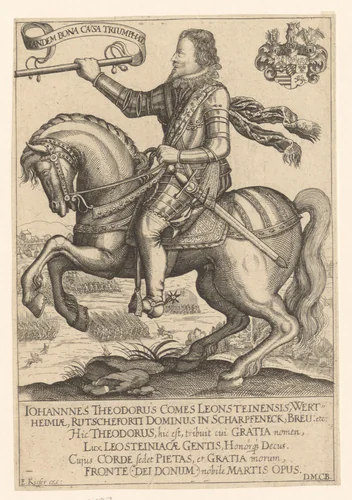
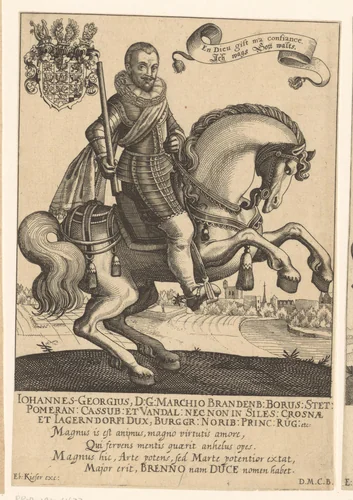
The dual role of engraver and publisher allowed Kieser to control the entire production cycle, ensuring the consistent quality of the finished plates. In an age where prints were often the only means for regional leaders, like Johann George van Brandenburg or Johan Theodor Löwenstein, to project their image across distant territories, this control was paramount. His work thus served not merely an aesthetic purpose, but a critical geopolitical function, translating military and dynastic status into readily reproducible visual form.
Today, the meticulous craftsmanship defining Eberhard Kieser prints is preserved within major collections, notably the Rijksmuseum in Amsterdam. His historical output demonstrates the crucial role of the engraver in shaping public perception before the widespread advent of photography. Fortunately for contemporary scholars and art enthusiasts, much of this historical inventory now resides in the public domain, allowing for widespread access to downloadable artwork and high-quality prints, ensuring that the legacy of this important early modern publisher remains visible and royalty-free for future generations.
Source: Wikipedia · CC BY-SA 4.0