Eastern India
The artistic output attributed to Eastern India, encompassing the modern states of Bihar, Jharkhand, Odisha, and West Bengal, along with the union territory of the Andaman and Nicobar Islands, represents a vital, prolonged period of textile innovation spanning the 18th and 19th centuries, from 1701 to 1860. This region served as a crucial hub for the production of luxury export textiles, particularly those destined for Western markets through the powerful trading companies of the era.
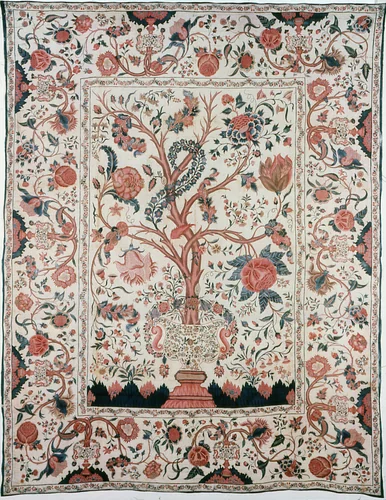
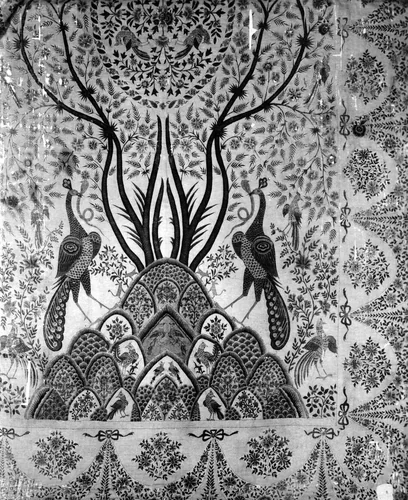
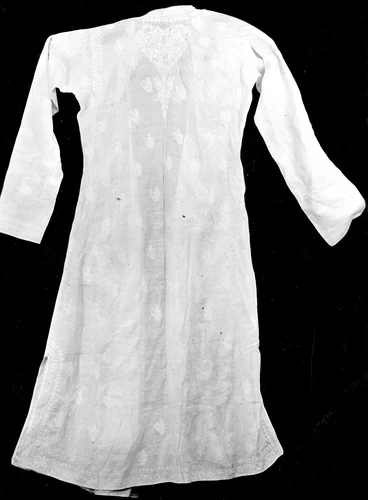
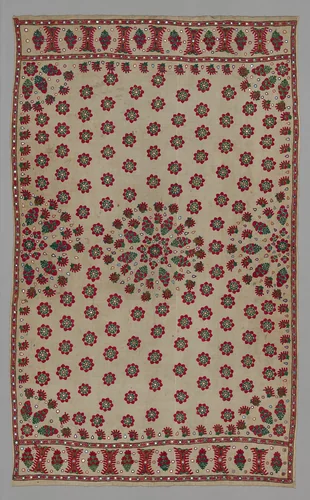
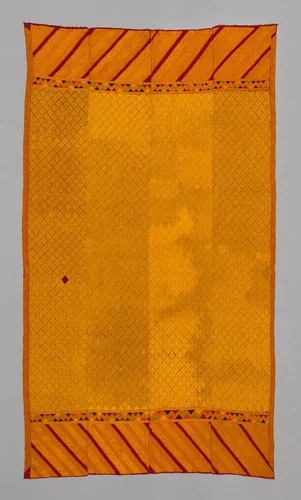
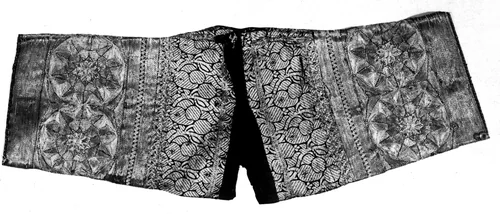
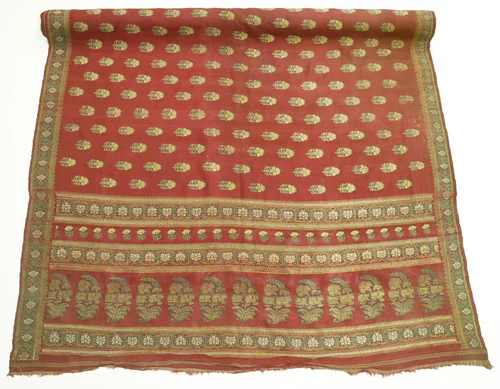
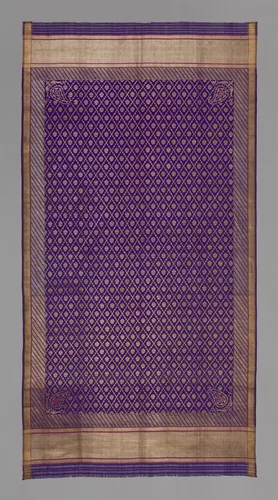
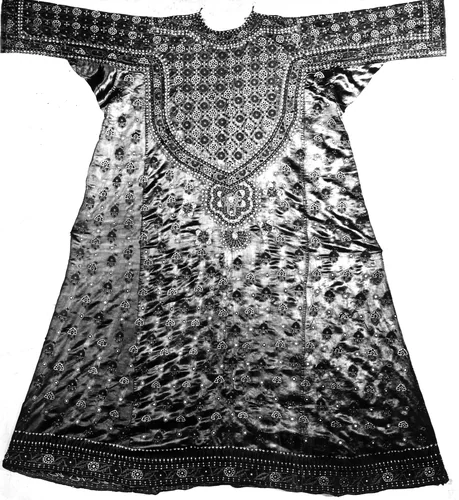
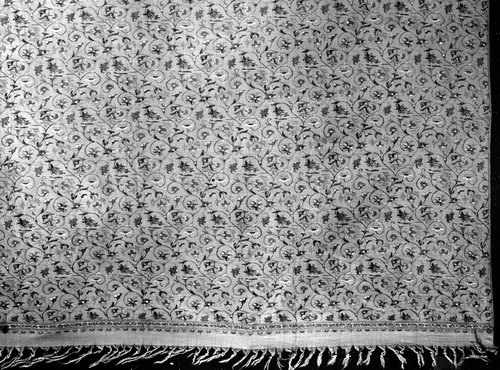
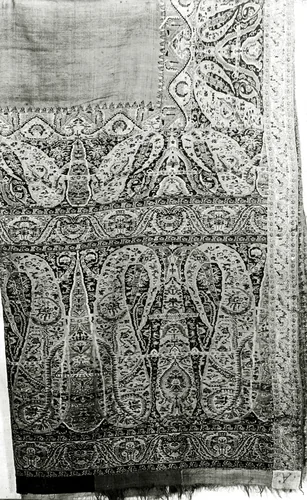
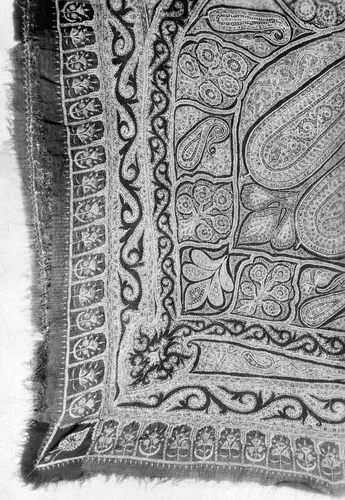
The corpus of identified works, including several examples of the Palampore, a highly prized coat, a richly detailed cover, and a hanging, confirms a mastery of the complicated, multi-stage processes required for high-quality chintz production. This era is defined primarily by its sophisticated control over mordant-dyeing on cotton, a technique that allowed for the creation of vibrant, permanent colors that resisted washing and light, a technological achievement unmatched in Europe at the time. The patterns frequently synthesized indigenous Indian flora and fauna, such as the Tree of Life motif, with stylistic elements dictated by European colonial taste, thereby establishing an early and complex paradigm of globalized artistic design.
The sheer stability and consistency of the textile style across the full 160-year production span suggest a robust, decentralized network of highly specialized artisan communities. Considering the meticulous, months-long process often involved in producing a single high-quality Palampore, which required dozens of intricate steps from preparatory treatments to final dyeing, it is perhaps fortunate for the producers that these early textile artists were historically compensated by the piece, not by the hour.
The 12 extant textiles documented from this period, housed in major institutions such as the Art Institute of Chicago, provide museum-quality evidence of this intense commercial and artistic sophistication. These complex hangings and specialized articles of apparel reveal a singular mastery of pigment application and resist techniques. While the original objects remain essential artifacts, the patterns and design principles established in these early Eastern India prints continue to influence contemporary textile aesthetics. Scholars interested in studying the minutiae of these historical techniques often find documentation and reference material available as downloadable artwork for detailed, non-destructive research.
Source: Wikipedia · CC BY-SA 4.0