Eadweard Muybridge
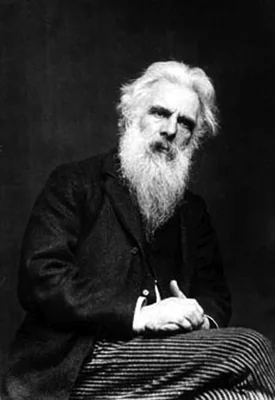
Eadweard Muybridge (1830-1904) stands as a foundational figure in both art photography and the history of motion pictures. This English photographer fundamentally altered the understanding of time, movement, and visual observation through his rigorous, quasi-scientific application of the camera lens. Though he is best known for his later chronophotographic experiments, his early career, active primarily between 1866 and 1875, established him as a technical master of monumental landscape documentation.
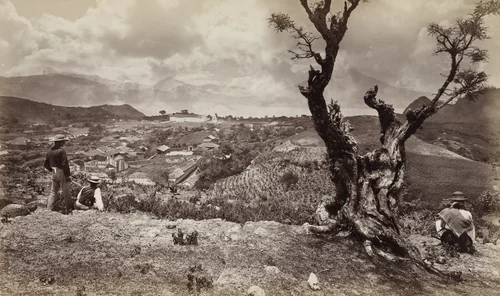
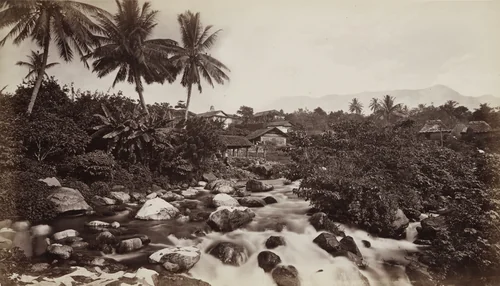
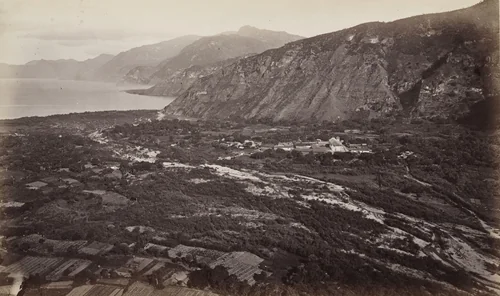
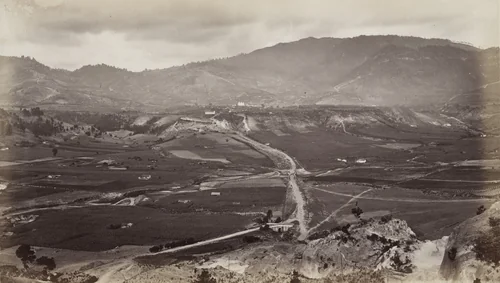
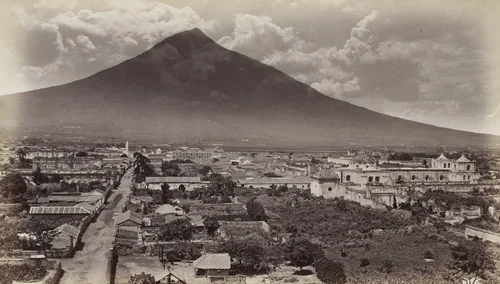
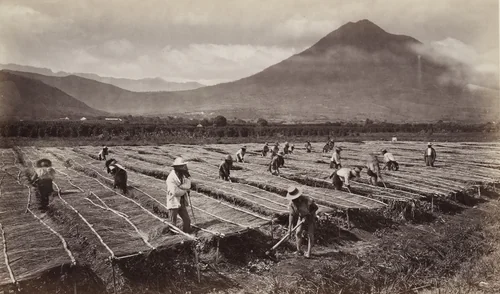
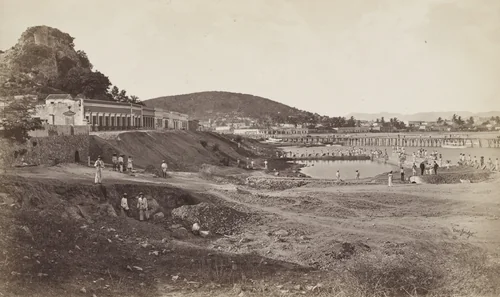
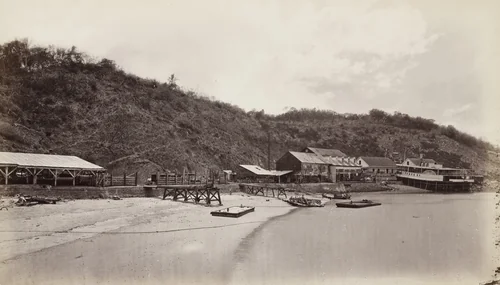
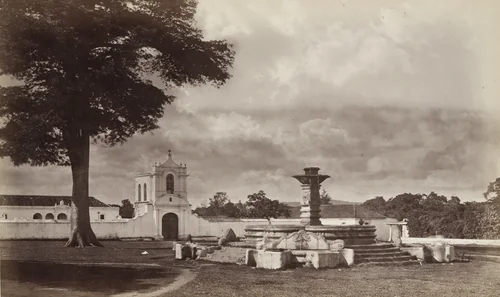
Works from this initial period, such as Sausalito from the N.P.C.R.R. Wharf, Looking South, Yosemite Falls, and the dramatically detailed Pi-wy-ack (Cataract of Diamonds), Vernal Falls, Yosemite Valley, California, exemplify the power and clarity achievable through the challenging wet-plate collodion process. These detailed views of the American West, including documentation like Untitled (Landscape near Watsonville, California), were often produced on massive plates, ensuring the final photographic product was of unparalleled scale and provided museum-quality detail. Muybridge successfully translated the ambition and dramatic scope of the rapidly expanding continent into visually articulate documents.
While his early landscapes remain stunning artistic achievements, it was his later preoccupation with sequential motion that secured his lasting international legacy. Working initially on behalf of former California Governor Leland Stanford, Muybridge engineered highly specialized camera setups capable of capturing subtle, high-speed moments beyond the threshold of human perception. He developed technology to illustrate precisely how animals and humans move, creating the first true stop-action studies, thus pioneering the field of photographic motion analysis and early motion-picture projection.
It is perhaps telling that this man, who dedicated his career to objectively freezing milliseconds of reality, repeatedly and drastically changed his own name throughout his life, eventually settling on the Anglo-Saxon spelling Eadweard. This focus on objective visual truth, married to a subtle restlessness of personal identity, defines his contradictory genius. Today, high-quality prints of his seminal landscape and motion studies are held in major institutions worldwide, including the Metropolitan Museum of Art, the Cleveland Museum of Art, and the Museum of Modern Art. Many of his key images are now in the public domain, ensuring that these vital documents of 19th-century vision remain accessible as downloadable artwork for scholars and enthusiasts alike.
Source: Wikipedia · CC BY-SA 4.0