Douglas Cox
Douglas C. Cox is firmly established among the foremost contemporary American luthiers, renowned for both the classical precision and the exceptional volume of his output across the violin family. Since initiating his professional practice in 1981, Cox has achieved a remarkable milestone, crafting and finishing well over one thousand instruments, encompassing violins, violas, and cellos.
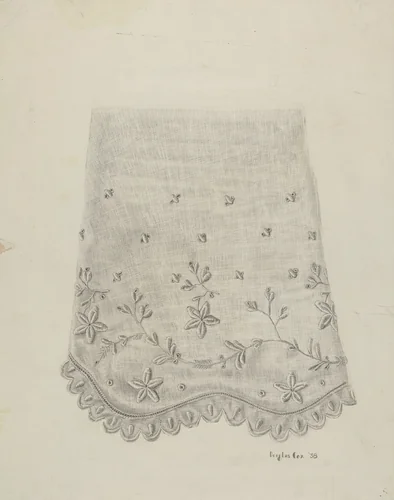
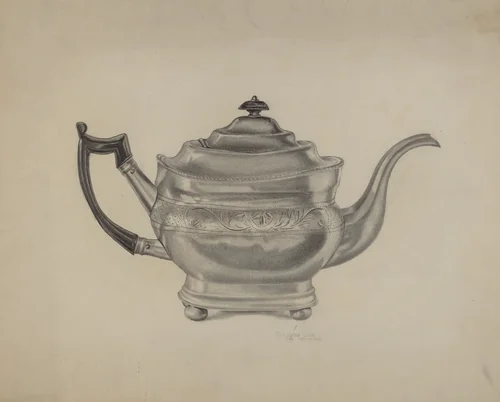
Cox’s methodology honors the structural and acoustic knowledge derived from the great Cremonese masters, while rigorously integrating contemporary analytical approaches to sound production. Unlike some makers who prioritize stylistic novelty, Cox’s hallmark is his commitment to impeccable internal geometry and vibrational efficiency. This focus ensures tonal consistency and projection, qualities that have made his instruments highly desirable among working symphony musicians and concertizing soloists alike. His attention to detail echoes the meticulous precision necessary in the study of historical American design, such as that seen in objects like the Embroidered Undersleeve or the elegant functional form of the Teapot.
The continuous success of his four-decade career confirms his dedication to repeatable, museum-quality excellence. Instruments bearing his signature are frequently held in high regard by major institutional collections, reflective of the kind of enduring appreciation afforded to artifacts documented by the National Gallery of Art. The substantial body of work he has produced offers a crucial resource for the study of modern American instrument making.
The achievement of building instruments for over forty years while maintaining this prolific rate is a quiet demonstration of sustained, singular artistic commitment. It is perhaps this consistency, this unwavering standard applied to each successive violin, viola, or cello, that distinguishes Cox most: an artist who measures his legacy not in singular commissions, but in the collective sonic achievement of a thousand perfect forms played worldwide. While the physical ownership of his work is highly sought after, detailed technical specifications and high-quality prints documenting his unique adaptations of classical arching and plate graduations are available for study by the luthier community, ensuring his methodological insights remain accessible and contribute meaningfully to the public domain of craft knowledge. His catalog stands not just as a collection of physical objects, but as a comprehensive archive of successful acoustic engineering.