Dorothy Harris
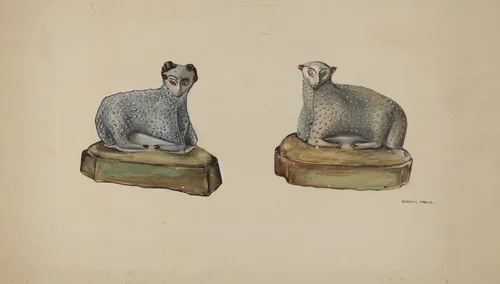
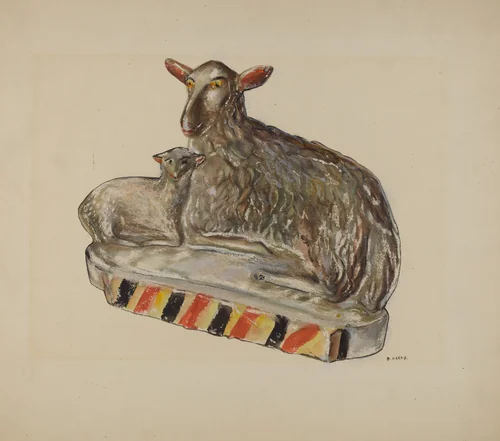
Dorothy Harris holds a distinct, if specialized, place within American art history, recognized primarily for her rigorous contributions to the Index of American Design (IAD). Active between 1935 and 1937, a critical period during the New Deal era’s Federal Art Project, Harris was engaged in the challenging task of documenting the nation’s material culture. This monumental WPA effort aimed not only to provide employment for artists during the Great Depression but also to create a comprehensive visual encyclopedia of American decorative and folk arts, preserving artifacts that might otherwise have been lost to time or neglect. Her documented output for the project included seven highly detailed renderings, illustrating the textures, forms, and historical integrity of their subjects with exacting precision.
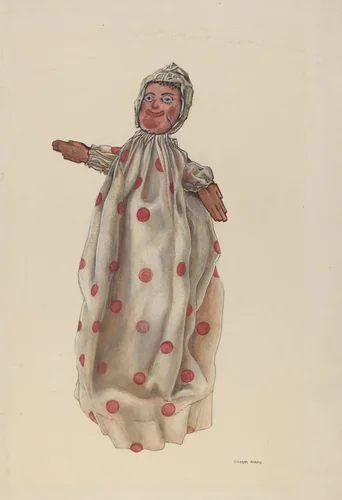
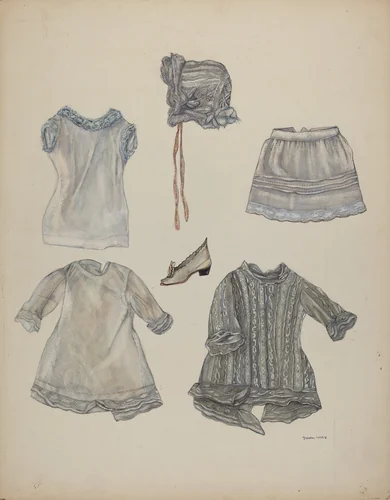
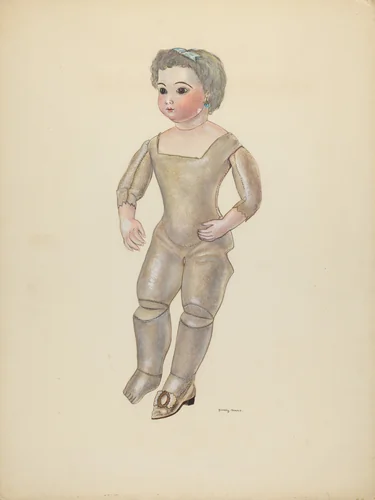
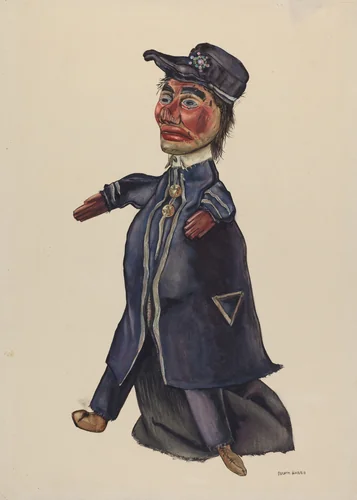
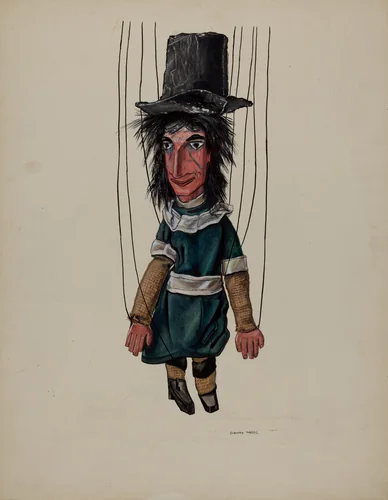
Harris’s drawings reflect the IAD’s commitment to the precise inventory of historical objects, serving as visual reference documents rather than expressive artworks. Works such as the detailed study of a Doll Wardrobe and the character inventory Jerry the Policeman exemplify her focus on translating three-dimensional objects onto paper with documentary fidelity. Her documentation of the Marionette - Missionary, for instance, captures the unique, sometimes unsettling, charm of early American stagecraft and recreational objects. These illustrations provide invaluable reference material today, preserving the nuances of items now considered museum-quality artifacts. It is perhaps an intriguing historical irony that such diligent documentation of antique folk art was achieved under a modern federal program designed specifically to combat economic collapse.
The legacy of Harris rests securely within the National Gallery of Art collection, where her IAD submissions reside alongside those of hundreds of other WPA artists who collectively created nearly 18,000 documentations. The commitment to historical preservation means these original studies serve as critical benchmarks for material historians. Furthermore, the modern availability of her work in the public domain ensures its continued study and appreciation, with high-quality prints and downloadable artwork often released as royalty-free images. Interestingly, biographical records indicate that Dorothy Joan Harris, the individual credited with these precise 1930s visual histories, later became known as a Japanese-born Canadian writer residing in Toronto, primarily focused on children’s books, marking a profound transition from the documentation of visual history to the creation of literary narrative.