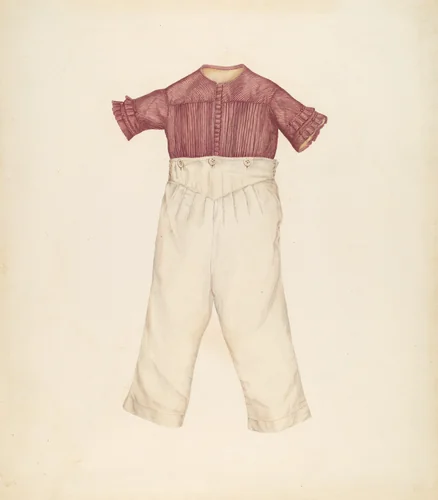
Dorothea Mierisch
Dorothea Mierisch (1885–1977) holds a significant place among the skilled documentary artists working during the critical period of the New Deal Federal Art Project. Born in New York City in 1885, Mierisch’s artistic output is defined almost entirely by her association with the monumental Index of American Design (IAD), an effort initiated by the Works Progress Administration (WPA) to create a comprehensive visual record of American material culture and decorative arts. Active within the IAD framework primarily between 1938 and 1940, her contribution focused on the meticulous cataloging of historic American garments.
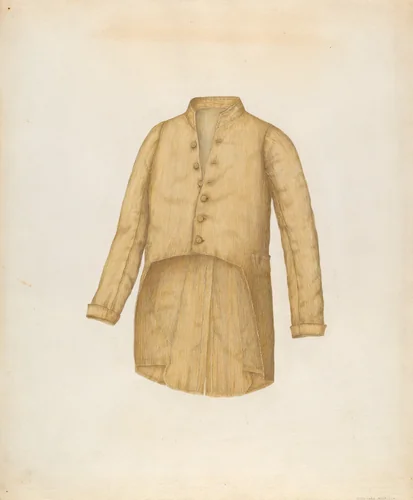
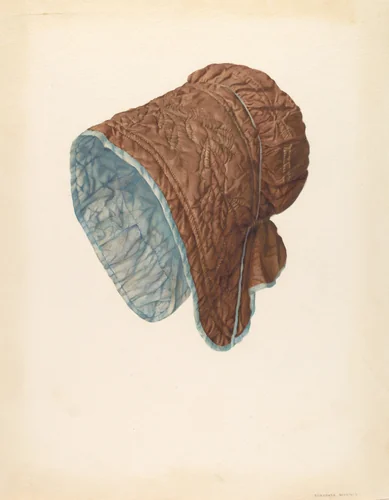
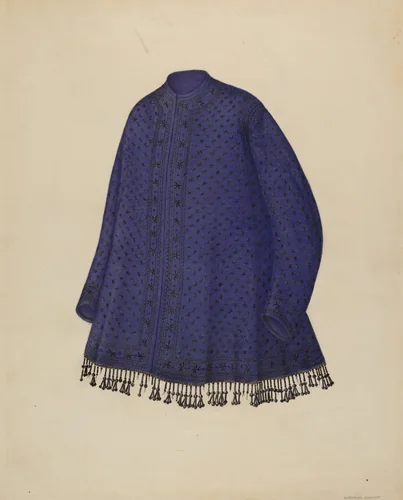
Unlike artists working in the popular regionalist style, Mierisch concentrated on the exacting discipline of visual preservation. Her technical proficiency transformed what were essentially artifact studies into high-quality records that blend scientific accuracy with aesthetic sensitivity. She specialized in the depiction of early American textiles and costume, demonstrating a remarkable facility for rendering complex fabric folds, stitching details, and the texture of antique materials.
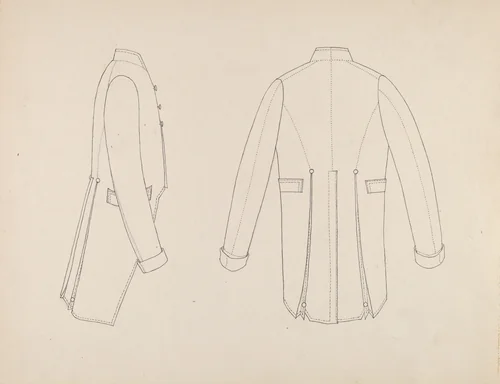
Her portfolio for the IAD features studies of crucial historical fashion elements, including the careful structure of a Boy's Cutaway Jacket, the practical elegance of the Woman's Coat, and the intricate detailing of the Child's Bonnet. These renderings, executed typically in watercolor or gouache, represent a high standard of descriptive drawing, elevating the utilitarian object to the status of museological subject. The documentation demanded not interpretive flourishes, but an absolute faithfulness to the original object’s form and color—a dedication that preserves for us the subtle ingenuity of early American craftsmanship.
Mierisch’s commitment to visual exactitude ensured the lasting impact of the IAD, which served as a vital, royalty-free resource for historians and designers. Her works are today maintained within the extensive archives of the National Gallery of Art, Washington D.C. The inherent documentary nature of the IAD means that many of these valuable Dorothea Mierisch prints are widely accessible to the public, ensuring that these historical records continue to be available for research and appreciation as public domain materials, often reproduced as high-quality prints. Mierisch died in Hopewell, New Jersey, in 1977, leaving behind a compact yet critical body of work that anchored the history of American design.
Source: Wikipedia · CC BY-SA 4.0