Dong Qichang
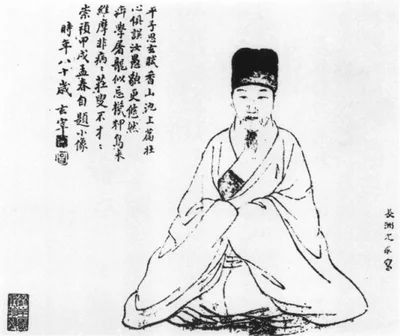
Dong Qichang (1555-1636) was one of the most commanding figures of the late Ming period, operating simultaneously as a high-ranking politician, a formidable calligrapher, and the most influential art theorist in Chinese history. While his political career was fraught with the standard volatility of imperial service, his artistic pronouncements fundamentally restructured the subsequent three centuries of painting, effectively defining the parameters of aesthetic taste for generations of collectors and artists.
His most enduring contribution was the comprehensive historical categorization known as the ‘Northern and Southern Schools’ (Nan Bei Zong). This framework, borrowed metaphorically from the division of Chan Buddhism, proposed that Chinese painting derived from two principal lineages. The Southern School, which Dong championed, comprised the orthodox tradition of scholar-amateur painters (wenren) who valued expressive brushwork and intellectual depth over technical polish. Conversely, he relegated the Northern School to the status of professional artisans concerned primarily with decorative detail and descriptive representation. This critical distinction elevated the prestige of the literati painter and cemented the philosophy that painting should reflect the artist's character and scholarship, not just the physical world.
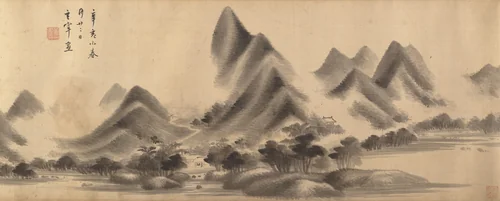
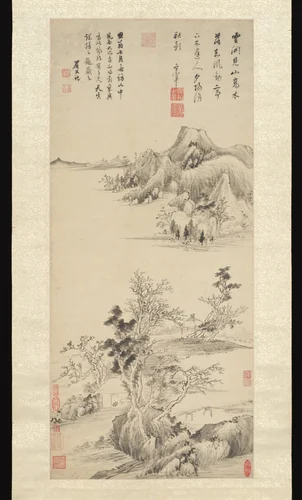
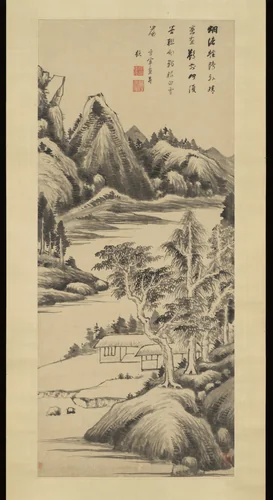
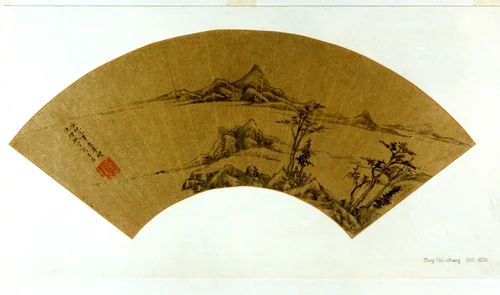
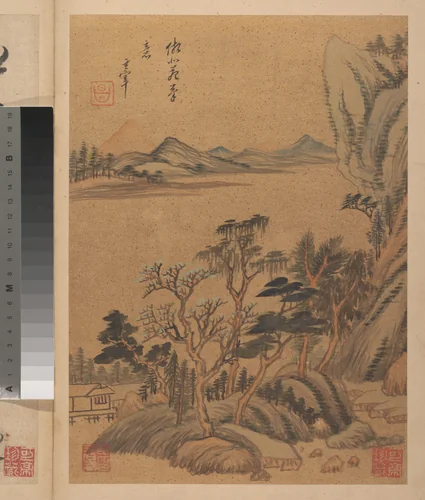
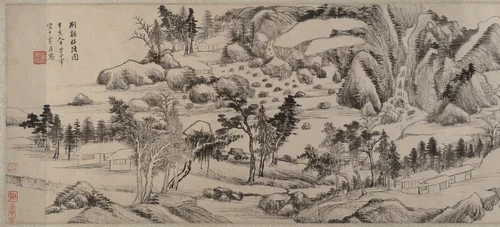
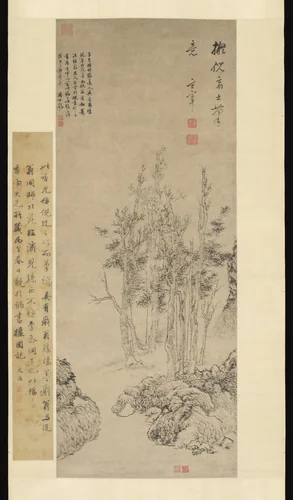
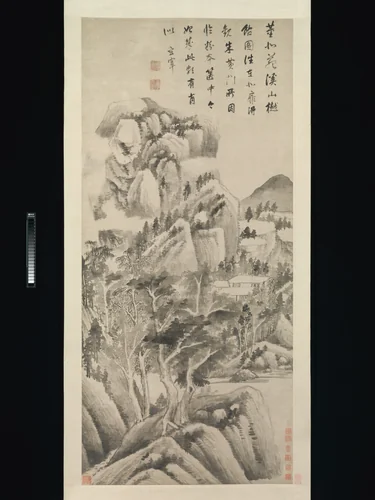
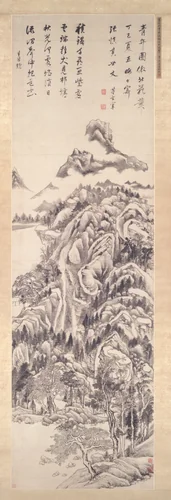
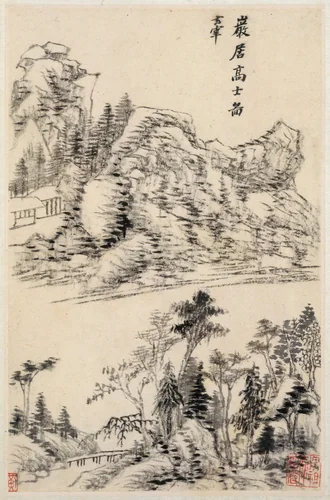
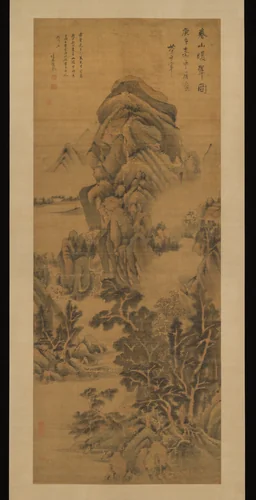
As a practitioner, Dong Qichang was renowned for his deliberate, often sparse, interpretations of historical masters. Works like Landscape in the Style of Mi Fu demonstrate his approach of engaging directly with ancient styles, dismantling and reassembling them to create new, dryly abstract compositions. His paintings often feature stacked, geometric forms and minimized color, prioritizing the structural relationships of ink and line. This highly self-aware style required viewers to possess deep historical knowledge to fully appreciate the conversation he was having across the centuries. It is perhaps an understated observation that few artists have successfully managed to control the critical reception of their own work with such systematic rigor.
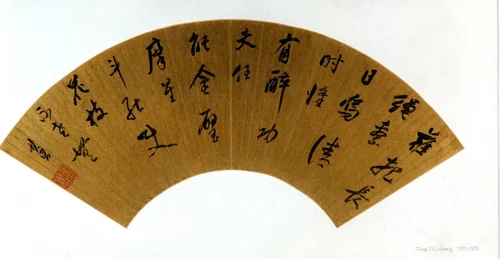
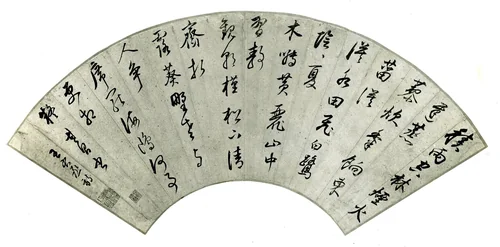
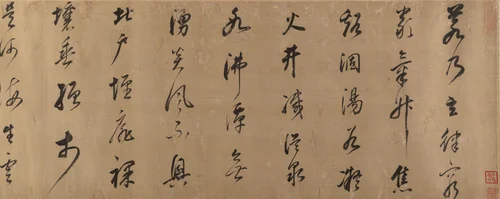
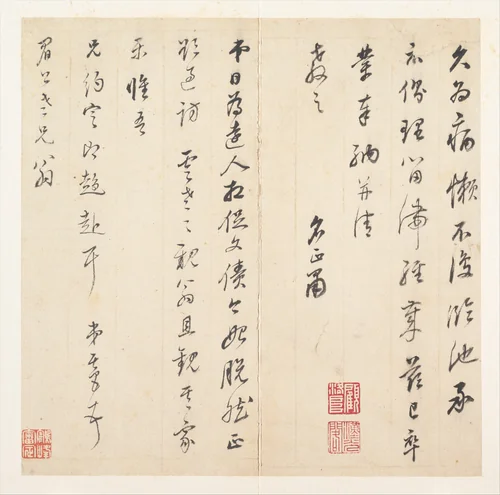
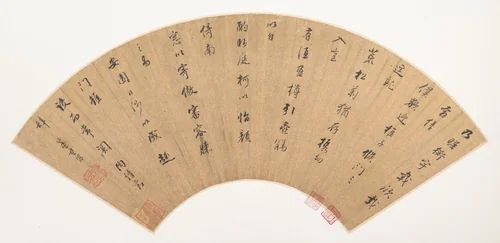
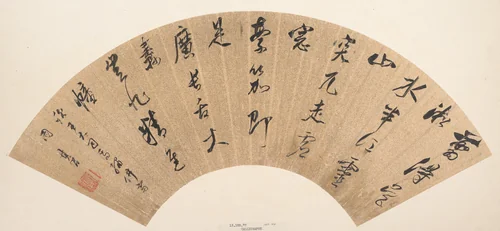
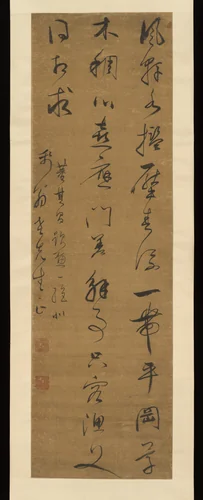
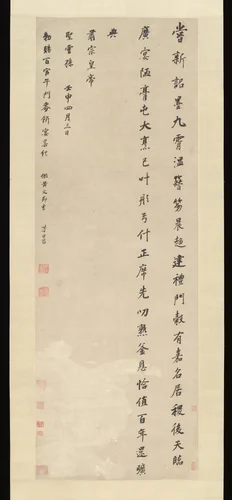
Dong excelled equally in calligraphy, where his monumental script, seen in pieces like Excerpt from Xie Huilian’s Prose Poem “On Snow”, reveals profound technical mastery. His commitment to the orthodox masters of the past established him as a cornerstone of traditional discipline. Today, many of the finest Dong Qichang paintings and scrolls are held in the permanent collections of international museums. Through the increasing availability of historical collections, high-quality prints and other downloadable artwork are now easily accessed by scholars studying this pivotal figure in Chinese art.
Source: Wikipedia · CC BY-SA 4.0