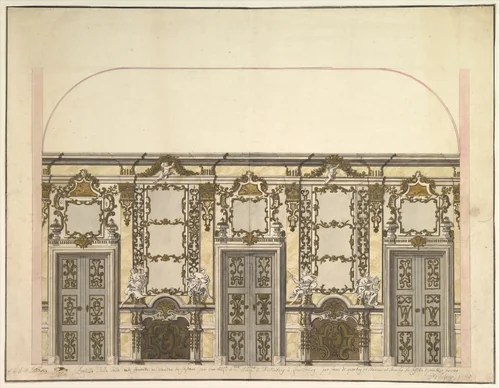
Donato Giuseppe Frisoni
Donato Giuseppe Frisoni (active 1709-1718) stands as a concise yet significant figure whose architectural drawings helped define the early period of the Rococo style across Central Europe. Though Italian, Frisoni’s nine years of documented activity reflect an extraordinary itinerary, successfully transplanting sophisticated Italian design principles into the courtly environments of Southern Germany and Bohemia. His work flourished precisely during the era when the heavy symmetry of late Baroque was giving way to the lightness, asymmetry, and exuberant fantasy of the new aesthetic.
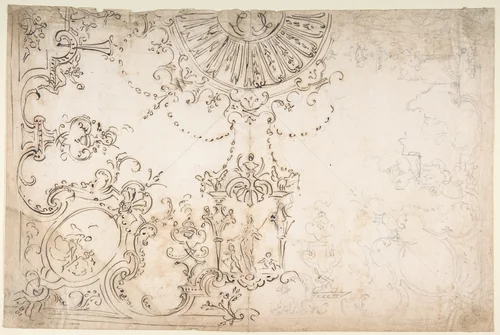
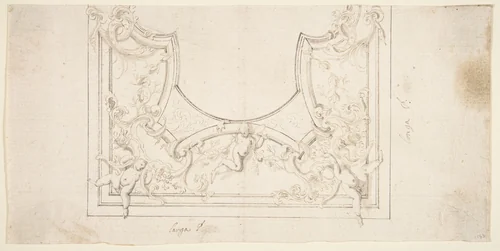
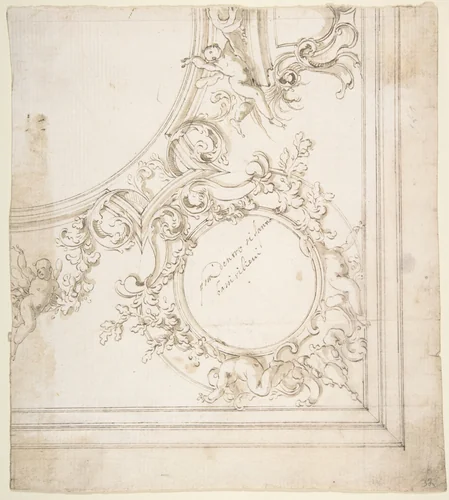
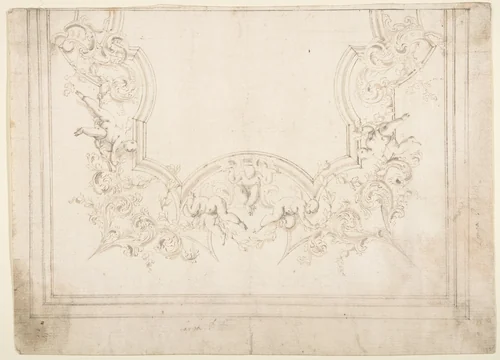
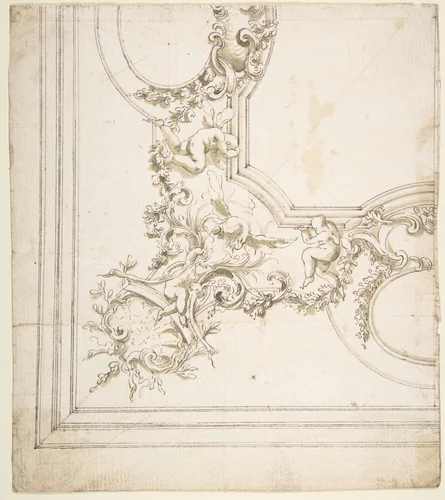
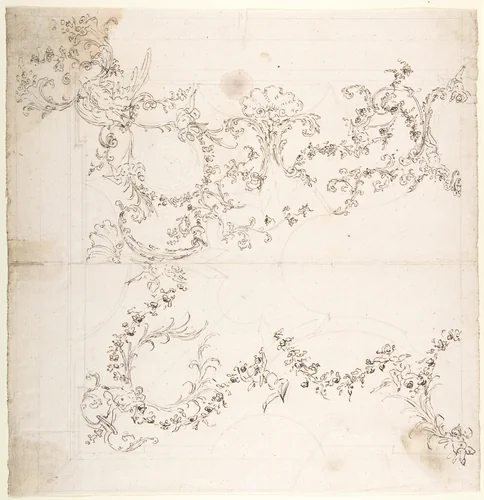
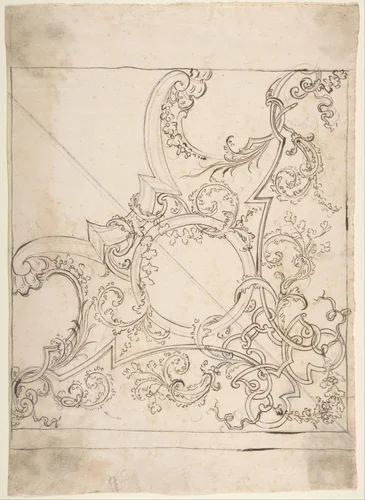
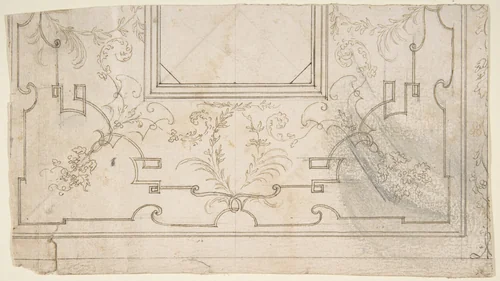
Frisoni was not chiefly known for monumental, built structures; his lasting legacy resides almost entirely in the exacting standards of his preparatory drafts. His surviving output consists of a specialized suite of designs, predominantly elaborate ceiling schemes intended for palatial interiors. Works such as Design for One Half of a Ceiling with Elaborate Medaillons and Figures showcase a fluent mastery of quadratura and ornamental detail. These drawings often feature complex vaulting and intricate borders populated by mythologic figures, demonstrating the spatial acuity necessary to transform a flat plane into a dynamic theatrical vista.
The crucial role of Frisoni’s design portfolio was its portability. In an age before rapid architectural exchange, these precise, museum-quality drawings served as highly valued commodities, functioning effectively as standardized, high-end design templates. They allowed distant patrons and regional craftsmen to access and reproduce the cutting-edge of Italian interior design with fidelity, ensuring the widespread adoption of Rococo stylistic devices far from their point of origin. This reliance on movable graphics positioned Frisoni as a pivotal propagator of taste.
Despite the brevity of his known career, the aesthetic standard established by his draughtsmanship ensured the careful preservation of his work. Today, examples of his highly detailed work are held in major institutional collections, including the Metropolitan Museum of Art. For scholars, the availability of these designs, many now residing in the public domain, offers invaluable insight into the mechanics of early 18th-century cross-cultural design transfer. The detailed linework of Donato Giuseppe Frisoni prints can be studied closely, ensuring this influential, transient vision of Rococo remains accessible for future architectural historians.
Source: Wikipedia · CC BY-SA 4.0