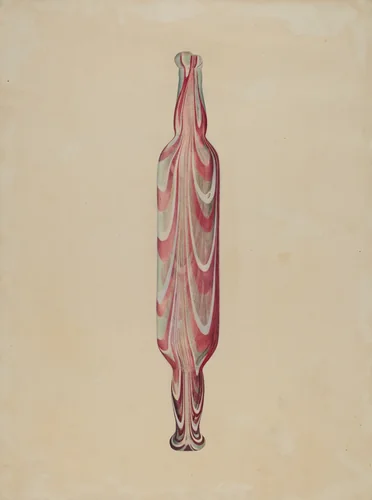
Donald Williams
The artistic and historical significance of Donald Williams centers definitively on his active involvement, circa 1938, with the Index of American Design (IAD). This monumental federally sponsored initiative, launched during the Great Depression, tasked hundreds of artists nationwide with creating meticulous visual records of America’s decorative arts and vernacular design spanning the colonial era through the nineteenth century. Williams was among the skilled draftsmen and watercolorists whose exacting precision proved vital to the project’s success, focusing on artifacts that represented daily domestic life rather than elite studio production.
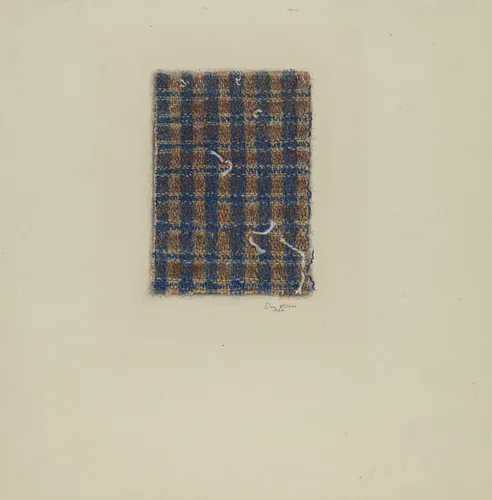
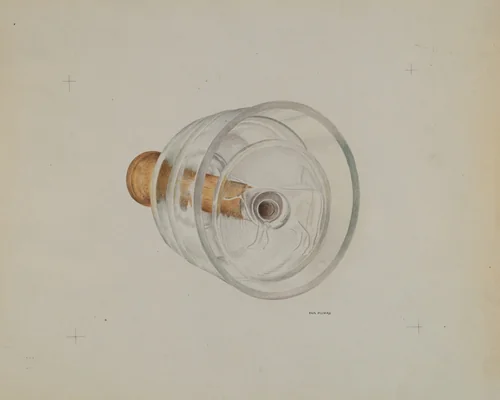
Williams’s contribution to the IAD is characterized by a dedication to faithfully rendering textures, materials, and historical wear. His documented subjects highlight the project's unique scholarly mission: the elevation of the mundane to the status of museum-quality historical artifact. This included practical implements like the crystalline transparency of the Glass Butter Mold and the highly specific structure of the Rolling Pin (Glass). His works capture the material ingenuity required of early American settlers, alongside documentation of domestic artistry, such as the detailed floral patterns visible in his rendering of a Fragment of Comforter.
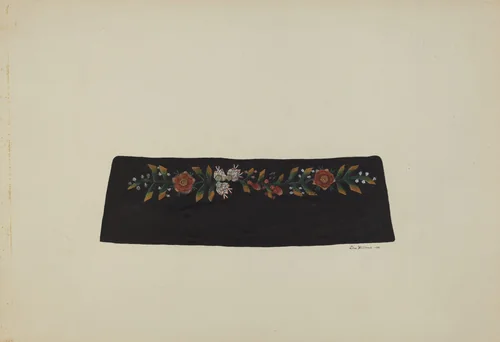
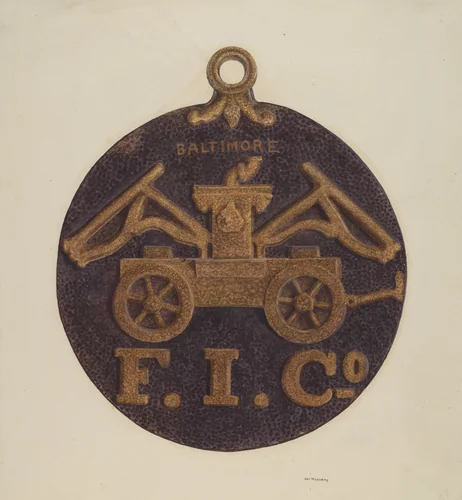
While often considered technical documentation, the resulting watercolors and drawings reveal a unique appreciation for forgotten design aesthetics. Williams’s focus on objects like the ornate Embroidered Leather and the graphic symbolism inherent in the Firemark ensured that these designs, many of which were deteriorating or fragile, would be permanently preserved. These renderings provide valuable insight into historical manufacturing techniques and localized artisan traditions.
Today, the entire Index of American Design collection, including works contributed by Williams, resides in the archives of the National Gallery of Art. Given their origin as government-commissioned documentation, these historical assets are now frequently made available in the public domain. This accessibility allows researchers and enthusiasts to view the full scope of his documentation. Consequently, high-quality prints and downloadable artwork derived from his original 1938 renderings continue to serve as essential resources for the study of American material culture. Williams’s legacy rests not on celebrity, but on his rigorous and enduring contribution to the visual inventory of American history.
Source: Wikipedia · CC BY-SA 4.0