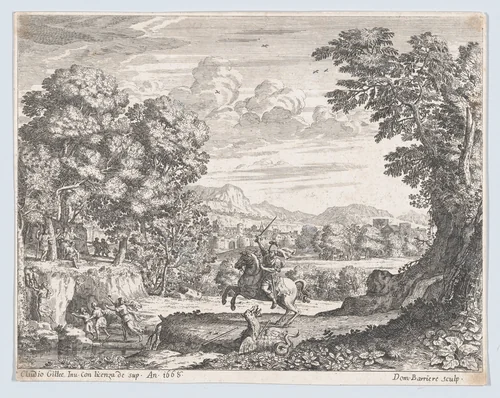
Dominique Barrière
Dominique Barrière (c.1622–1678) was a crucial French painter and engraver whose primary activity took place in Rome during the mid-17th century. While initially trained in painting, Barrière achieved lasting significance as a master of reproductive engraving, creating highly detailed visual records of the city’s architectural evolution, public ceremonies, and spectacular ephemeral events. His work offers one of the most reliable windows into the social and physical landscape of High Baroque Rome.
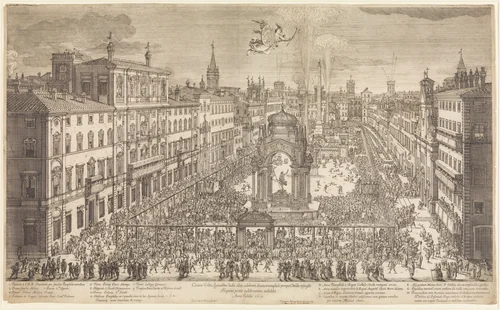
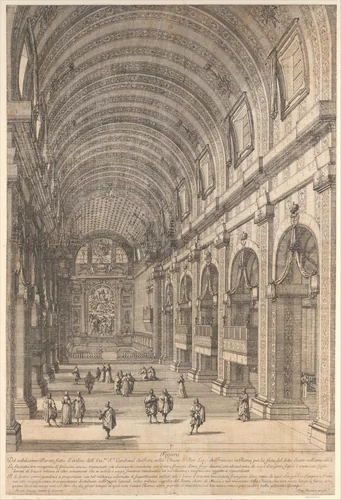
Barrière’s technical precision allowed him to render both permanent structures and complex temporary installations with fidelity. His prints demonstrate a sophisticated understanding of perspective necessary to capture grand urban theater, such as the famous The Feast of the Resurrection in Piazza Navona, Rome (1650). This particular piece documents the elaborate, temporary constructions erected for the Easter celebration, capturing the energy of the crowd alongside meticulous architectural detail. Barrière was adept at securing important patronage, evidenced by his documentation of the Decoration ordered by Cardinal de Retz in the Church of San Luigi, Rome, for the Saint's Feast Day, an essential record of a short-lived but costly artistic commission.
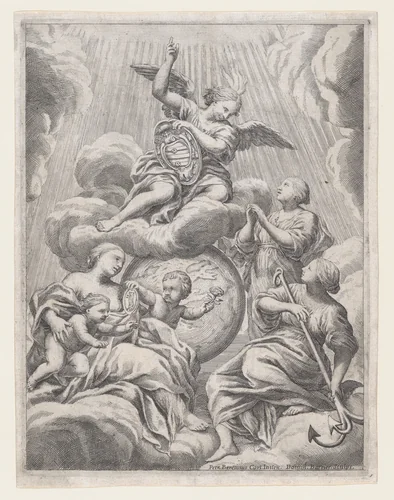
Beyond topographical and ceremonial documentation, his oeuvre included allegorical and mythological subjects. Works like Bellerophon Vanquishing the Chimera and allegories such as Faith, Hope, and Charity confirm his versatility in handling diverse narrative themes popular among Roman collectors. A useful observation about Barrière's career is his focus on the fleeting: his skill lay not just in depicting buildings, but in capturing the immediate, momentary spectacle that defined much of Baroque display.
Today, his contributions are recognized internationally, with his valuable works residing in major collections, including the Metropolitan Museum of Art. The clarity and precision of Dominique Barrière prints ensure their continued utility for historians and researchers. Many of these historically significant engravings are now part of the public domain, allowing access to high-quality prints that retain the original museum-quality detail and offer deep insight into the culture and architecture of 17th-century Italy.
Source: Wikipedia · CC BY-SA 4.0