Dominicus Custos
Dominicus Custos (1560–1612) was a foundational figure in the tradition of Northern European reproductive printmaking during the late sixteenth century. A Flemish artist specializing in copperplate engraving, his career reached its zenith in Prague, where he held the vital position of printer and engraver in the service of Emperor Rudolph II. This appointment placed Custos at the epicenter of a court renowned for its intense patronage of the arts, alchemy, and esoteric scholarship. His primary function was the rigorous and precise translation of sketches and drawings into durable metal plates, ensuring the consistent and widespread dissemination of images throughout the sprawling Habsburg territories.
Custos’s active period, spanning roughly 1579 to 1600, yielded a catalog of approximately fifteen known prints that defined the visual culture of the Rudolfine era. Unlike artists who concentrated on singular oil paintings, Custos excelled in reproducible media, mastering the technical demands of line work required for both delicate religious iconography and the formal strictures of state portraiture. His works range from sacred studies, such as H. Benedikt and Heilige Familie met de heilige Clara van Assisi, to historical and allegorical scenes.
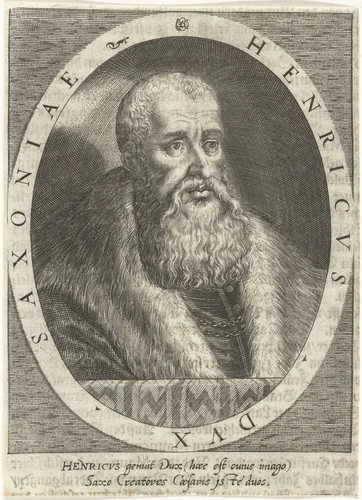
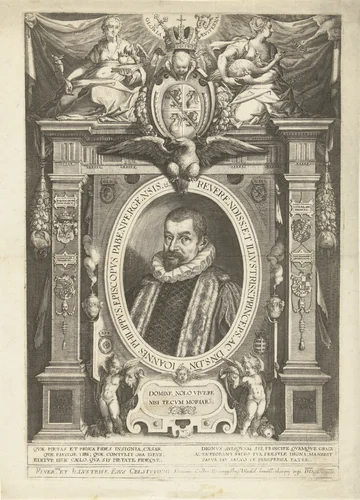
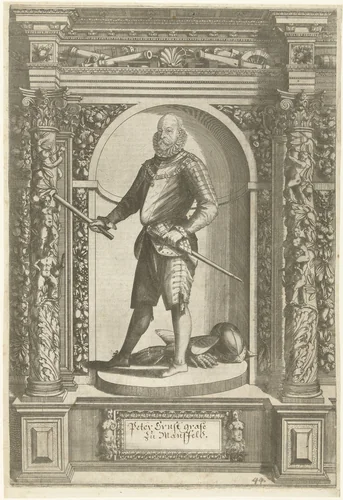
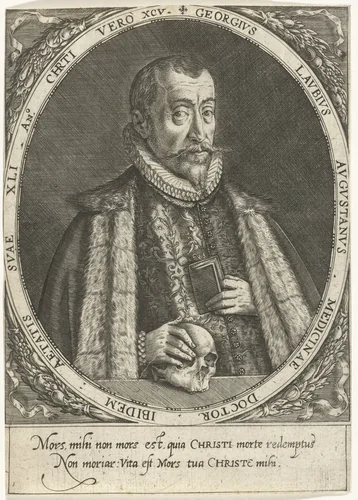
The most enduring aspect of Custos’s output lies in portraiture, providing an essential visual record of the European aristocracy and the political figures of the era. Prints like Portret van Andreas aartshertog van Oostenrijk and Portret van Georg Frederik van Baden demonstrate his remarkable ability to balance technical detail with the psychological requirements of a commissioned likeness. Custos ensured that the power and authority of his sitters were captured with unwavering clarity, a tricky task that demanded both artistic talent and keen political acumen. It is notable, however, that among his output, he produced a print titled H. Dominikus, sharing his own first name, perhaps a subtle acknowledgment of his patron saint or simply a point of personal pride.
Today, examples of Dominicus Custos prints are held in major institutional collections worldwide, including the Rijksmuseum, the Metropolitan Museum of Art, and the National Gallery of Art. Their historical significance remains high, offering insight into the aesthetic tastes of an influential imperial court. Consequently, much of his work is now in the public domain, readily accessible as high-quality prints and downloadable artwork for scholars and enthusiasts alike.
Source: Wikipedia · CC BY-SA 4.0