Domenico Veneziano
Domenico Veneziano was a pivotal and profoundly influential painter of the early Italian Renaissance, active primarily in Perugia and Tuscany between 1435 and 1445. Though often overshadowed by his more prolific contemporaries, Veneziano’s lasting significance rests on his decisive role in introducing the northern Italian, coloristic emphasis of Venetian art to the Florentine tradition of strong draughtsmanship and linear definition. He acted as a vital conduit, integrating advanced atmospheric and light effects into the established Central Italian aesthetic, thereby setting the stage for the innovations of the succeeding Quattrocento masters.
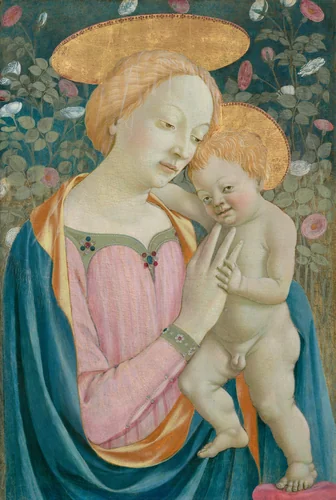
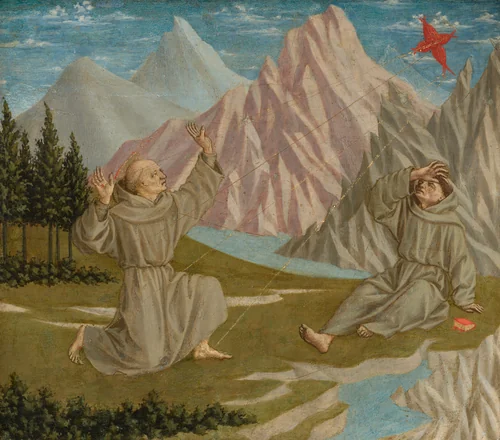
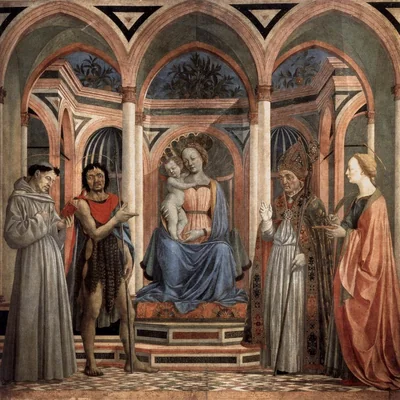
His known surviving corpus, though limited, includes both key panels and revealing preparatory studies, establishing him as a rigorous draftsman committed to volumetric clarity. The devotional work Saint Francis Receiving the Stigmata exemplifies this synthesis, showing a delicate precision in light handling alongside a spiritual gravitas that characterized the best early Renaissance iconography. His Madonna and Child panels further showcase an innovative use of subtle shadow and diffused light to define form, giving the figures an approachable realism sought by private patrons.
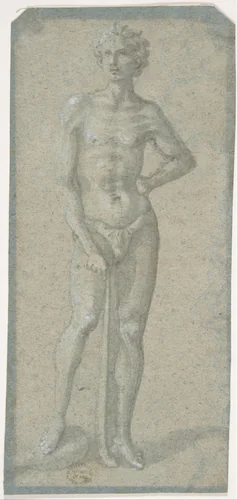
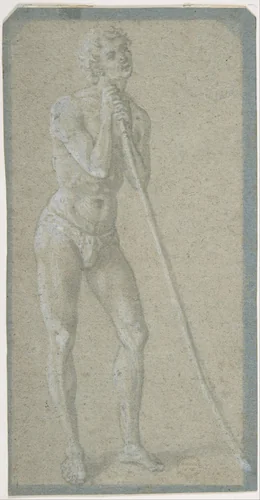
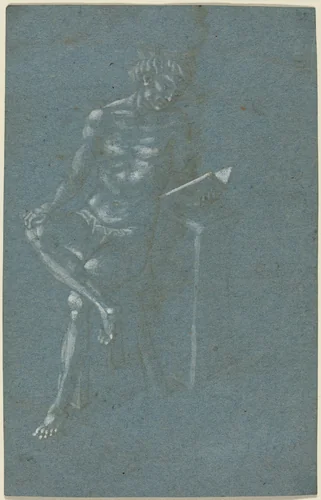
A remarkable window into Veneziano’s working process is provided by the exceptional series of double-sided drawings in major American collections, demonstrating his intensive preparation and study. These sheets, such as Standing Youth Leaning on a Long Staff paired with Seated Man on the reverse, or A Young Man Sitting on a Stool Reading a Book followed by The Fall of Man, reveal an artist deeply focused on optimizing his resources. It is perhaps a subtle testament to the era's material constraints that a master of this caliber would utilize every square inch of paper, sketching religious compositions on the verso of quick life studies. This economical approach underscores the diligence required to achieve the smooth, museum-quality surface finish visible in his surviving paintings.
Despite the brevity of his documented peak period, Veneziano’s impact was disproportionately large. His techniques regarding oil and tempera medium, and his advanced understanding of natural perspective, served as direct inspiration for artists like Piero della Francesca. Scholars interested in the foundational mechanics of the Renaissance often study these essential Domenico Veneziano paintings. Today, the foundational role he played ensures that high-quality prints and downloadable artwork of his key compositions remain essential resources for the study of this critical period in art history.
Source: Wikipedia · CC BY-SA 4.0