Domenico Piola
Domenico Piola stands as the preeminent master of the Genoese Baroque during the second half of the seventeenth century, a period when Genoa’s merchant aristocracy invested heavily in opulent visual declarations of wealth and piety. As the leading artist of his generation, Piola dominated the cultural scene, executing monumental ceiling frescoes across numerous Genoese churches and palaces, while simultaneously fulfilling a steady stream of canvas paintings for private collectors. His practice fundamentally defined the interior aesthetic of the Republic, blending dynamic Baroque compositional energy with a light, decorative sensibility characteristic of the local school.
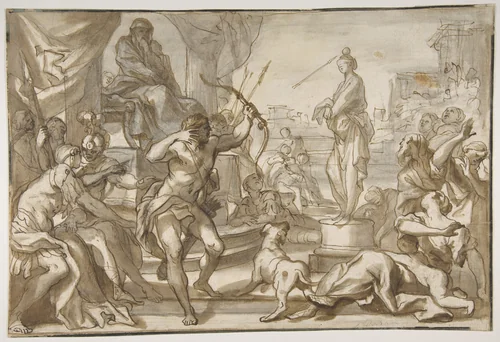
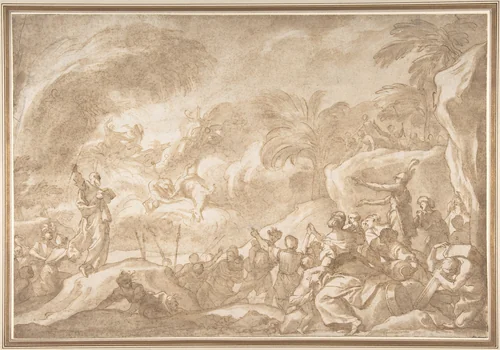
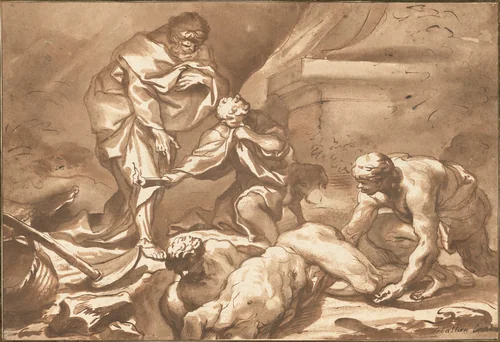
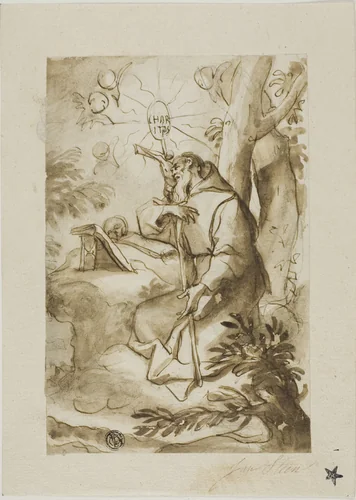
Piola’s extensive productivity was sustained by a uniquely successful institutional structure: the casa-bottega, or family studio. This highly organized, prolific enterprise frequently incorporated specialized outside collaborators, enabling the artist to manage vast, concurrent commissions while maintaining remarkable stylistic consistency. Maintaining such stylistic uniformity and quality control across a high volume of output suggests a sophisticated level of project management, far beyond the image of the solitary genius often associated with the era. His mastery extended across media; while renowned for fresco cycles, his skill in preparatory drawing reveals a keen intelligence in narrative construction, evident in complex works such as Moses and the Chosen People Behold the Drowning of the Egyptian Army in the Red Sea and the intriguing academic study Male Figure with a Bow and Arrow Shooting at a Statue of a Woman with a Ball on her Head.
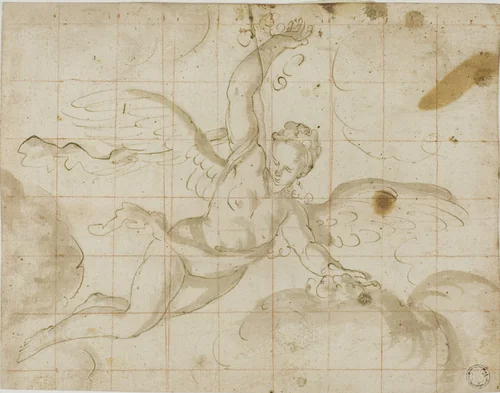
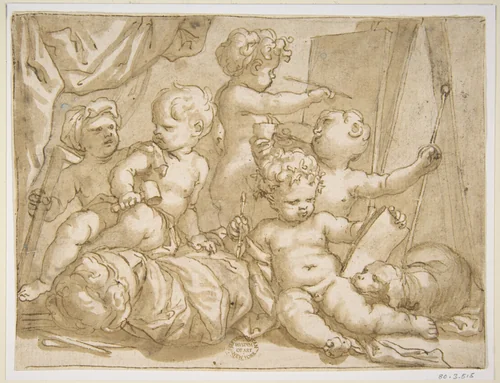
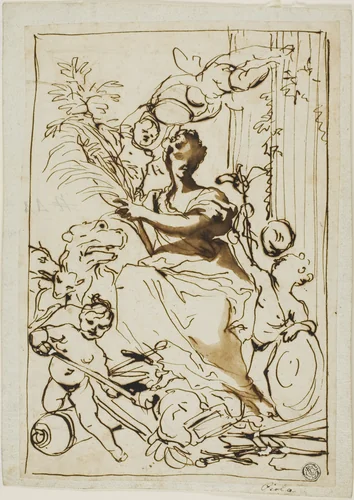
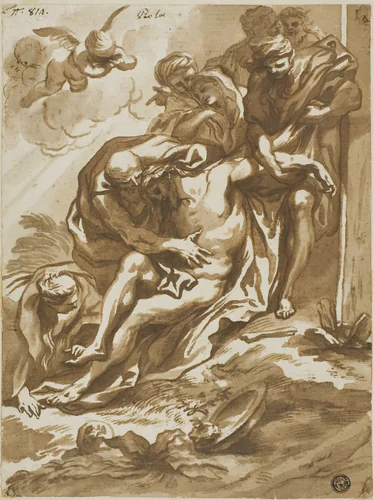
The enduring appeal of Domenico Piola paintings and preparatory sketches is attested by their presence in prestigious institutions globally, including the Metropolitan Museum of Art, the National Gallery of Art, and the Art Institute of Chicago. While the scale and scope of his work meant that some pieces remained inaccessible, the advent of digital collections has increased visibility. Today, many of his key drawings, such as Iris and Putti with the Attributes of the Arts, are available as downloadable artwork for high-quality prints, ensuring that the legacy of this influential Genoese master remains widely appreciated by scholars and enthusiasts alike.
Source: Wikipedia · CC BY-SA 4.0