Domenico Morelli
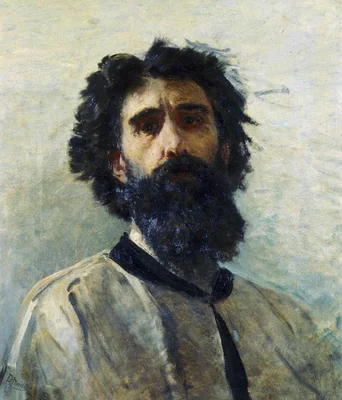
Domenico Morelli (1800-1890) stands as one of the most profoundly influential figures in Italian visual culture during the second half of the 19th century. Primarily recognized for his substantial historical and religious canvases, Morelli’s significance extends far beyond his immediate production, impacting the subsequent evolution of Italian modernism.
His remarkable career was defined by a productive duality: for many years, he served as the powerful director of the Accademia di Belle Arti in Naples, upholding institutional standards. Simultaneously, however, he championed a restless defiance against entrenched artistic conventions. This inherent rebelliousness fueled the stylistic evolution evident in his work, moving dynamically from the heightened emotion of Romanticism toward the evocative, interior narratives of early Symbolism. His exploration of passionate, often overtly patriotic, subjects solidified his role as a leading figure ushering in modern aesthetic sensibilities in Italy. As an educator, he mentored a significant generation of artists, including Vincenzo Petrocelli, Ulisse Caputo, and Anselmo Gianfanti, thereby shaping the Neapolitan school for decades.
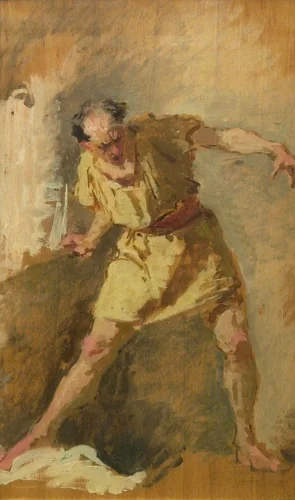
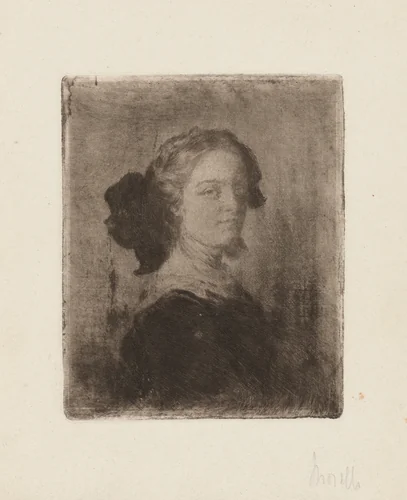
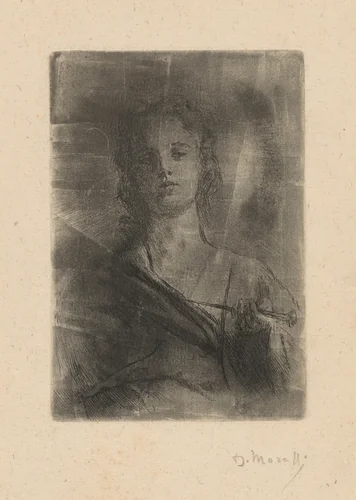
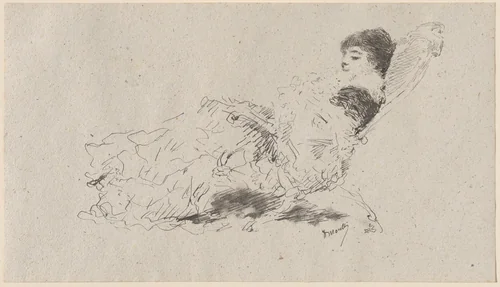
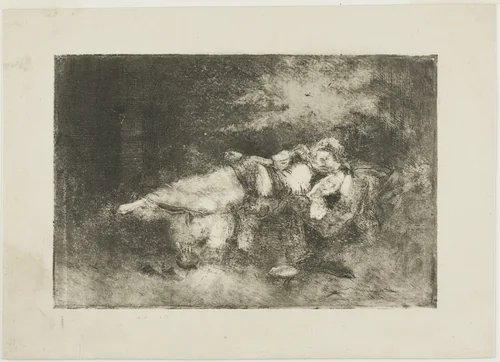
While renowned for large-scale Domenico Morelli paintings, his oeuvre demonstrates versatility across media, encompassing detailed drawings and sophisticated printmaking. This technical mastery is evident in studies for his major compositions, such as The Gladiator, and in refined character observations like A Young Woman with a Bow in Her Hair. Other compelling works, including the sophisticated Personification of Engraving (Allegoria dell'incisione) and the intimate The Artist's Daughter Eleonora Reclining on a Chaise-Longue, demonstrate his fluid command over form and subject matter.
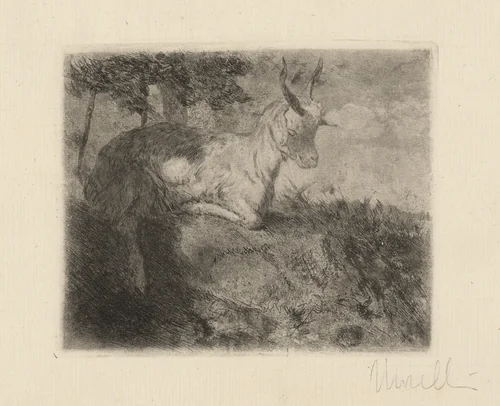
Morelli’s legacy is preserved in major international repositories, notably the Art Institute of Chicago and the National Gallery of Art. It is telling that an artist who spent decades directing the nation’s foremost institutions felt compelled to constantly challenge them; this tension resulted in works of lasting dramatic power. Today, a growing selection of Domenico Morelli prints and studies, like The Little Goat (La capretta), are becoming available within the public domain, offering audiences the opportunity to access high-quality prints reflecting his complex artistic output.
Source: Wikipedia · CC BY-SA 4.0