Domenico Mondo
Domenico Mondo (active c. 1690-1760) holds an important transitional position in 18th-century Italian art, navigating the shift from the dramatic visual rhetoric of the late Baroque to the measured precision of the nascent Neoclassical movement. His importance is validated by the institutional history of his surviving corpus, with Domenico Mondo paintings and preparatory drawings housed in such prestigious collections as the Metropolitan Museum of Art, the Art Institute of Chicago, and the Rijksmuseum.
Mondo's career reached its zenith through his association with the Bourbon court’s most ambitious architectural endeavor: the monumental Royal Palace of Caserta. The palace’s principal architect, Luigi Vanvitelli, personally selected Mondo to decorate the Salone degli Alabardieri (Hall of the Halberdiers). This commission demanded not only grand scale and technical finesse but also the ability to integrate painted illusion seamlessly within the structure's overwhelming classical symmetry, a task requiring great versatility.
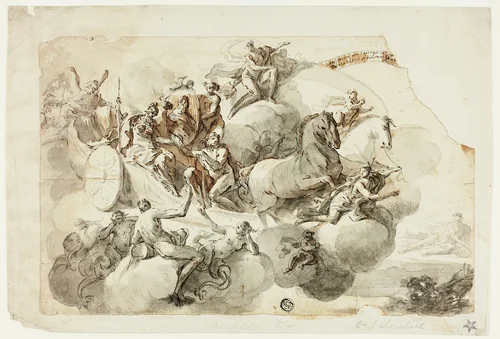
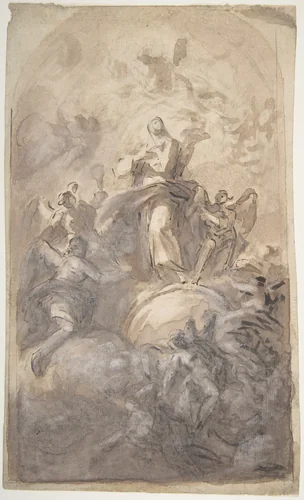
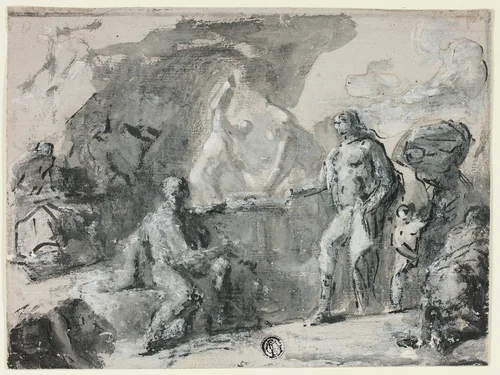
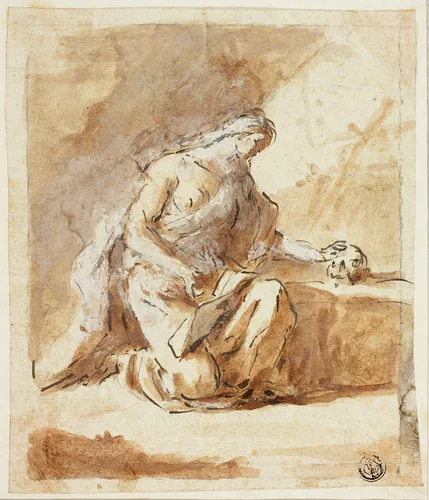
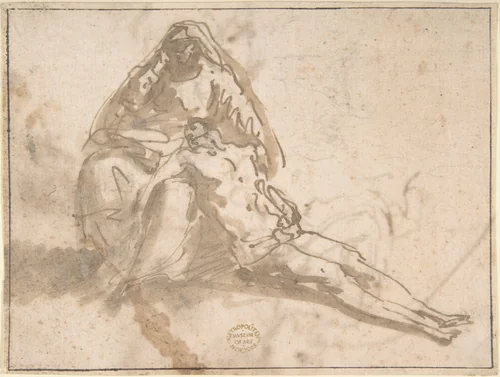
His surviving works demonstrate a broad command of subject matter, ranging from the mythological and allegorical, such as the dynamic Forge of Vulcan, to profound religious narratives like David and Abigail and The Virgin Immaculate in Glory. Mondo excelled particularly in grand narrative compositions, often employing the vigorous movement and high emotion characteristic of the preceding Baroque era, exemplified by the masterful Apotheosis of a Hero.
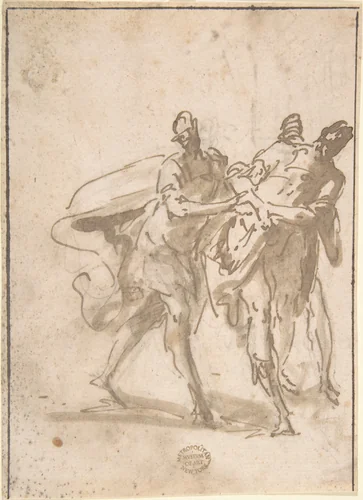
Yet, the artist's longevity meant he adapted keenly to changing aesthetic demands. His meticulous attention to form and line, vital components of the emerging Neoclassical sensibility, is revealed in his detailed draftsmanship. Intriguingly, Mondo seems to have prioritized efficiency, evidenced by his preparatory sketches; one such example is Sketch of a Part of a Leg and a Hand found on the reverse (verso) of the religious study The Virgin Immaculate in Glory, showing a delightful commitment to combining the spiritual duties of religious painting with the practical demands of academic anatomical study.
Mondo’s legacy is defined by his ability to maintain relevance across seven decades of intense stylistic change. Today, scholars utilize his extensive surviving drawings and high-quality prints of his finished canvases to understand the shift in academic practice during the mid-18th century. Many of these historically significant works are now available through the public domain, ensuring continued accessibility for study and appreciation.