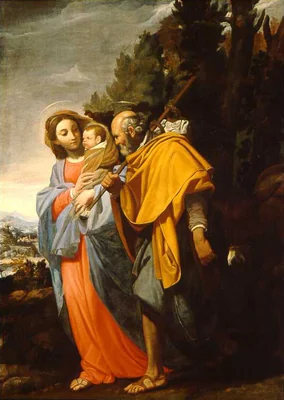
Domenico Fiasella
Domenico Fiasella, often known by his cognomen Il Sarzana, was an Italian painter whose lengthy and productive career spanned the critical artistic transition into the high Baroque. Though born in Sarzana, near Genoa, his artistic gravity centered firmly on the Ligurian capital. Active for approximately seventy years, from the late 16th through the 17th century, Fiasella established a dominant local practice that ensured the continuation of rigorous classical training within the rapidly changing environment of Genoese art.
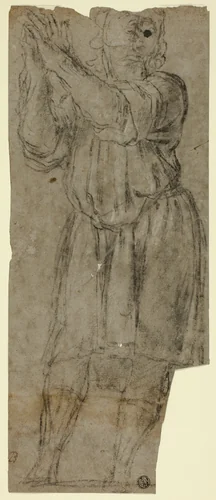
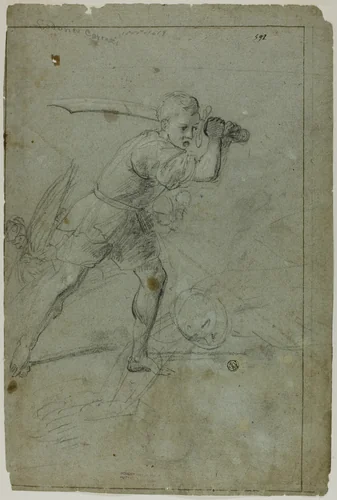
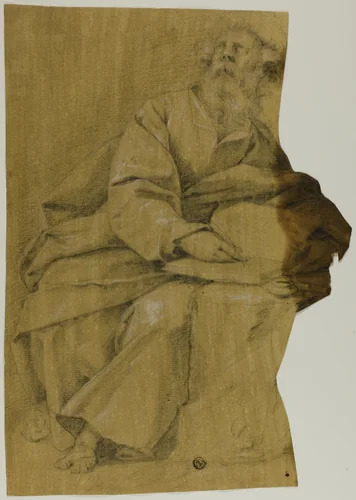
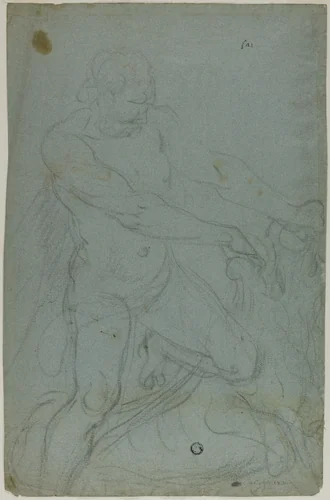
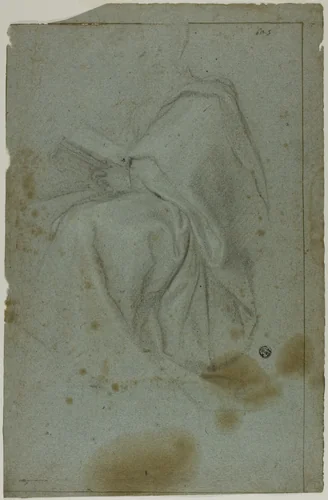
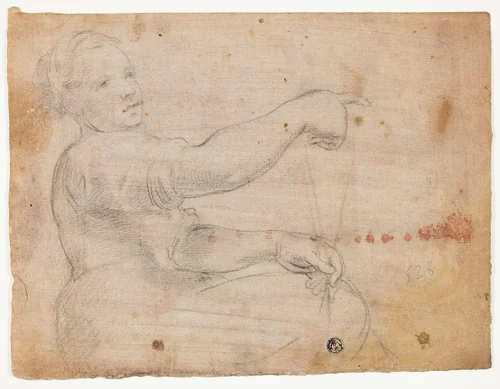
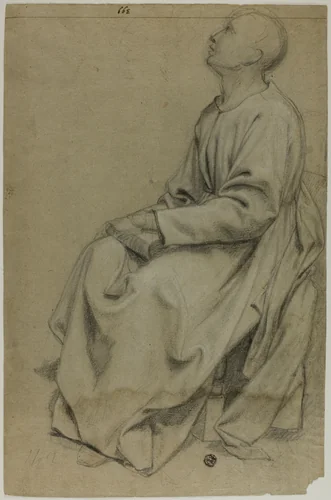
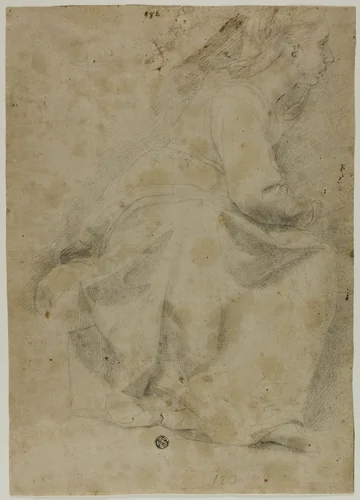
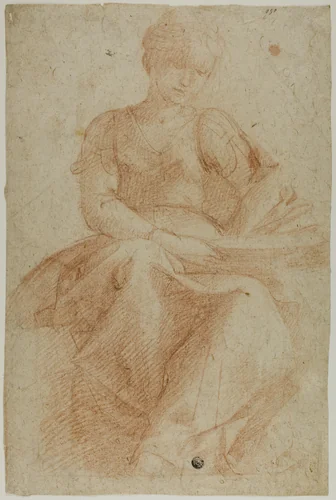
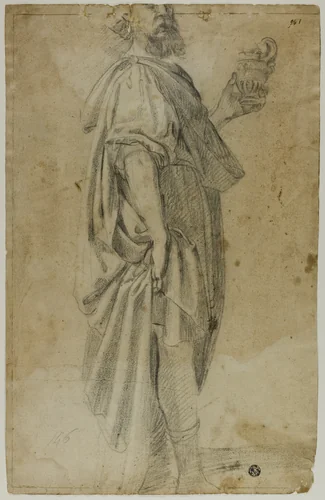
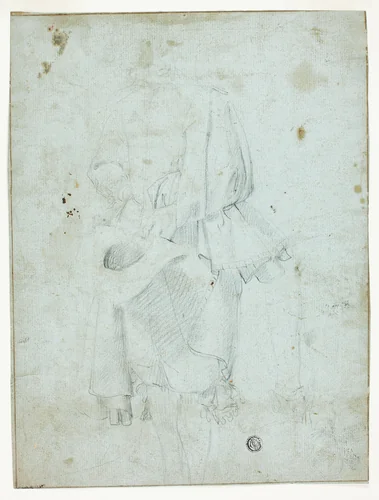
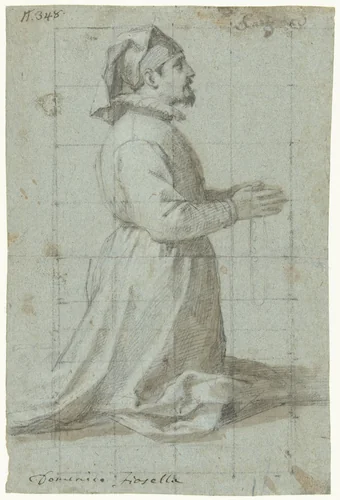
Fiasella’s substantial output demonstrates a profound mastery of the dramatic visual storytelling and emotional depth characteristic of the Baroque. While surviving Domenico Fiasella paintings focused primarily on large-scale religious commissions, it is through his preparatory studies, particularly the thirteen known drawings in major collections, that his technical rigor is most evident. These sheets reveal the deep academic discipline he employed to execute complex narratives. For example, works such as Samson and the Lion (recto) are often paired with essential, highly resolved anatomical explorations like Virgin Mary with Right Arm Extended (verso), ensuring that even minor gestures possess substantial weight and gravity. His ability to render complex forms, whether the dynamic action required for David Beheading Goliath or the focused contemplation evident in Evangelist Writing at Desk, underscores his value as a draftsman. The paired study of Seated Draped Male Figure with Book reveals his disciplined focus on drapery and pose essential for his crowded compositions.
His influence extended broadly across the Genoese school, maintaining a commanding relevance even as styles rapidly evolved around him. Interestingly, his enduring adoption of the nickname Il Sarzana seems less a reflection of humble origins and more a statement of unwavering provincial pride he carried throughout his illustrious career. Today, Fiasella’s meticulous preparatory drawings are preserved in major international repositories, including the Rijksmuseum and the Art Institute of Chicago, testifying to the enduring museum-quality of his draftsmanship. Many of these historically significant works are now available in the public domain, offering the opportunity for researchers and enthusiasts to obtain high-quality prints for study and appreciation.
Source: Wikipedia · CC BY-SA 4.0