Domenico del Barbiere
Domenico del Barbiere (c. 1475-1540), known variously throughout his career as Domenico Fiorentino or Dominique Florentin, was a significant Florentine artist whose printmaking output defined a critical moment during the late Renaissance. While biographical details remain scarce concerning his earliest activities, his substantial legacy is preserved through the exacting detail and ambitious scale of his surviving graphic works. His contributions, though limited to approximately eleven known prints, hold prominent places in major international collections, including the Metropolitan Museum of Art, the National Gallery of Art, and the Cleveland Museum of Art.
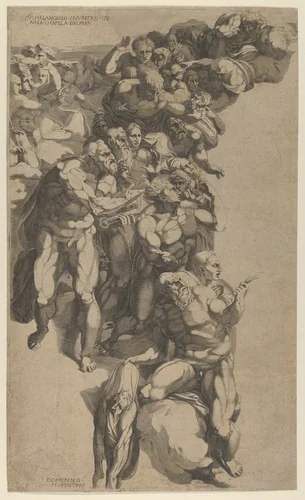
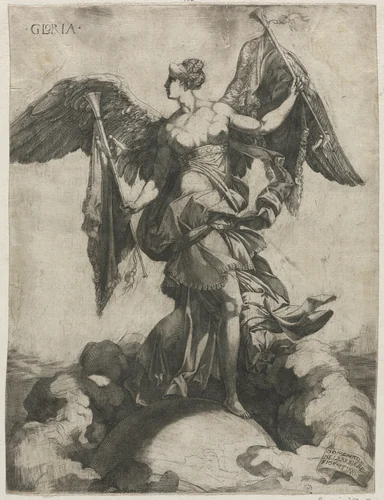
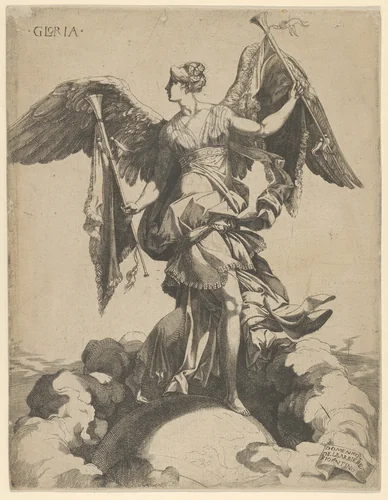
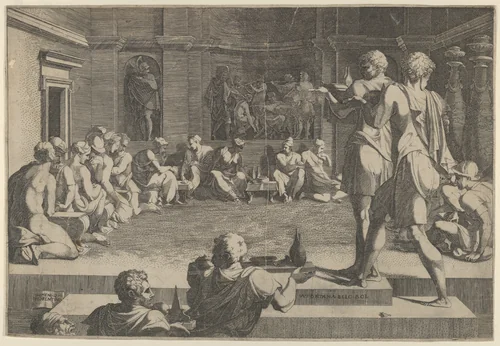
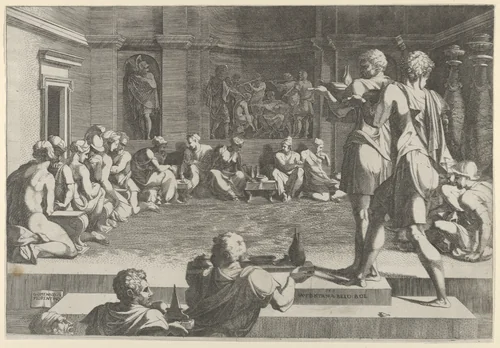
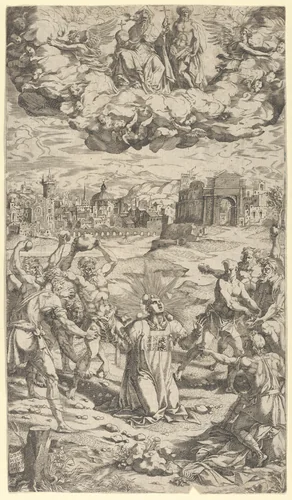
Del Barbiere specialized in complex, figure-laden compositions that often explored theological and mythological themes with anatomical precision and dramatic intensity. Pieces like Group from Last Judgment, St. Bartholomew, St. Peter, and other Apostles and Gloria demonstrate his mastery of rendering dynamic human forms in celestial or fraught psychological states. His works possess a distinctive visual signature: a blend of high Florentine compositional rigor with the expressive energy then emerging in other European graphic centers.
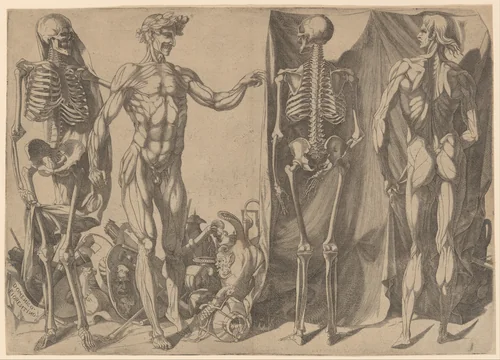
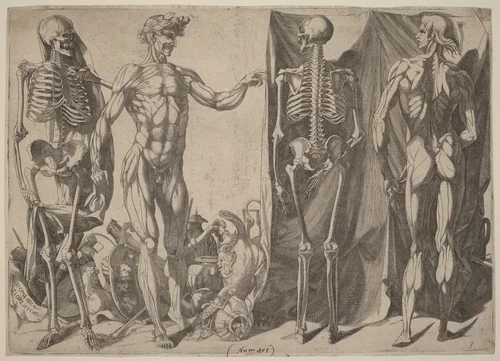
A fascinating element of his repertoire is the unflinching confrontation with mortality and the human form, exemplified by Two Flayed Men and Their Skeletons. This print, likely serving didactic or academic purposes, showcases a deep engagement with anatomical study, reflecting the scientific curiosity that permeated the period's artistic practice. It is an image that is perhaps less suitable for contemporary high-quality prints but speaks volumes about the early modern intersection of art and dissection.
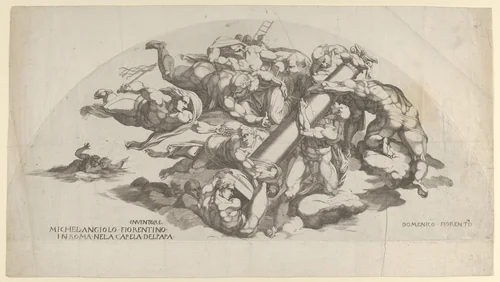
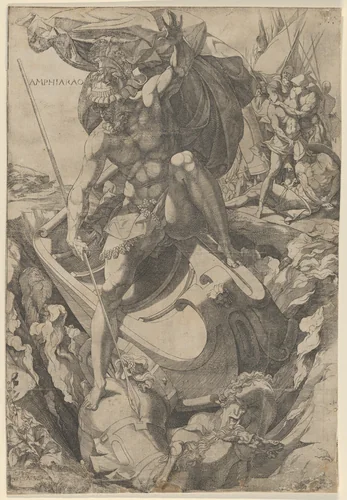
Del Barbiere’s known active period spans the early 16th century, placing him directly amid the dissemination of Italianate styles northward. The sheer density and technical complexity required to produce engravings such as Amphiaraus hint at a highly skilled professional operating within sophisticated artistic networks. Today, the lasting quality of Domenico del Barbiere prints ensures their continued study. Given their historical importance and inclusion in major institutions, many of these museum-quality reproductions and downloadable artwork are now available for scholarly access or general appreciation through public domain initiatives, ensuring his subtle but firm place in the history of Renaissance graphic art endures.
Source: Wikipedia · CC BY-SA 4.0