Domenico Campagnola
Domenico Campagnola (active 1500-1517) occupies a pivotal, if sometimes understated, position within the artistic lineage of the Venetian Renaissance. While cataloged as a proficient Italian painter and printmaker skilled in both engraving and woodcut, his profound historical influence rests almost entirely upon his pioneering landscape drawings. Campagnola was instrumental in transforming the function of the graphic sheet from a mere preparatory study into a self-sufficient work of art, effectively inaugurating the independent landscape genre in Northern Italy.
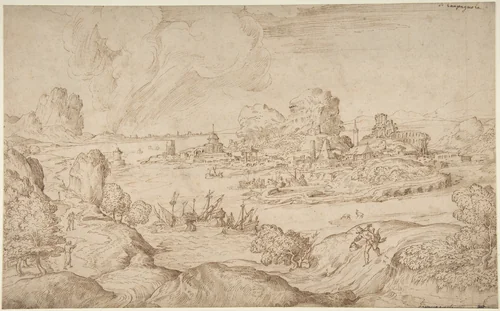
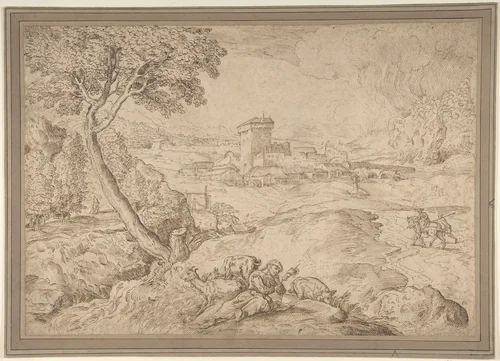
His highly finished drawings, often executed in deft pen and ink, display an astonishing technical confidence. Works such as Imaginary Coastal Landscape with Ruins move far beyond simple topography, employing complex, vibrant lines to capture atmosphere and dramatic lighting, a technique that would strongly influence succeeding generations of graphic artists. He treated the wilderness and classical ruins not as stage scenery for mythological dramas, but as the subject itself, creating deeply textured, visionary compositions that merged observational study with sheer fantasy.
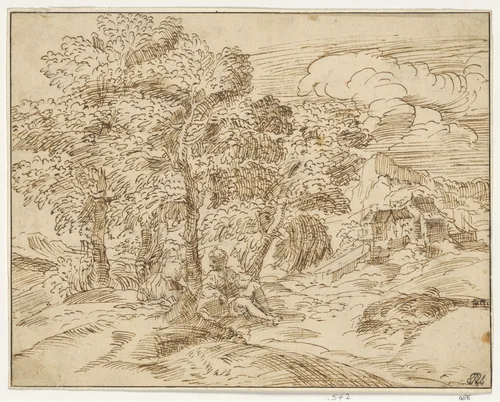
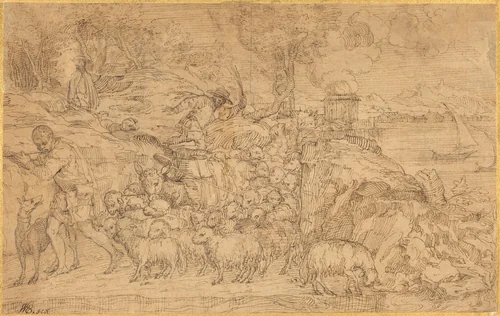
The artist’s sustained focus on the environment meant that the human element was typically small, almost incidental; figures, such as those in Landscape with Two Seated Figures or Landscape with an Old Woman Holding a Spindle, are secondary anchors used primarily to establish scale. It is a subtle observation that Campagnola clearly understood the drama of nature required no supporting narrative, which perhaps explains why his inventive drawings have retained far greater critical weight than his modest output of Domenico Campagnola paintings.
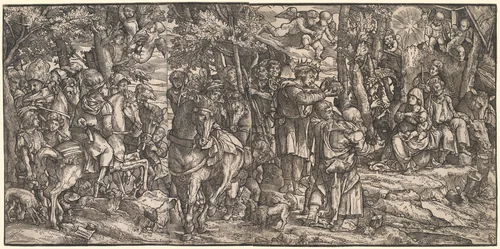
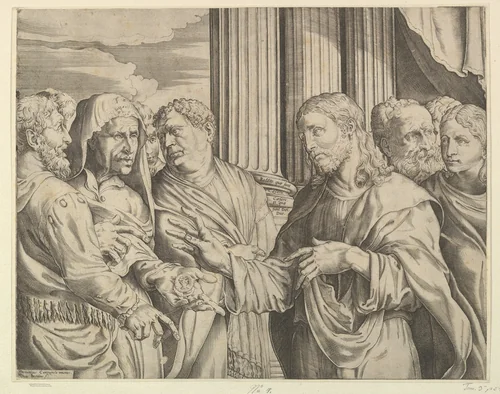
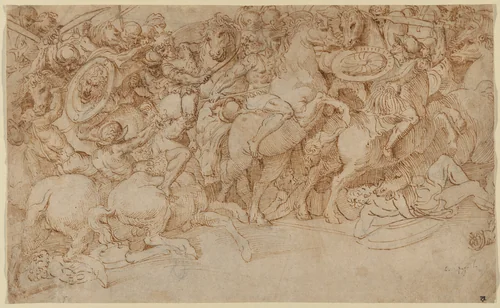
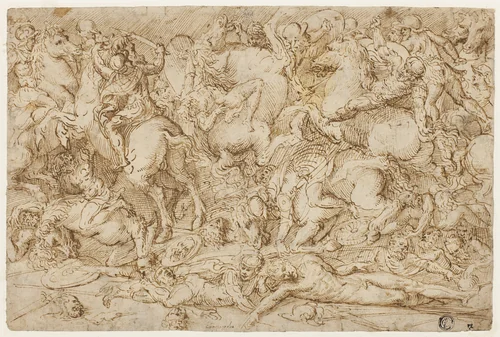
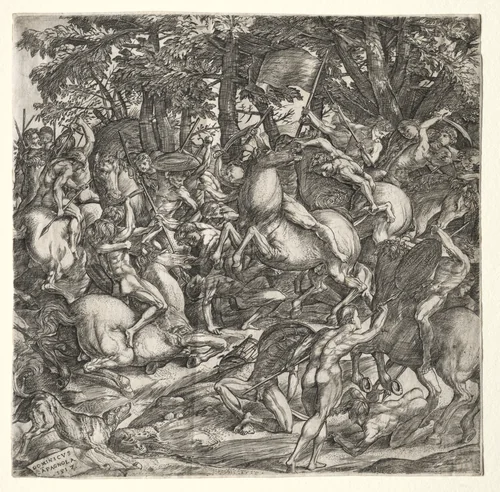
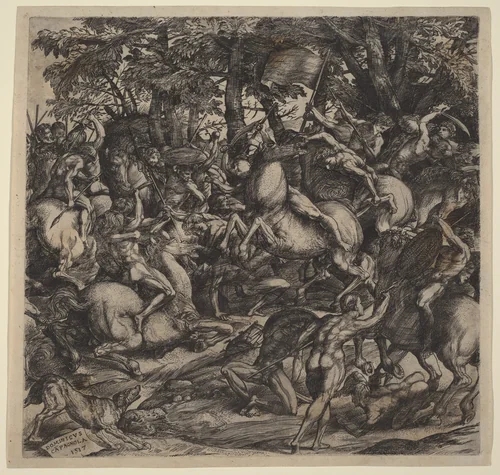
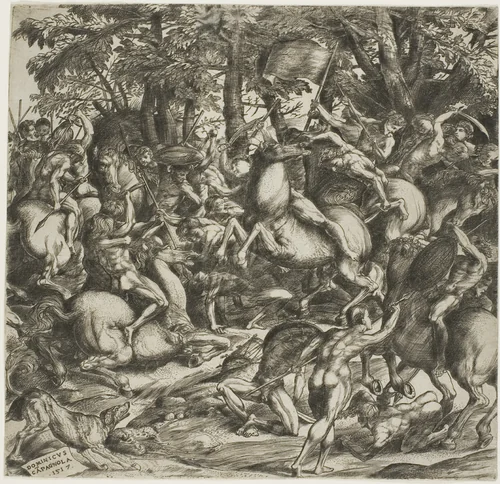
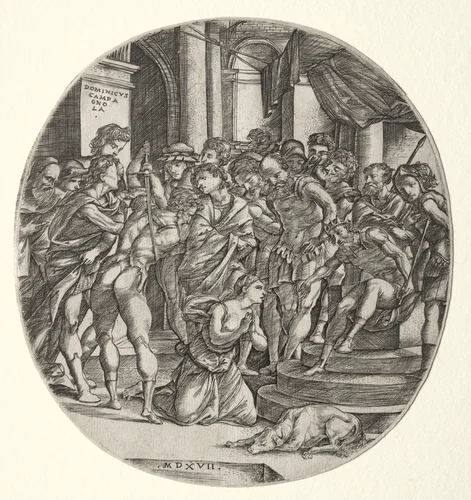
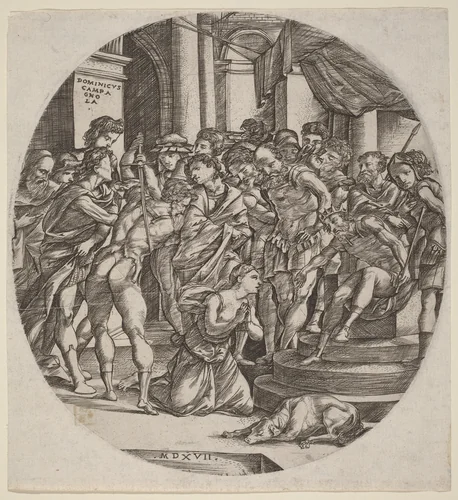
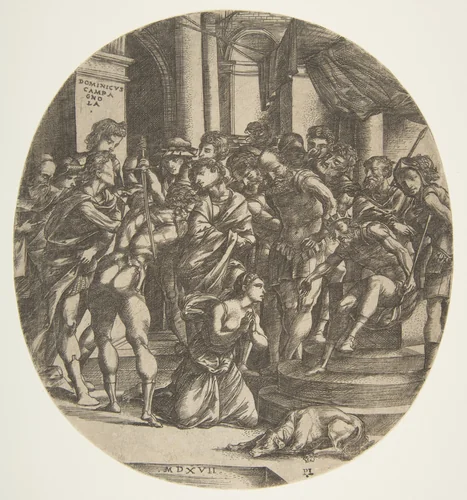
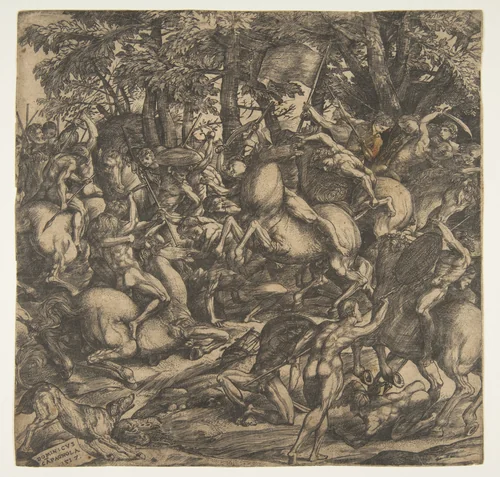
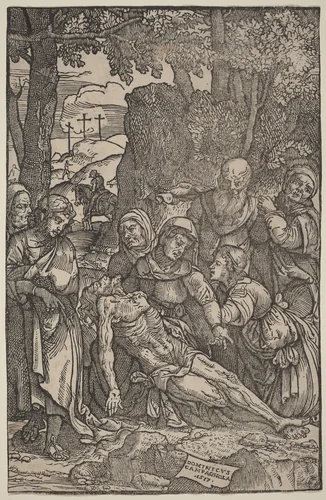
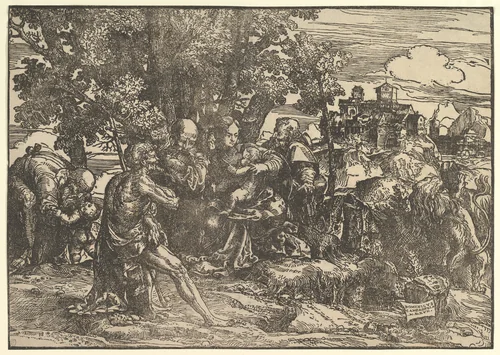
Campagnola’s active period spanned less than two decades, yet his output included at least nine significant drawings and six recorded Domenico Campagnola prints. Today, his works are considered museum-quality cornerstones for understanding early sixteenth-century Venetian draftsmanship and are proudly held in prestigious institutions, including the Art Institute of Chicago, the Cleveland Museum of Art, and the Metropolitan Museum of Art. Because many of these historic images are now in the public domain, art enthusiasts can easily access high-quality prints and downloadable artwork that preserve his influential early experiments with environmental depth and detail.
Source: Wikipedia · CC BY-SA 4.0