Dirk Maas
Dirk Maas, active between 1666 and 1710, was a specialist Dutch Golden Age landscape painter whose surviving corpus reveals a profound focus on military and equestrian subjects. While the designation “landscape painter” is technically accurate, Maas distinguished himself by incorporating highly detailed, kinetic figures into his compositions, shifting the focus from idealized scenery to dramatic action.
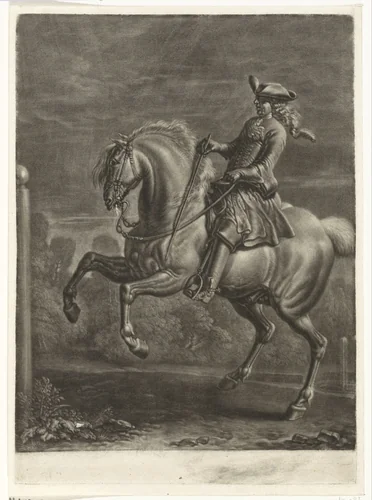
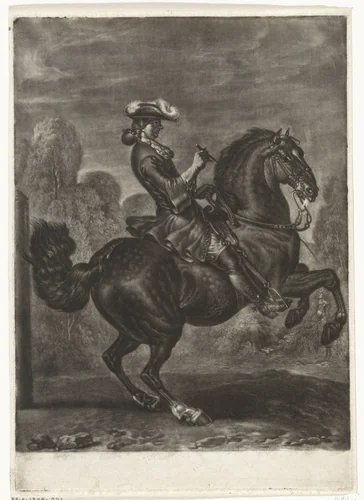
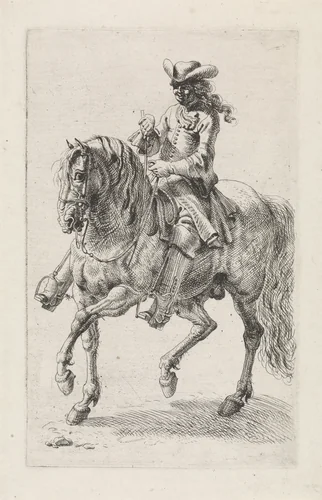
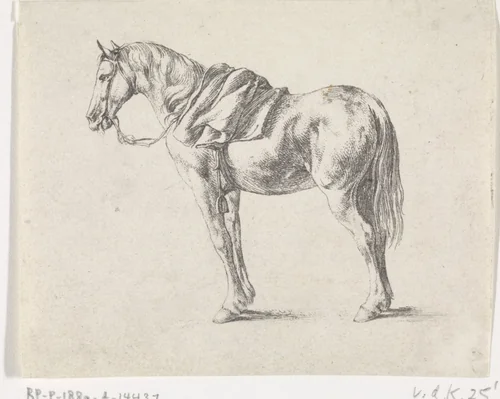
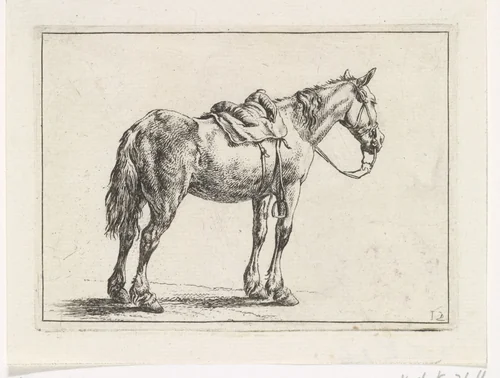
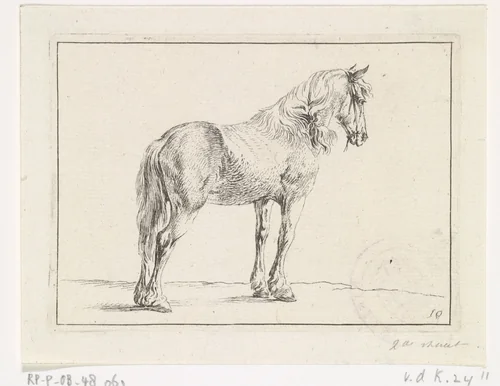
Maas’s technique is predominantly known through his graphic output, with thirteen high-quality prints and two drawings cataloged alongside a smaller number of Dirk Maas paintings. This preference for etching and engraving indicates he was acutely aware of the growing market for reproducible, narrative art in the late seventeenth century. His facility with draftsmanship is powerfully evident in studies of anatomy and movement, such as Steigerend paard and the striking reversal, Zwart steigerend paard. These works showcase the controlled musculature and dynamic tension of the domesticated horse, a recurring motif often studied in isolation before integration into broader historical scenes.
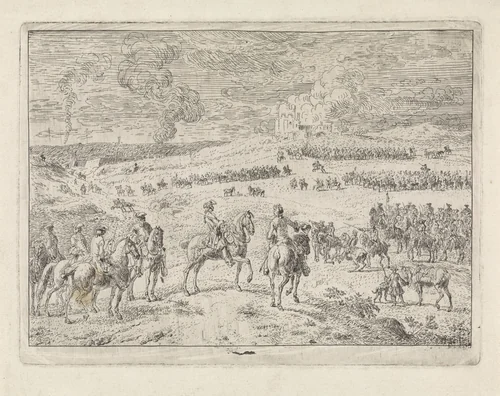
Beyond genre studies, Maas also functioned as a pictorial chronicler, documenting significant political and military milestones. His celebrated depiction of the battle between William III and James II, Willem III bij de slag aan de Boyne, 1690, is a definitive example of historical narrative translated into potent graphic art. It captures the scale and chaotic energy of the conflict, elevating his work beyond simple documentation into serious contemporary history painting.
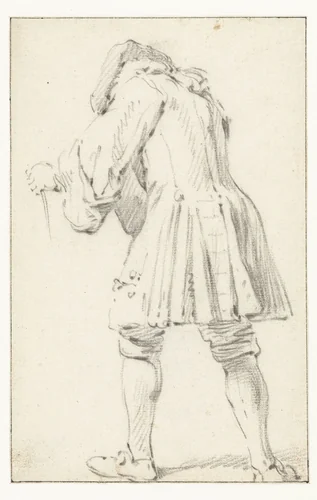
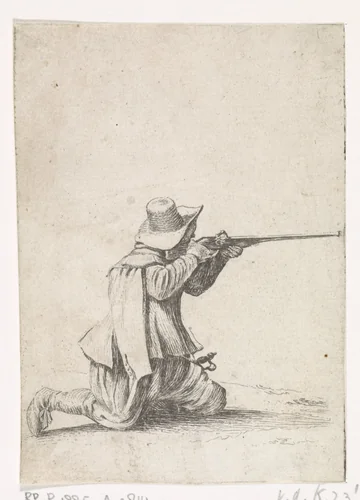
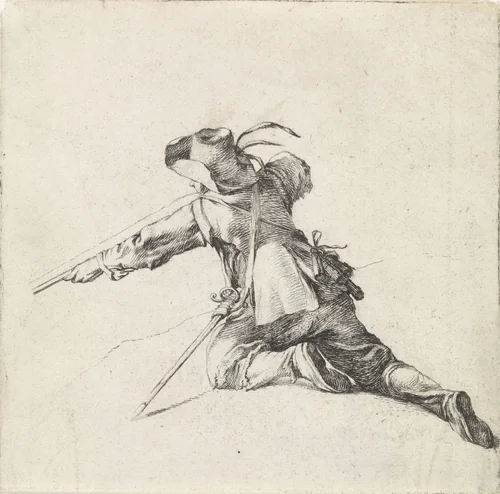
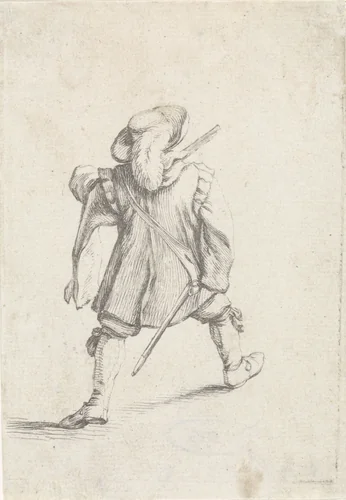
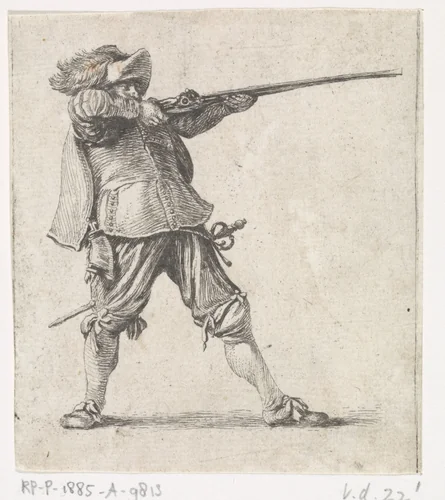
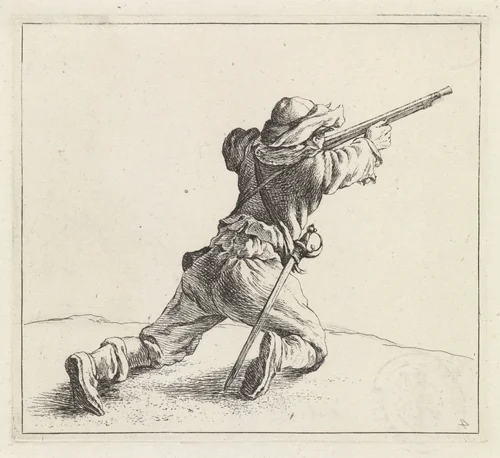
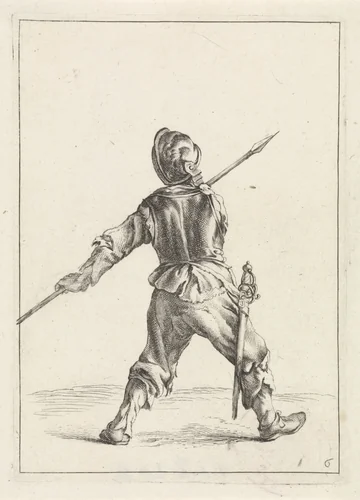
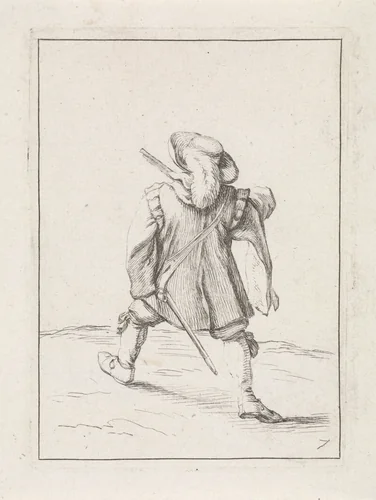
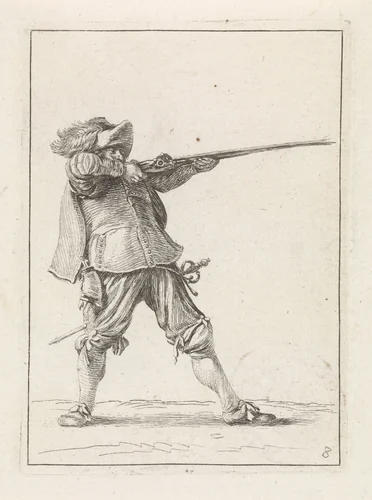
Maas seems to have possessed an almost forensic interest in the logistics of war, exemplified not just by grand battle scenes but also by detailed observation of the common soldier, such as the focused study Standing Soldier, Seen from Behind. This attention to the essential operational elements, coupled with his dramatic staging, ensures his enduring appeal. His original works reside in prestigious collections, including the Rijksmuseum. Today, his detailed imagery is increasingly accessible; much of his work is in the public domain, allowing viewers globally to appreciate museum-quality composition and line work.
Source: Wikipedia · CC BY-SA 4.0