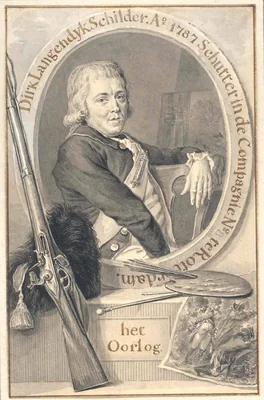
Dirk Langendijk
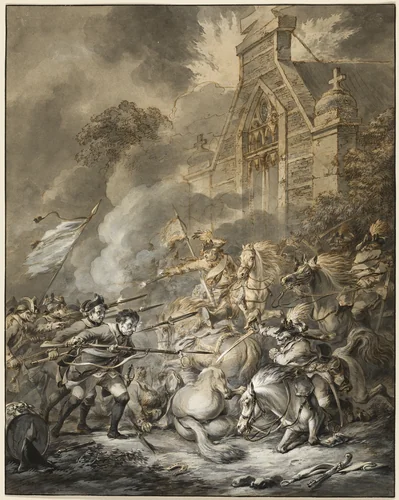
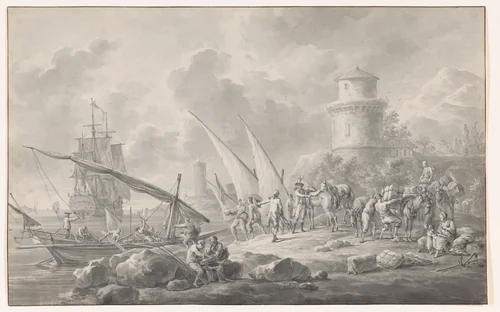
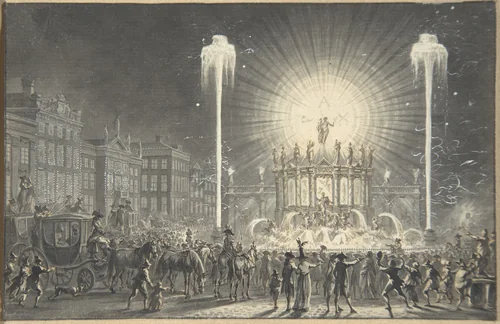
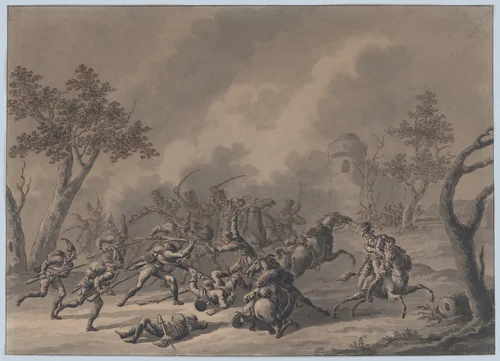
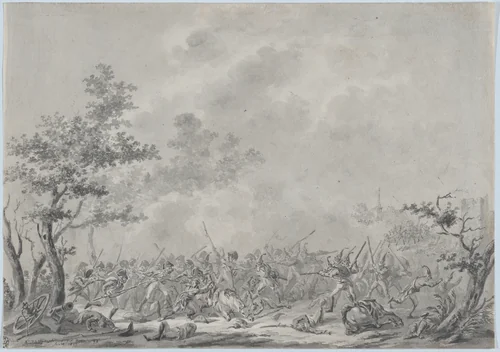
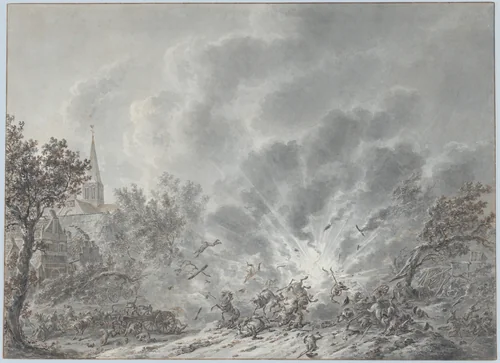
Dirk Langendijk, a highly regarded Dutch draughtsman, painter, and etcher, holds a unique position as one of the most immediate visual chroniclers of late 18th-century European conflict. Active primarily between the Dutch Patriottentijd and the subsequent French Revolutionary and Napoleonic Wars, Langendijk specialized in capturing the precise movements and visceral drama of military life, both on land and at sea. His prolific output of drawings and prints established him not merely as an illustrator, but as a crucial historical documentarian of a turbulent era.
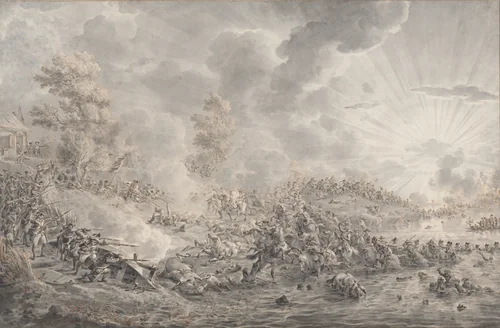
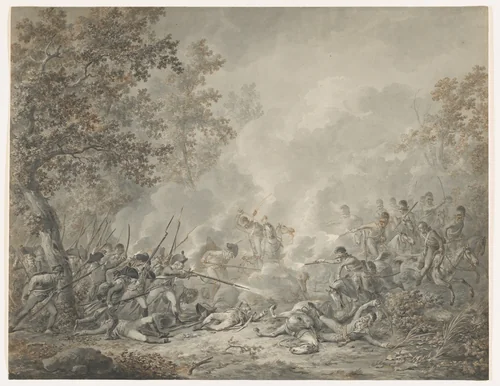
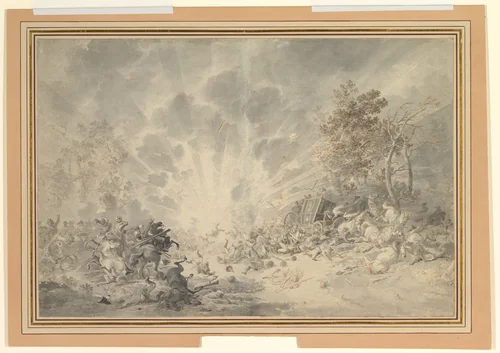
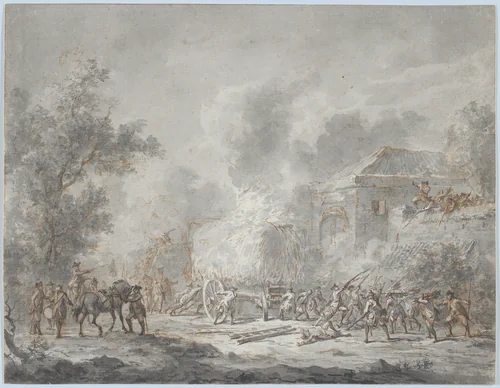
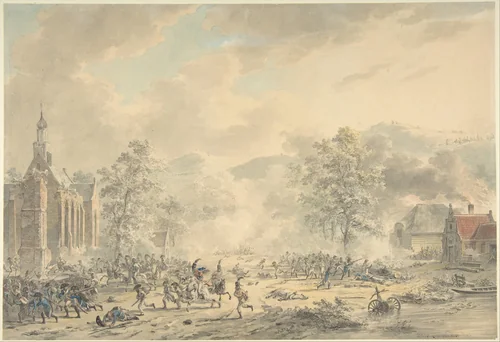
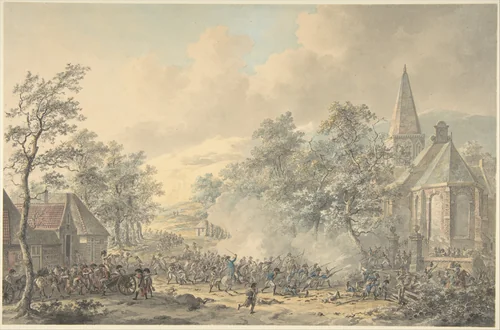
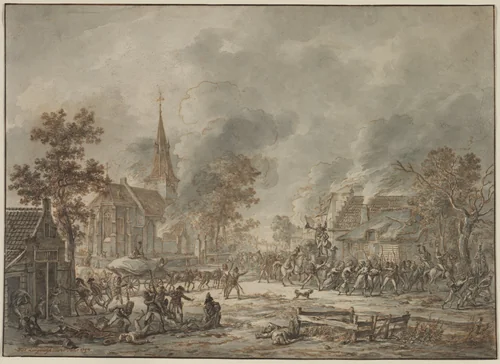
Langendijk’s strength lay in his ability to translate the chaotic energy of combat into highly structured compositions. His mastery of detail is evident across his oeuvre, whether depicting cavalry in motion, the confusion of infantry maneuvers, or the dense rigging and cannon smoke of naval encounters. Works such as Battle by a River showcase his dynamic use of line and shadow to convey the urgency and scale of war, placing him firmly in the tradition of Dutch masters concerned with historical narrative.
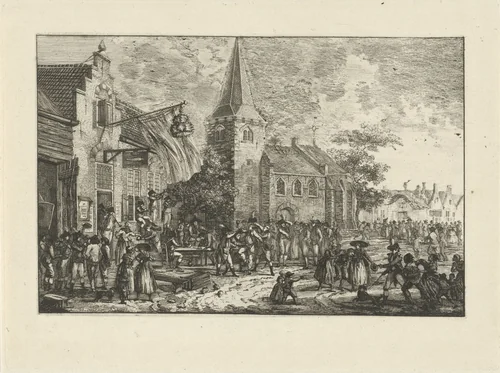
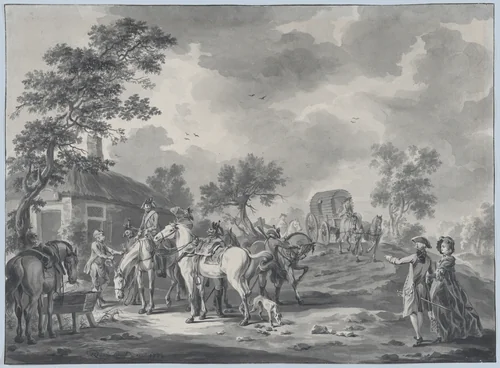
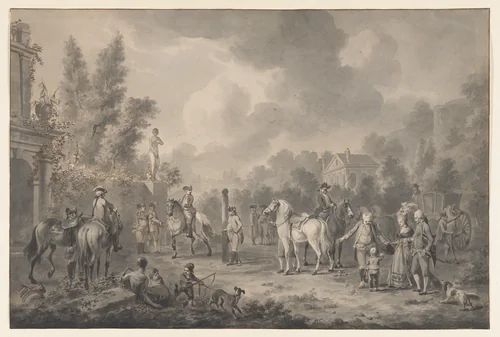
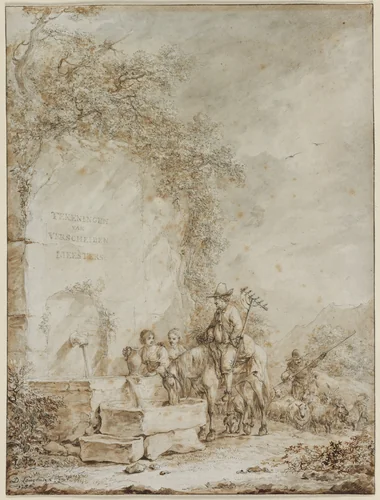
While celebrated for the fury in his battle scenes, Langendijk also possessed a keen eye for genre subjects. The artist who so convincingly rendered the noise and smoke of combat was also responsible for the quiet domesticity of scenes like A Riding School with a Visiting Family or the casual grouping depicted in Figuren bij een herberg. This stylistic versatility speaks less to a divided talent and more to a comprehensive understanding of Dutch society, capturing both its moments of high political drama and everyday routine. This duality lends his work a richness often overlooked by those who focus solely on the martial elements.
Today, Langendijk’s rigorous graphic output continues to be a vital resource for military historians and collectors. His drawings, etchings, and paintings, many of which are considered museum-quality works, are held in prestigious international institutions, including the Art Institute of Chicago, the National Gallery of Art, and the Cleveland Museum of Art. Because of their enduring significance, many of the detailed studies and high-quality prints derived from his originals are now available in the public domain, providing royalty-free access to the visual history he so meticulously recorded.
Source: Wikipedia · CC BY-SA 4.0