Dirck Hals
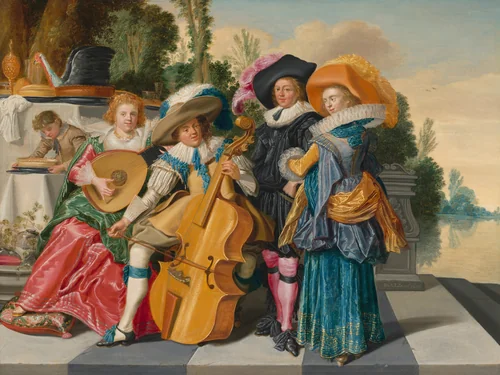
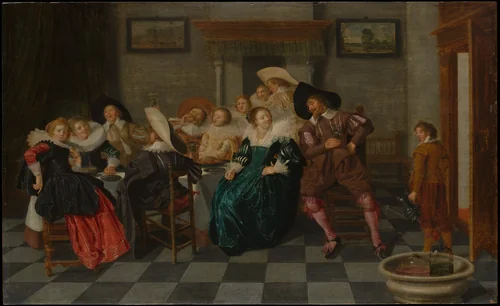
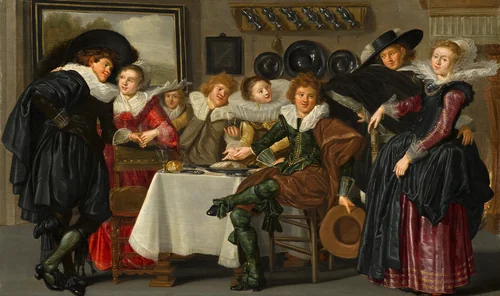
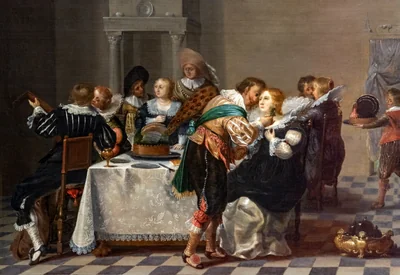
Dirck Hals (1600-1645) was a Dutch Golden Age painter who established his reputation as one of Haarlem’s most dedicated and influential genre specialists. Active during a period of intense artistic specialization, Hals focused almost exclusively on depicting the elegant social rituals of the emerging moneyed class: the ‘merry company’ scene, the formal banquet, and the lively ballroom gathering. This sustained focus elevated him to a crucial role in the development and popularization of these specific types of genre painting in the Netherlands.
Born in Haarlem, Dirck was the younger brother of the celebrated portraitist Frans Hals. While he inevitably drew some stylistic influence from his brilliant sibling, Dirck deliberately channeled that energy away from individual likenesses and toward collective atmosphere. He concentrated on capturing the texture of society and the mise-en-scène of leisure rather than the psychological depth of his sitters. Indeed, he painted remarkably few formal portraits, preferring instead to arrange groups of fashionably attired figures engaged in conversation, music, or flirtation.
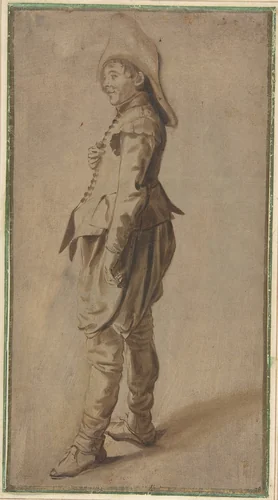
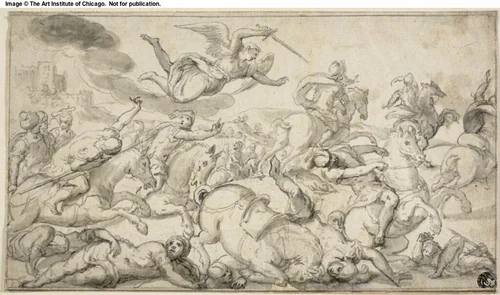
His works, such as Merry Company and A Banquet, are invaluable visual documents detailing 17th-century interior design, clothing, and social customs. They capture the transient pleasures of the era with an engaging lightness and technical mastery. It might be observed that Dirck seems to have taken more pleasure in rendering a fine silk doublet and an ostrich feather hat, exemplified in the detailed drawing Study of a Standing Youth in a Hat, than in the challenging pursuit of portraiture. He succeeded in making the setting and the mood the true subject of the painting, rather than merely the backdrop.
Today, Dirck Hals paintings are highly sought after for their historical insight and technical finesse, forming part of the core holdings of major institutions internationally, including the Metropolitan Museum of Art, the National Gallery of Art, and the Art Institute of Chicago. For those seeking access to the historical vibrancy of this era, much of his oeuvre is now in the public domain, making high-quality prints and downloadable artwork widely available for study and appreciation. His pioneering efforts solidified the 'merry company' as a standard subject, influencing subsequent generations of genre painters who followed his sophisticated approach to depicting social interaction.
Source: Wikipedia · CC BY-SA 4.0