Dionys van Nijmegen
Dionys van Nijmegen (1705-1798) established himself as a specialized portraitist within the Dutch Republic during the 18th century. Though his recorded active period was relatively concise, spanning primarily from 1732 to 1750, the works he produced offer an incisive visual record of the influential burgher class in Rotterdam, capturing the city at the height of its commercial and literary prominence. His lasting significance is tied directly to his skill in documenting the administrators and intellectuals who defined the regional culture of his day.
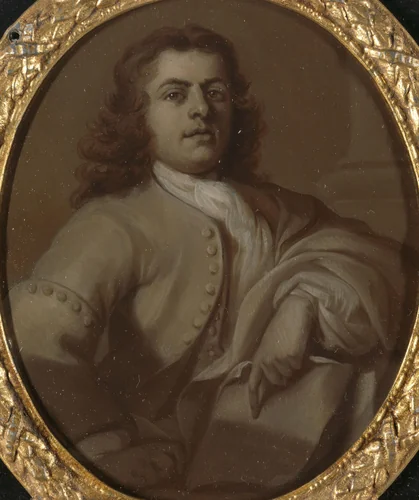
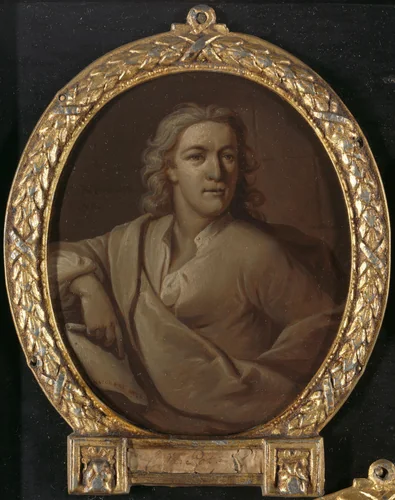
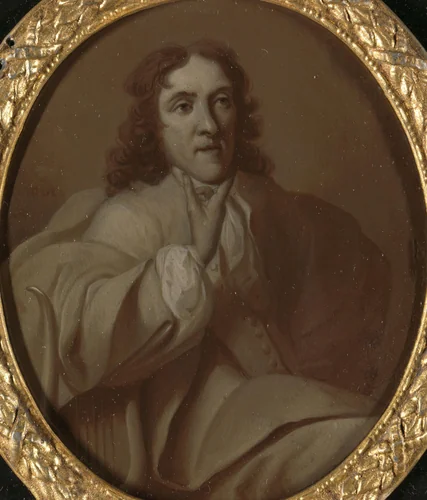
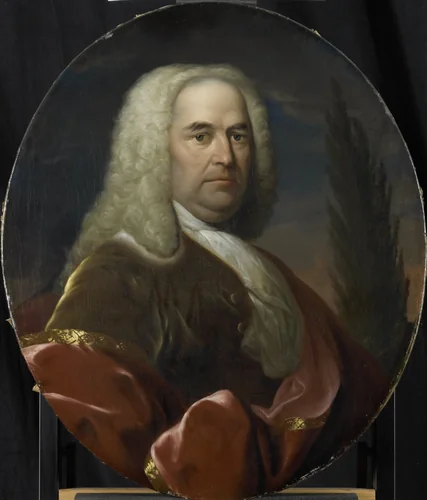
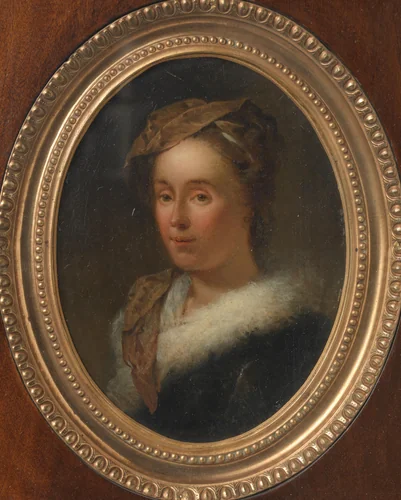
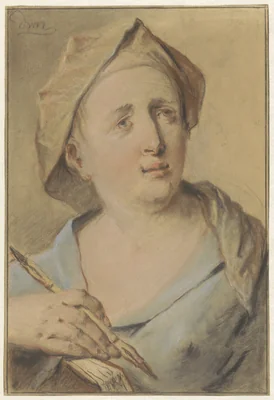
Van Nijmegen’s extant body of work, comprising six major Dionys van Nijmegen paintings, reveals a deliberate focus on the city’s dual identity: its thriving intellectual sphere and its formidable financial engine. His brush captured prominent local poets and humanists, including the formal likenesses of Adriaan van der Vliet, Cornelis van der Pot, and Frans de Haes. These commissions demonstrate the artist’s ability to render the refined contemplation valued by the literary class.
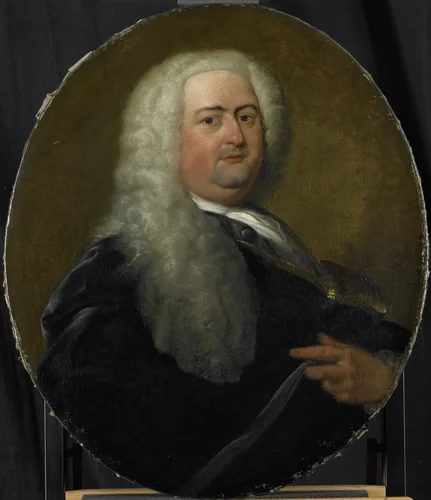
Critically, Van Nijmegen’s career also coincided with the need to memorialize Rotterdam’s powerful commercial brokers. This is evidenced by his crucial commissions for the high administration of the Dutch East India Company (VOC), producing striking likenesses of Adriaen Paets and Hugo du Bois, both elected Directors of the Rotterdam Chamber in 1734. While the artist successfully rendered the contemplative spirit of the literary figures, it is perhaps telling that a significant portion of his recorded surviving output secured sitters directly affiliated with the vast financial machinery of the VOC. His ability to navigate and satisfy both the cultured salons and the corporate boardrooms of Rotterdam underscores his versatility in a competitive marketplace.
Van Nijmegen’s output solidified his place as a dedicated chronicler of his era. Today, his recognized portraits are held in esteemed institutions, most notably the Rijksmuseum, ensuring their continuing study. Reflecting the changing accessibility of art history, many of these historical works, having passed into the public domain, are increasingly available to scholars and enthusiasts. As an enduring element of Dutch historical portraiture, the available images allow for the creation of high-quality prints, extending the legacy of this important 18th-century master.
Source: Wikipedia · CC BY-SA 4.0