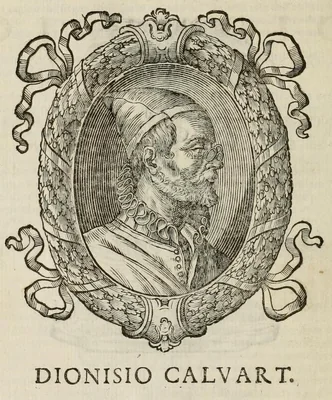
Denys Calvaert
Denys Calvaert (1540-1607) occupies a pivotal position in the transition between Northern European and Italian Renaissance styles. Born in Antwerp, the Flemish master spent the overwhelming majority of his professional life in Italy, establishing residence in Bologna and Rome. This extensive residency led to his immediate adoption into the Italian artistic community, where he was universally known as Dionisio Fiammingo, or simply Il Fiammingo (The Fleming). This dual identity defined his output: a rigorous technical grounding from the North infused with the dramatic scale and classical aspirations of the Italian High Renaissance.
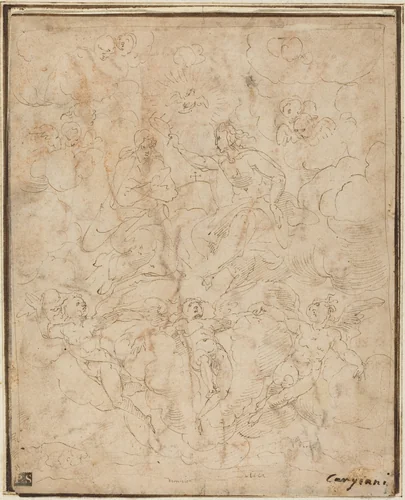
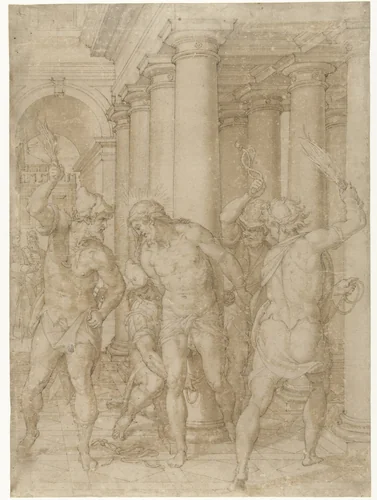
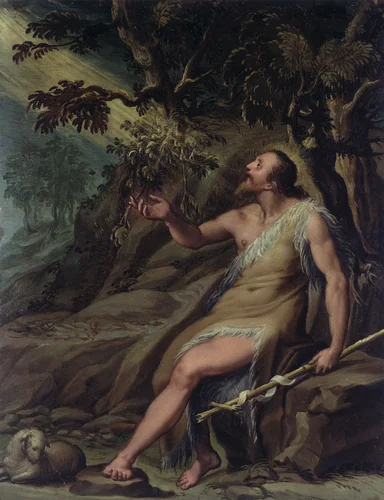
Calvaert was an artist of profound intellectual curiosity and rigorous academic application. Unlike contemporaries who might focus solely on execution, Calvaert was a dedicated, systematic student of history, architectural theory, and, crucially, human anatomy. This academic approach formed the bedrock of his stylistic achievements. His works, including the dynamically structured Geseling van Christus and the grand narrative Coronation of the Virgin, are marked by an advanced understanding of composition and spatial arrangement. This technical mastery, combined with a highly refined and luminous colouring, allowed him to produce complex, emotionally resonant works that helped pave the way from the expressive refinement of Mannerism towards the nascent Baroque.
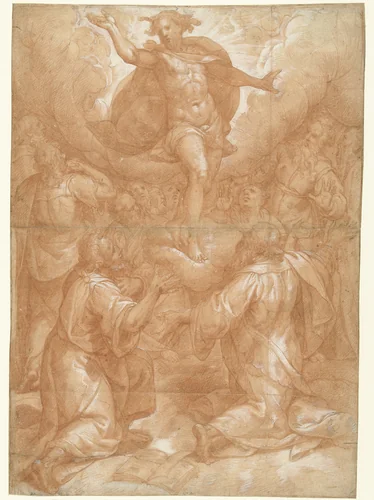
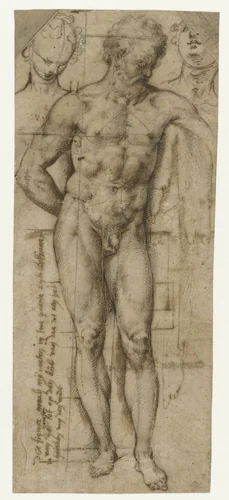
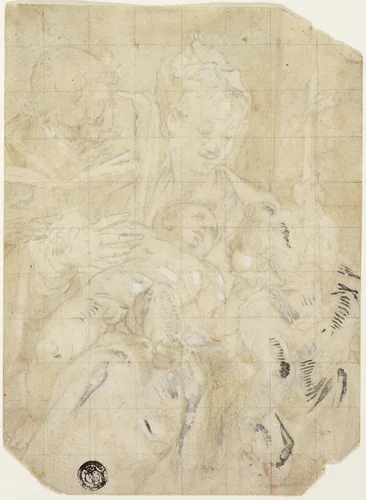
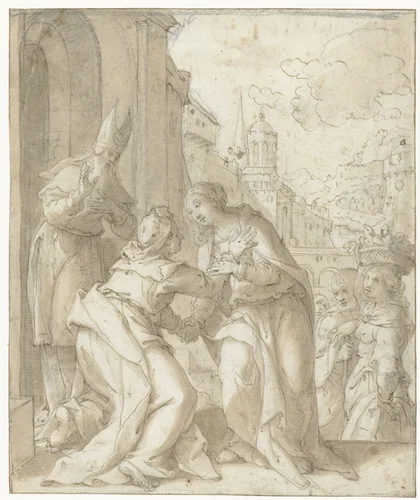
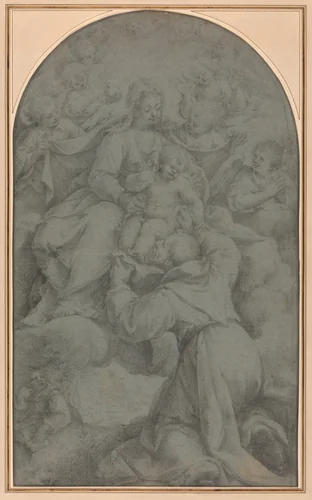
While the totality of Denys Calvaert paintings represents a significant contribution to late Cinquecento art, his surviving preparatory studies and drawings also provide invaluable insight into studio practice of the era. Sheets such as Studie van een naakte man (Hercules?) reveal a meticulous hand and an assured line, characteristics that make his work highly prized in major institutions. Today, his enduring oeuvre, including religious narratives like Holy Family with the Infant Saint John the Baptist, resides in global collections including the Rijksmuseum, the National Gallery of Art, and the Art Institute of Chicago. As many of these images have now entered the public domain, high-quality prints and downloadable artwork are increasingly accessible, allowing scholars and enthusiasts access to his precise draftsmanship.
Calvaert’s legacy extends beyond his canvases and drawings; he was also a highly influential teacher whose Bolognese studio trained pivotal artists, most notably Guido Reni. It is perhaps a minor historical irony that, despite spending a lifetime mastering and advancing the expressive style of his adopted country, Calvaert’s foreignness remained the primary identifier used to label his prodigious talent.
Source: Wikipedia · CC BY-SA 4.0