Denis Diderot
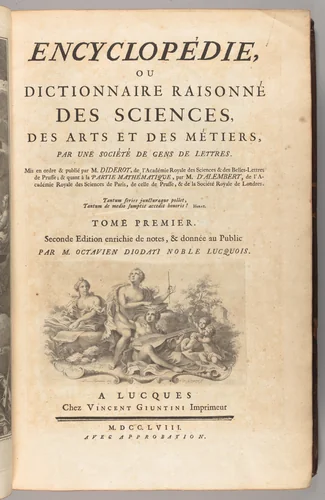
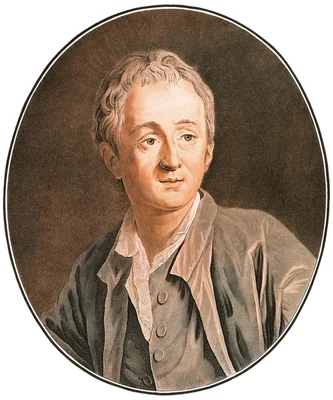
Denis Diderot (1713-1784) stands as a foundational intellectual figure of the French Age of Enlightenment, internationally recognized as a philosopher, compelling writer, and seminal early art critic. His profound impact on the visual arts is primarily architectural: he served as co-founder and chief editor of the Encyclopédie, ou Dictionnaire raisonné des sciences, des arts et des métiers, the colossal project undertaken with Jean le Rond d’Alembert. This work was not merely a textual catalog of human knowledge but a radically comprehensive visual standardization of it, elevating the mechanical arts to scholarly status.
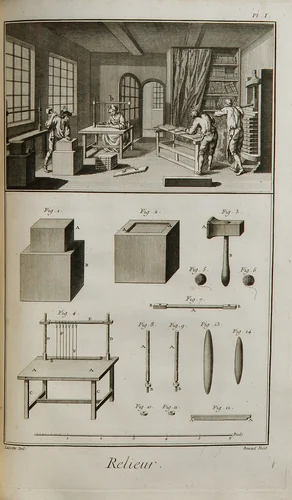
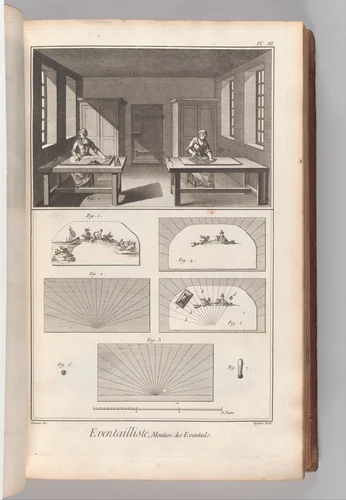
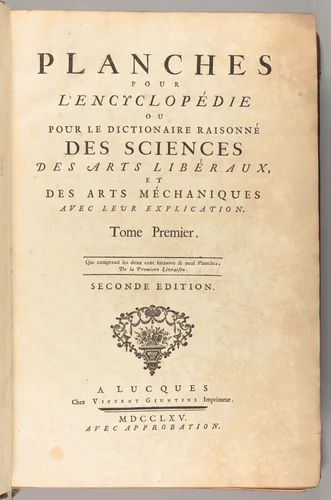
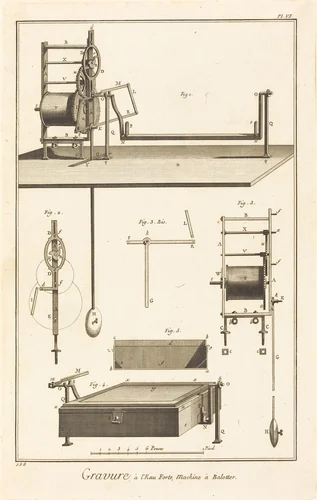
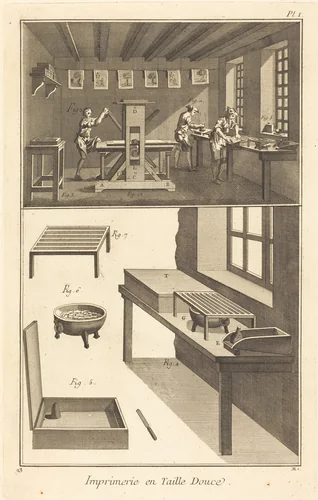
While Diderot was not a practicing engraver or painter, his two decades of editorial stewardship resulted in one of the most significant bodies of 18th-century graphic art: the companion volumes of plates, the Recueil de planches. These works, which include thousands of meticulously executed copperplate illustrations such as Gravure à l'Eau Forte, Machine à Balotter: pl. VI, were designed to instruct readers in subjects spanning medicine, architecture, physics, and industry. The resulting visual archive is an astonishing document of industrial process and technical skill, providing unprecedented detail on everything from surgical instruments to complex manufacturing machinery.
Diderot’s secondary, yet critical, contribution to the arts was the invention of modern art criticism. His famous Salons were detailed, eloquent reviews of the Parisian exhibitions, offering analysis and occasionally devastating wit that set the standard for critical discourse in Europe. He moved beyond merely describing a canvas, focusing instead on narrative, social context, and the psychological effects of the work, forever changing the dialogue surrounding painting.
It is perhaps the greatest irony of this most textual of Enlightenment philosophers that his principal visual legacy is found in the technical renderings of craftsmen and engineers. Today, the encyclopedic plates overseen by Diderot are preserved in major institutions worldwide, including the Metropolitan Museum of Art and the National Gallery of Art. These historically critical documents are often available as high-quality prints and downloadable artwork, offering royalty-free access to the detailed visual fabric of the 18th century.
Source: Wikipedia · CC BY-SA 4.0