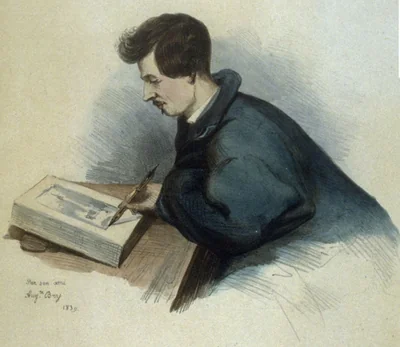
Denis Auguste Marie Raffet
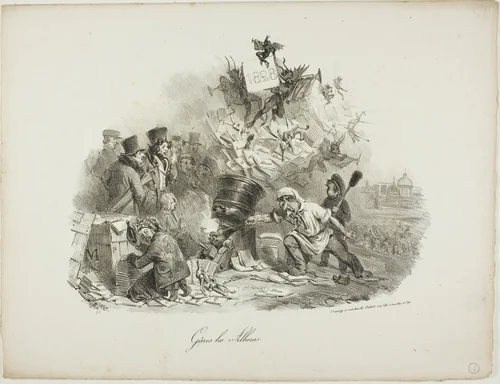
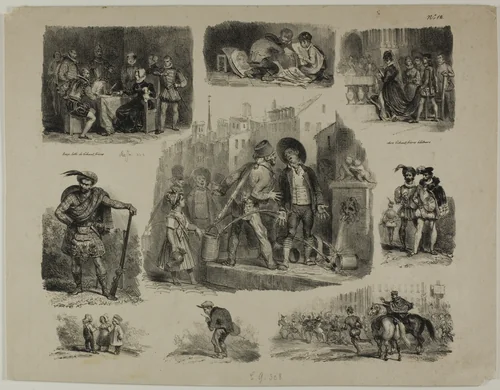
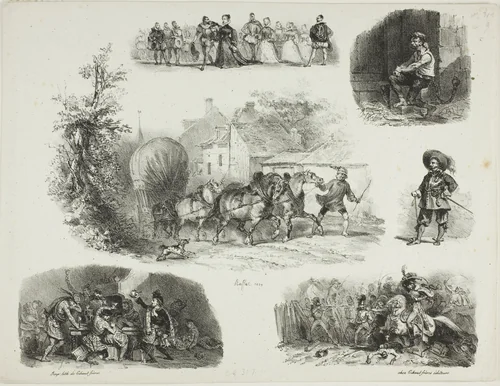
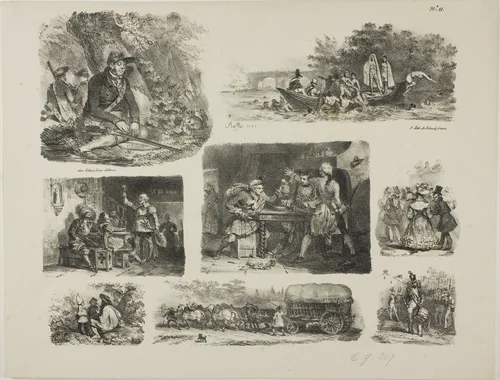
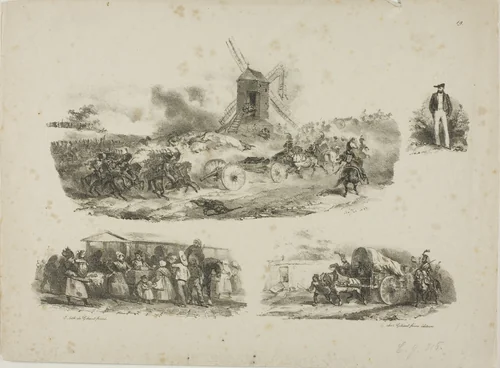
Denis Auguste Marie Raffet (1795-1860) occupies a pivotal position in early nineteenth-century French illustrative arts. Working primarily as an illustrator and lithographer, his relatively concise active period, spanning roughly 1814 to 1827, laid the groundwork for the nostalgic and often idealized portrayal of the recently fallen Empire. Raffet was instrumental in shaping the enduring visual memory of the Napoleonic campaigns, a memory that permeated French culture throughout the following decades.
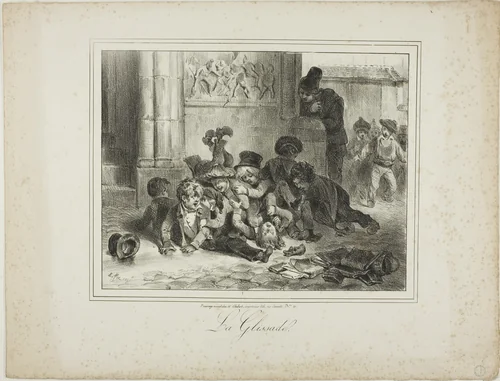
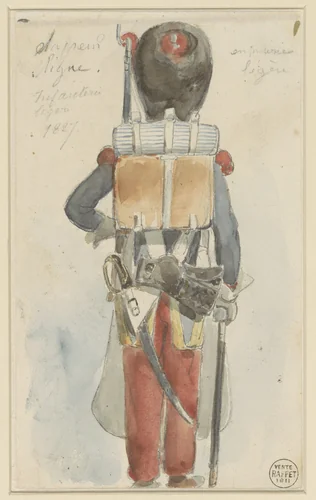
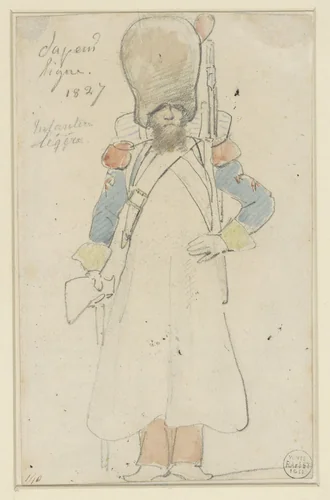
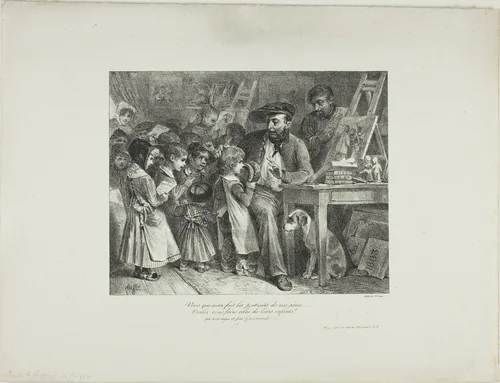
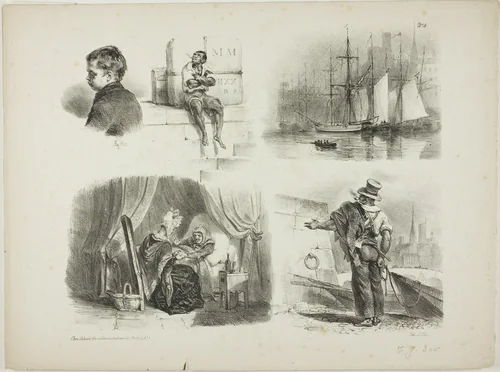
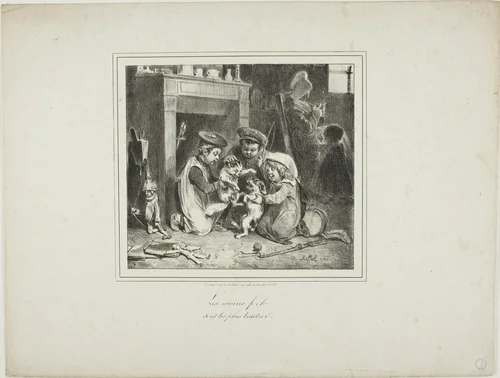
Raffet received his formal training under the influential Nicolas Toussaint Charlet, an association that cemented his focus on military and genre scenes. Though known mainly for his graphic works-including a documented output of at least eight distinct prints and five detailed drawings-Raffet was also an accomplished, if less prolific, painter, evidenced by two recorded Denis Auguste Marie Raffet paintings. His masterful command of the emerging medium of lithography allowed for the widespread dissemination of his detailed scenes, turning them into early forms of museum-quality reproductions accessible to a broad audience.
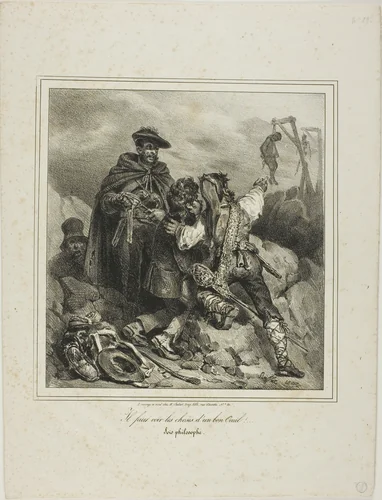
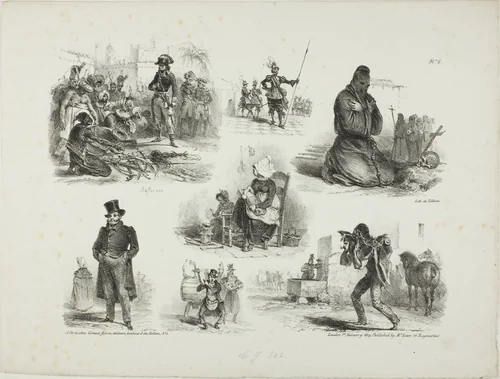
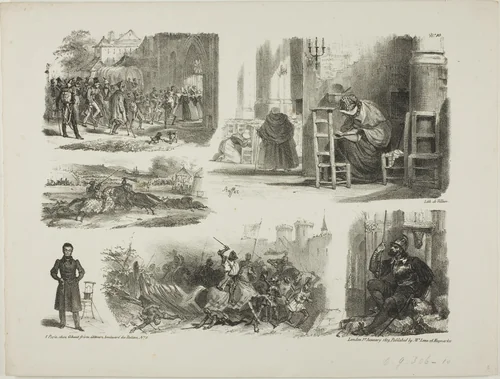
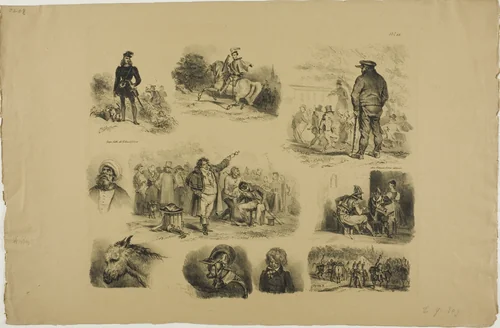
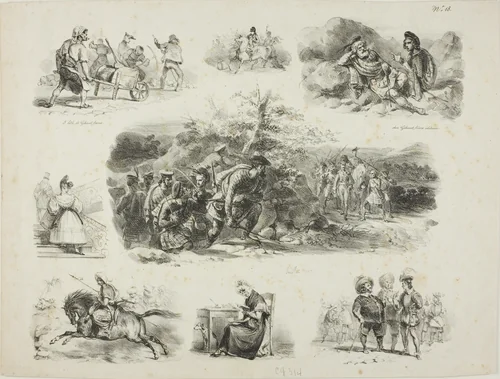
Raffet’s work captures the detailed life of soldiers and the theater of battle, distinguishing itself through an unflinching gaze at both heroism and the inherent hardships of military service. While commissions often focused on triumphs and official likenesses, such as the grand Portret van Napoleon, kniestuk, staand, driekwart naar links, some of his private studies reveal a peculiar fascination with the harsh aftermath of conflict. A study sheet cataloged as Studies van een paardenkadaver en een dode opgehangen hond provides a subtle, almost macabre footnote to the grand narratives of military life he otherwise depicted, illustrating the wide range of his observational skill.
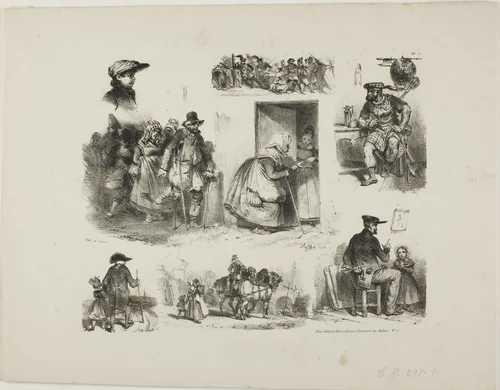
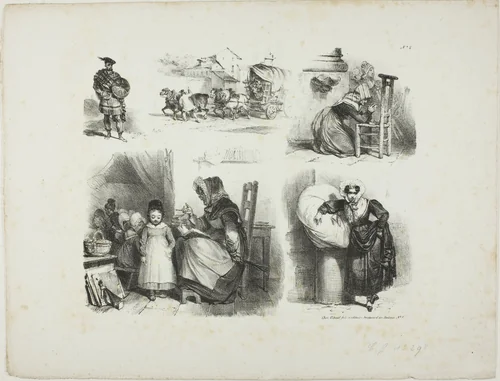
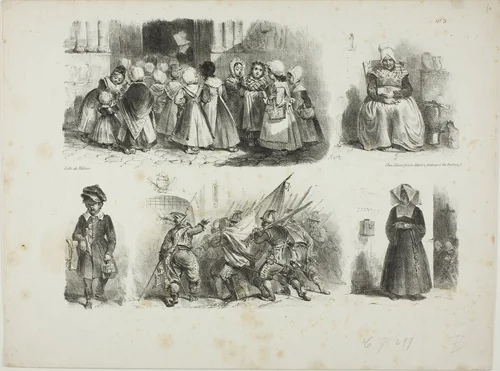
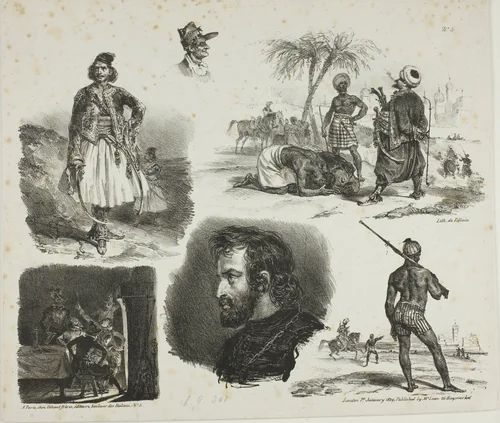
The artist’s retrospective view of the Napoleonic era positioned him as a central figure in memorializing a politically complex time. His detailed renderings, such as General with Troops in Background and his travel sketches like Studieblad met zittende vrouw en kinderen, te Dereköy in Turkije, demonstrate a consistent commitment to factual detail. Given his historical significance and technical skill, works by Raffet are held in major international institutions, including the Rijksmuseum and the Art Institute of Chicago. Much of his output, particularly his high-quality prints, is now considered public domain, securing the availability of the historical record he so expertly created.
Source: Wikipedia · CC BY-SA 4.0