David Ramage
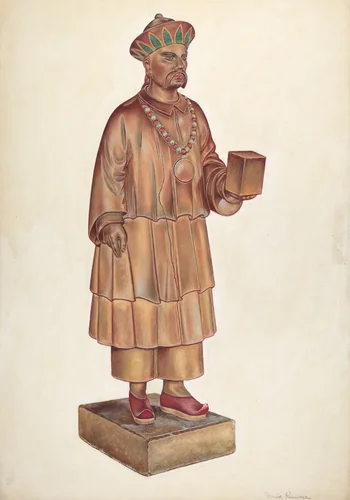
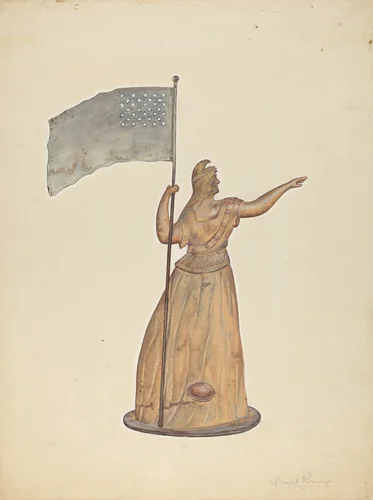
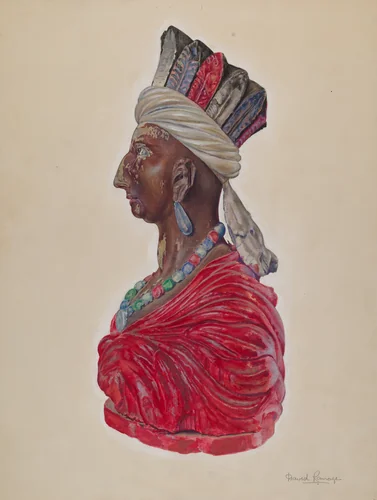
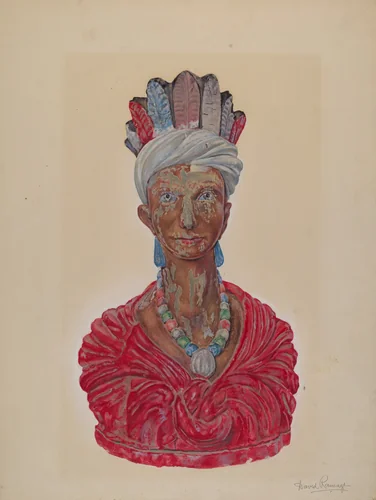
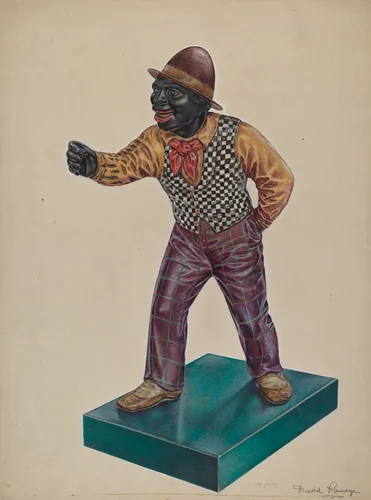
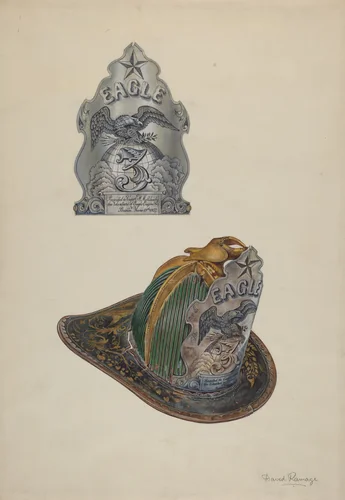
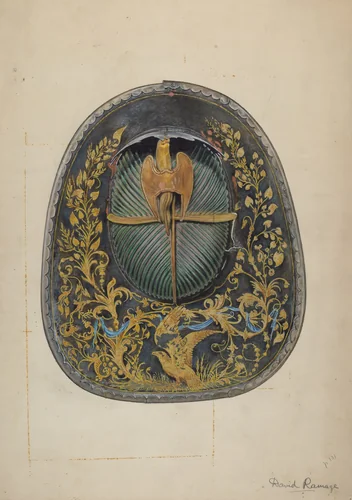
David Ramage holds a significant, albeit concise, place within the history of American functional art documentation, recognized primarily for his meticulous contributions to the Index of American Design (IAD) during the peak years of the WPA Federal Art Project. Active between 1935 and 1937, Ramage specialized in executing highly precise, often vibrant, renderings of historic folk artifacts and decorative arts discovered across the northeastern United States.
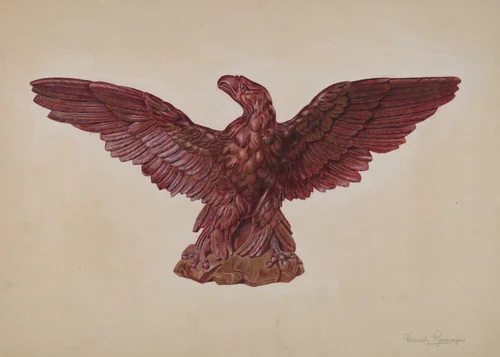
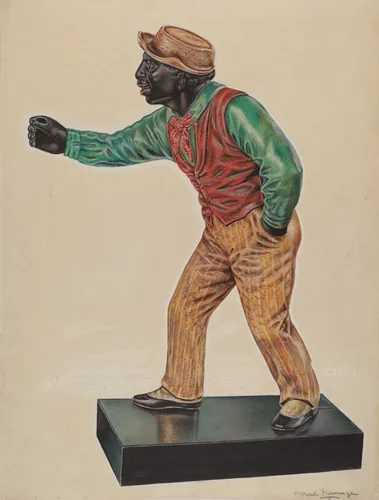
His work was not merely copying but a careful act of preservation, ensuring that the visual knowledge of these vanishing domestic objects was captured for future generations. Ramage is credited with documenting approximately fifteen designs, contributing to one of the most comprehensive typological surveys of American craftsmanship ever undertaken. These objects, once everyday utilitarian items, were elevated through his skilled hand into detailed, almost sculptural records.
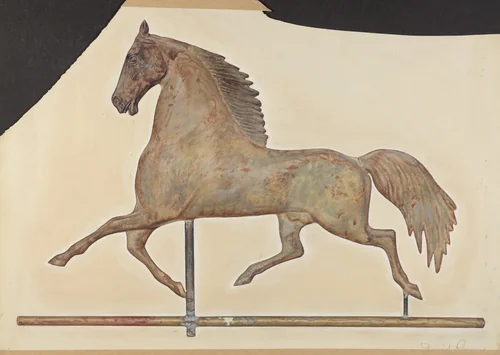
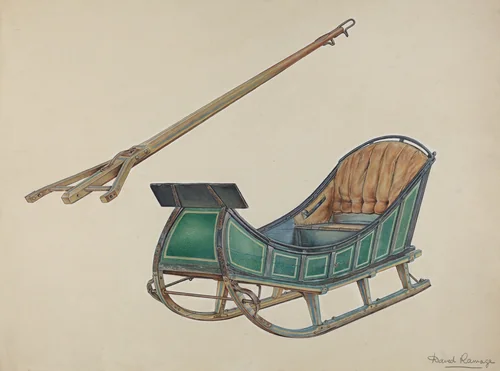
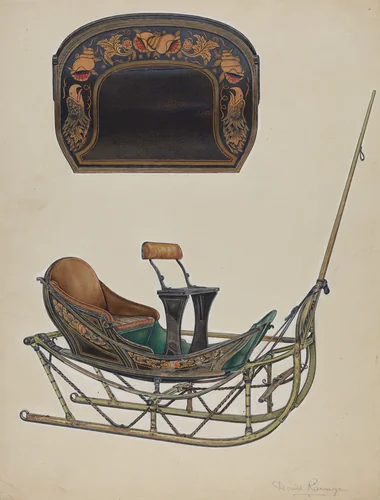
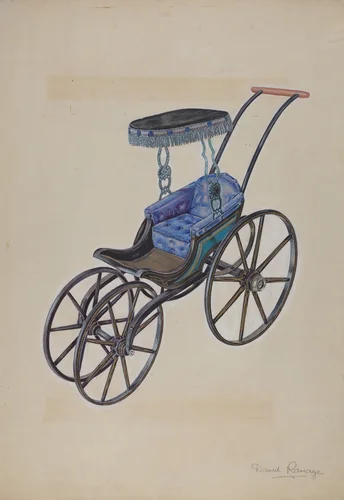
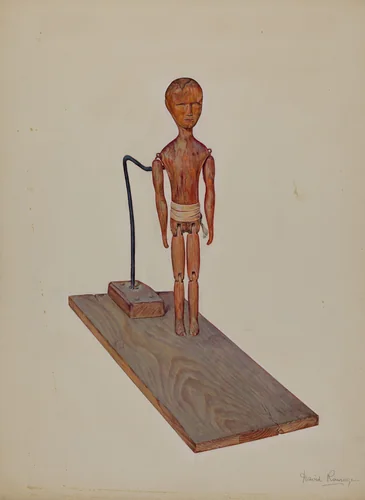
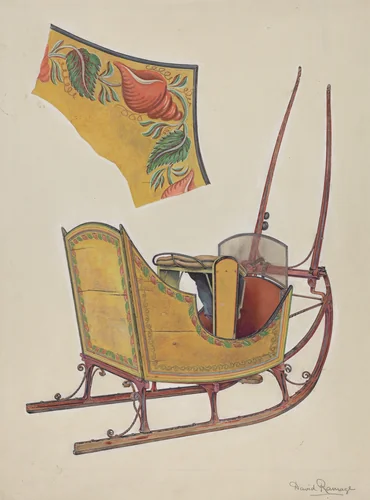
Ramage’s talent for capturing texture and dimension is evident in works such as the dynamic Horse Weather Vane, a classic representation of early American industrial artistry, and his studies of traditional transportation, exemplified by the detailed renderings of a country Sleigh. Perhaps his most charming contribution is Acrobat Albert, a portrait of an articulated toy whose movement and personality are implied through static, careful line work—a subtle demonstration of how Ramage captured the spirit of the objects alongside their physical reality. It is a quiet irony that while many IAD artists were focused on recording the functional simplicity of their subjects, Ramage’s technical skill often imbued these simple items with a palpable sense of historical weight.
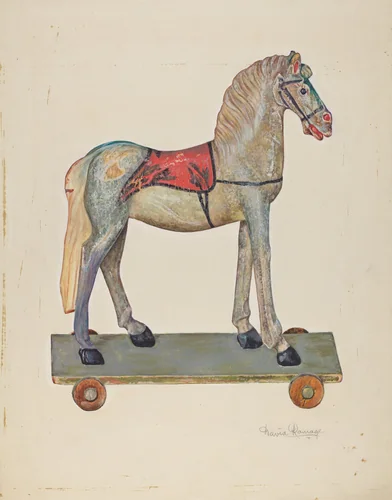
The enduring relevance of Ramage’s documentation lies in its accessibility and historical context. His work is now housed in major institutional holdings, including the permanent collections of the National Gallery of Art, forming a crucial part of the national visual archive. Owing to their initial public purpose, these historical designs, including the detailed plans for the Toy Wooden Horse, are widely available in the public domain. Researchers and historians continue to access and study these essential documents, making the resulting high-quality prints and downloadable artwork cornerstones of American decorative arts scholarship.
Source: Wikipedia · CC BY-SA 4.0