David Claypoole Johnston
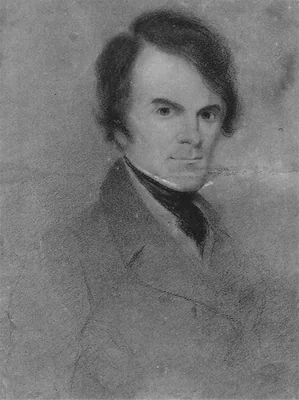
David Claypoole Johnston (1799–1865) stands as a pivotal figure in the early history of American printmaking and visual satire. Operating primarily out of Boston during the 19th century, Johnston was uniquely distinguished as the first natively trained American artist to achieve comprehensive mastery across the full spectrum of graphic arts processes. This unprecedented technical fluency included lithography, etching, metal plate engraving, and wood engraving, establishing him as a crucial link in the development of sophisticated American visual media.
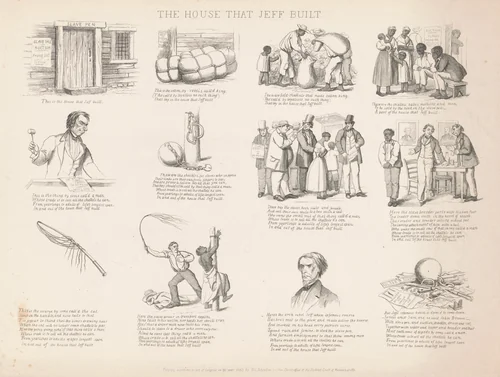
Johnston’s artistic output was profoundly informed by a diverse professional background that included a concurrent career as an actor on the stage. This theatrical sensibility infused his best-known works, primarily his satirical prints and drawings, with a necessary sense of dramatic timing and biting humor. He expertly applied his rigorous technical skill to often irreverent social and political commentary, creating compelling, museum-quality prints that captured the rapidly changing cultural shifts of the era.
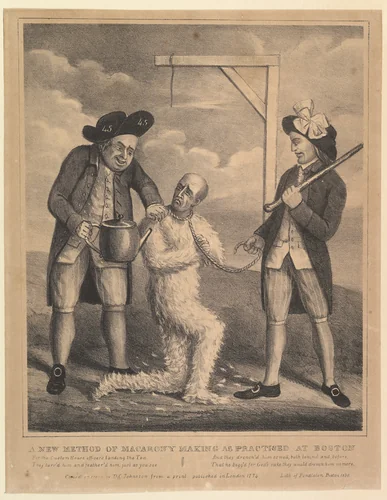
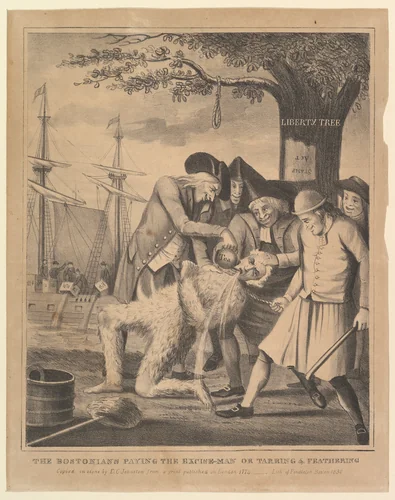
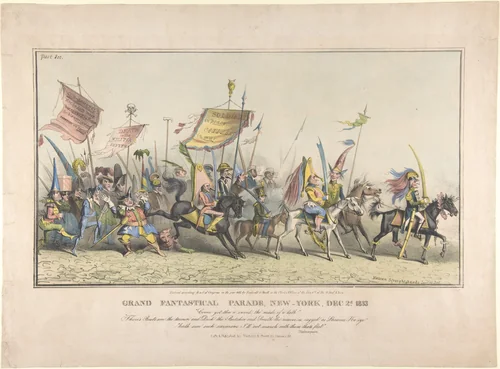
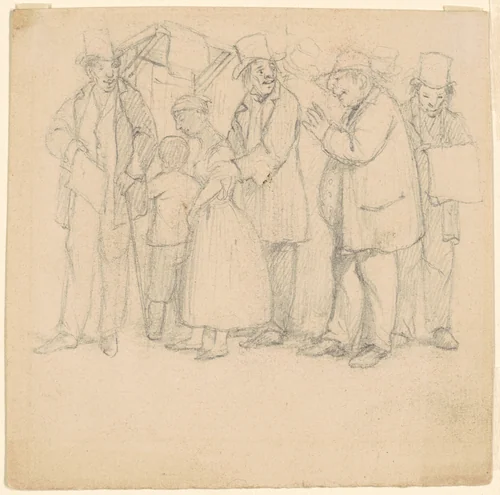
His visual commentary frequently targeted both local customs and national anxieties. Works such as A New Method of Macarony Making, as Practised at Boston and the political satire The Bostonians Paying the Excise-Man, or Tarring & Feathering showcase his ability to distill complex civic conflicts into highly readable visual narratives. His observations, including the detailed urban view depicted in Grand Fantastical Parade, New-York, December 2, 1833, functioned to chronicle the life and manners of Jacksonian America, holding the mirror up to society’s pretensions and excesses with sharp precision.
While he occasionally produced David Claypoole Johnston paintings, his enduring legacy rests firmly upon his graphic work. The historical and artistic relevance of his output is underscored by the inclusion of his prints and drawings in prestigious institutions globally, including the National Gallery of Art, the Art Institute of Chicago, and the Metropolitan Museum of Art. Because many of these influential historical images are now in the public domain, they remain accessible today as high-quality prints and downloadable artwork, providing valuable documentation for scholars and collectors studying 19th-century American life.
Source: Wikipedia · CC BY-SA 4.0