David Burliuk
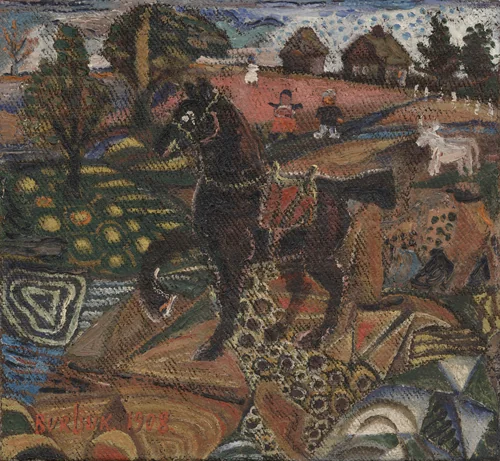
David Davidovich Burliuk (1882-1967) occupies a central, foundational position in the history of the Russian avant-garde. Often characterized as "the father of Russian Futurism," Burliuk was a prolific Ukrainian poet, artist, and indispensable publicist whose energy helped forge one of the twentieth century’s most visually and literarily disruptive movements. His influence spanned the transition from the folkloric inquiries of Neo-Primitivism into the explosive manifestos of the Gileia group, marking a decisive shift away from traditional European aesthetics.
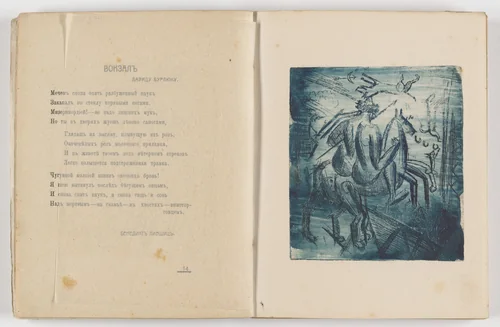
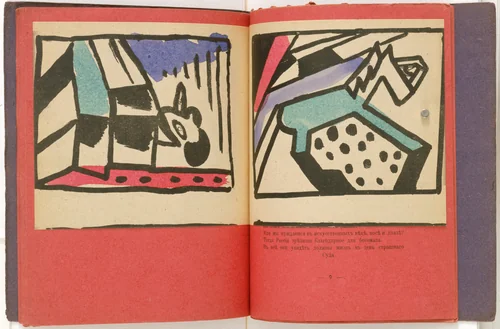
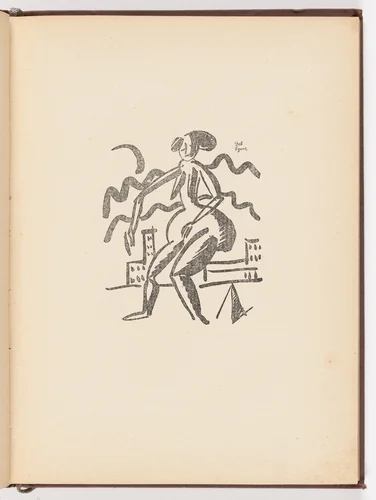
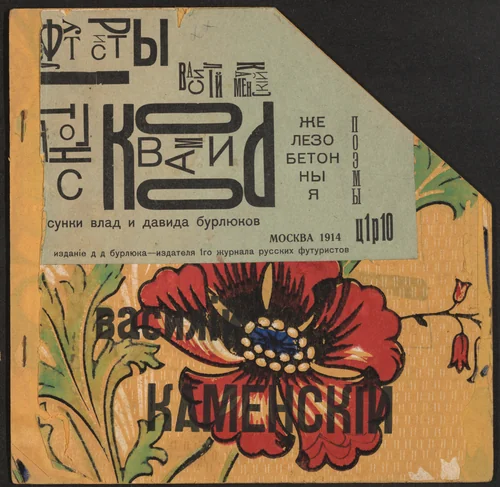
Burliuk’s primary innovation during his most active years, 1908 to 1915, was not confined to traditional easel painting, but rather lay in the creation of collaborative, hand-crafted illustrated books. These publications served as critical platforms for synthesizing radical poetry and deliberately crude visual material. As both a designer and contributor, Burliuk shaped the appearance of key works, including the notorious 1913 volume, Dokhlaia luna. Sbornik edinstvennykh futuristov mira!! Poetov Gileia (The Croaked Moon: Collection of the Sole Futurists of the World!! The Gileia Poets), and Zatychka (The Bung), which featured his drawings alongside verse by his brothers and Velimir Khlebnikov.
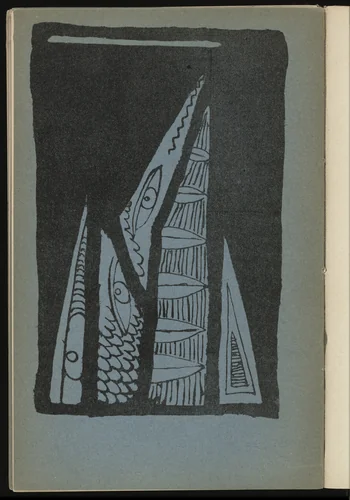
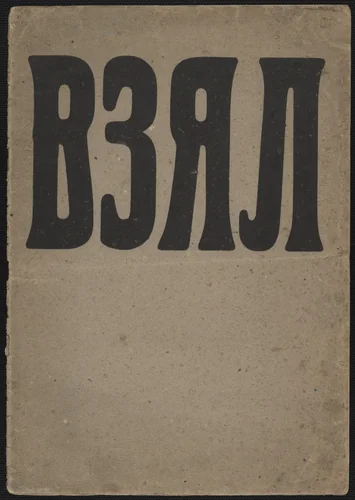
These early experimental books, printed on rough paper and often employing lithography, utilized visual imperfection and raw force to underscore their revolutionary poetic content. They redefined the relationship between text and image, transforming the book object itself into a mobile piece of art. Works such as Moloko kobylits (Milk of Mares) exemplify this fusion, proving that the radical message resided as much in the typography and rough illustrations as in the poetry.
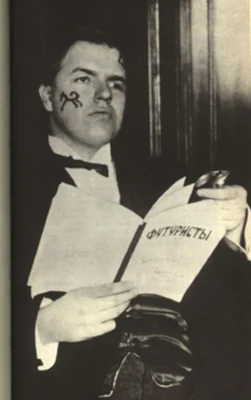
Burliuk was adept at marketing the movement; his calculated public persona, often involving theatrical scarves and a deliberately jarring monocle, served as a living manifestation of Futurist defiance against bourgeois sensibilities. This unique synthesis of visual art, poetic output, and deliberate self-presentation ensured the movement’s visibility.
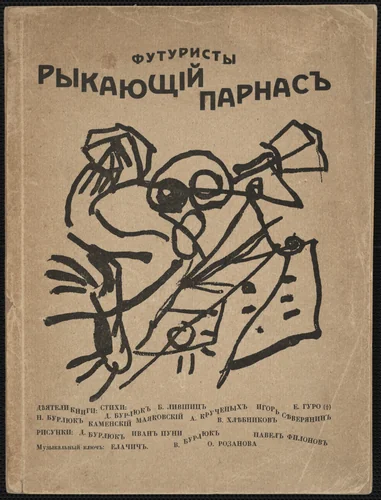
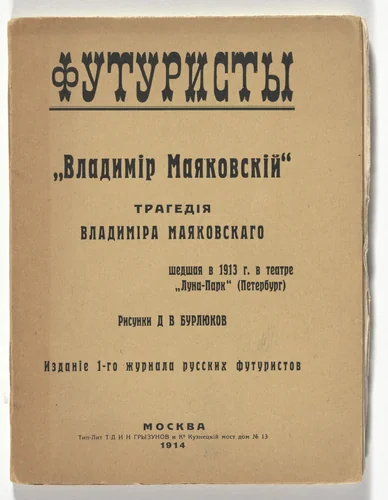
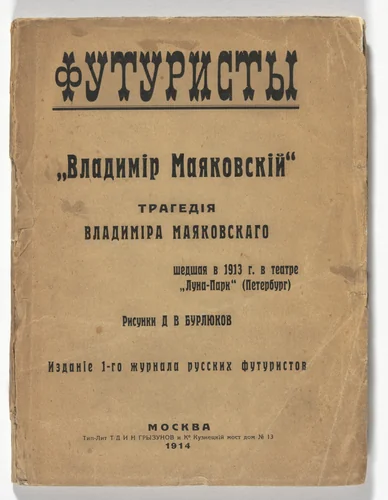
Today, examples of Burliuk’s drawings and collages from this pivotal era are housed in major institutional collections, including the Museum of Modern Art, confirming their museum-quality status. While some of his later David Burliuk paintings are also collected, it is his pioneering graphic work, such as the pages contributed to Futuristy. Pervyi zhurnal' russkikh' futuristov' (Futurists: First Journal of the Russian Futurists), that established the movement’s lasting visual legacy. These historical artifacts are now widely accessible as downloadable artwork and high-quality prints, allowing for continued study of his crucial contributions.
Source: Wikipedia · CC BY-SA 4.0