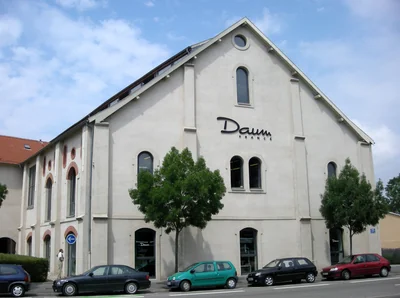
Daum Frères
Daum Frères stands as one of the preeminent French glassworks of the late 19th and early 20th centuries, inextricably linked to the zenith of the Art Nouveau movement. The studio was established in Nancy in 1878 by Jean Daum (1825–1885). However, it achieved its crucial artistic and commercial momentum under the direct leadership of his sons, Auguste Daum (1853–1909) and Antonin Daum (1864–1931). It was during their stewardship that the firm abandoned more traditional crystal models, aligning itself instead with the revolutionary forms, organic sensibilities, and complex color palettes that defined the new modern aesthetic.
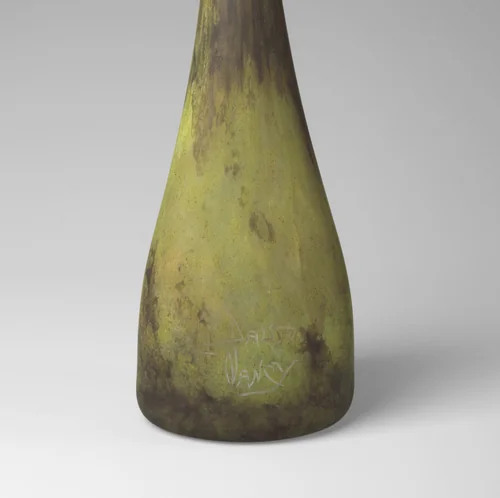
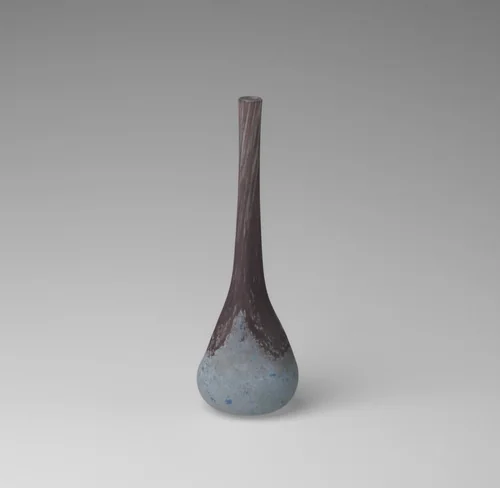
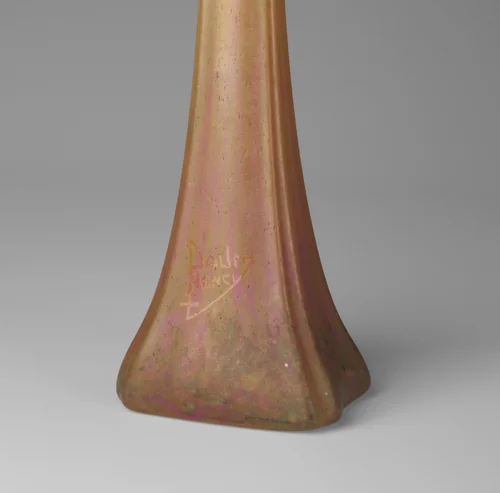
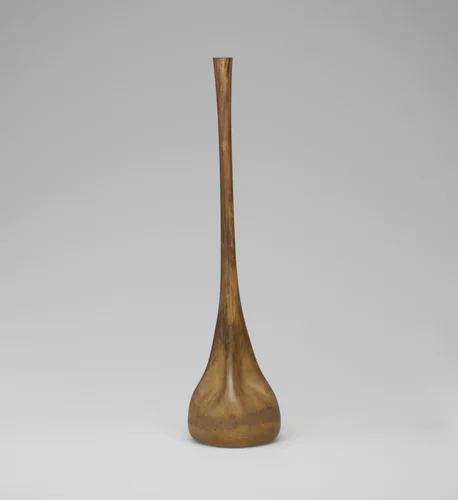
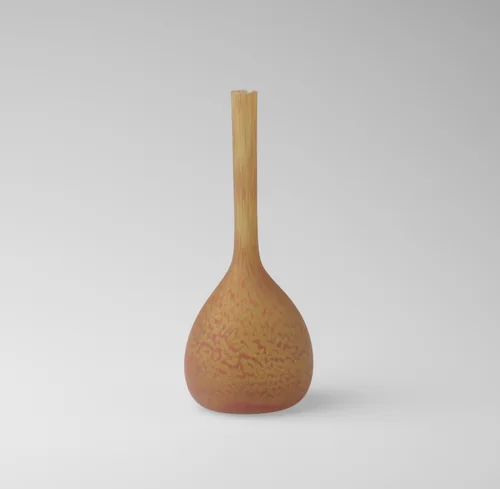
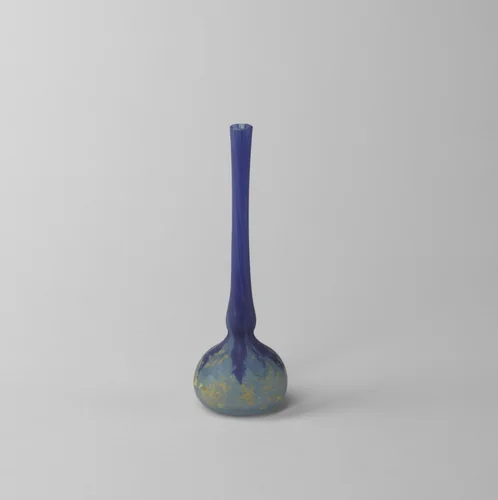
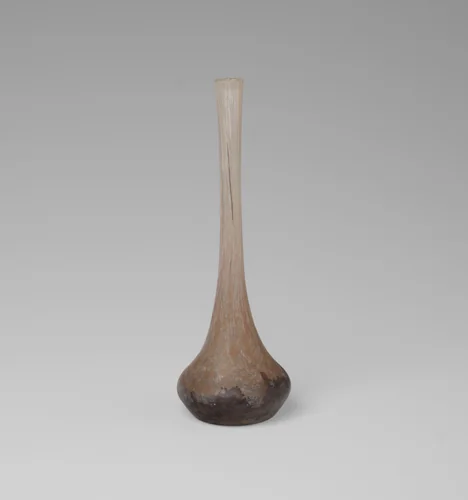
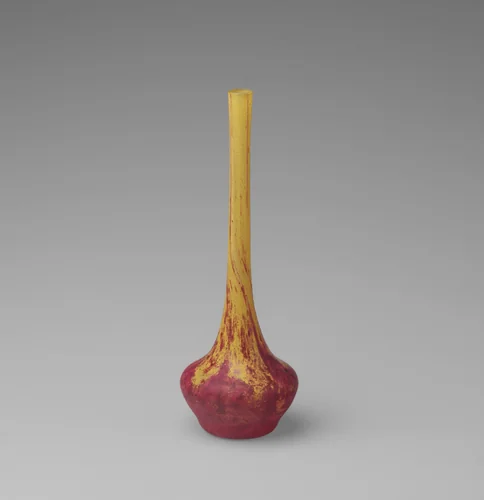
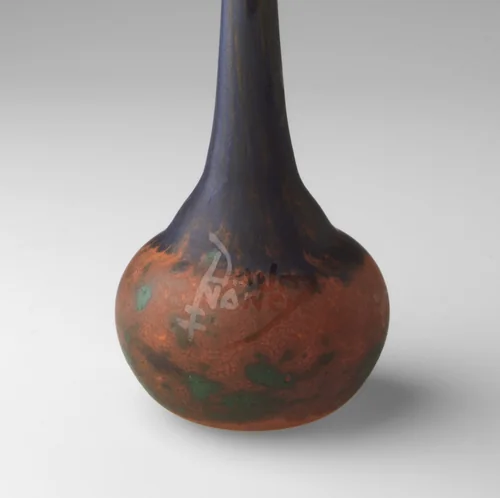
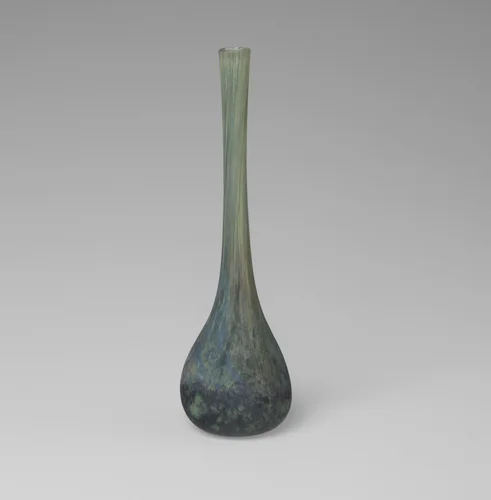
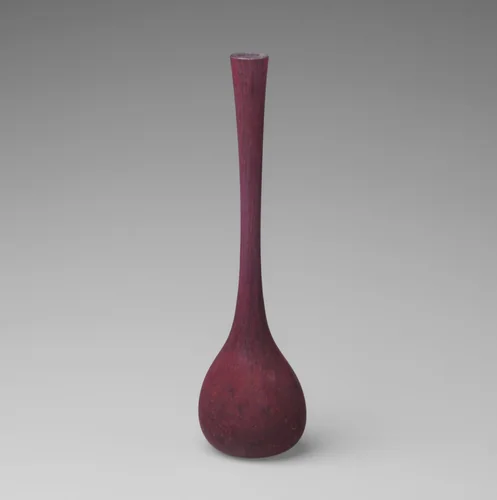
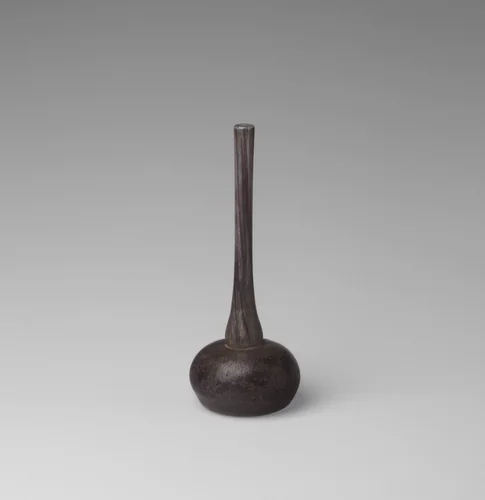
Operating at the height of their influence between approximately 1900 and 1910, Daum Frères pioneered numerous techniques, but the firm’s most significant technical contribution to art glass rests on its mastery of pâte de verre. An exceptionally demanding and ancient medium, pâte de verre is a process in which crushed glass is meticulously packed into a refractory mold and then fused in a kiln. Daum remains one of the only major crystal manufacturers to successfully employ this technique for producing art glass and sophisticated crystal sculptures, lending their works, such as the notable Le Parthènon Vase, a distinctly textural and often painterly quality.
This technical approach allowed the artists at Daum to achieve a unique range of subtle color transitions and depth often unattainable through conventional blowing methods. Their designs are characterized by elaborate naturalistic motifs, frequently realized through a complex layering of acid etching, wheel carving, and metallic inclusions. A subtle point of pride, perhaps, is that they managed to make the often unforgiving and volatile nature of pâte de verre appear entirely effortless.
The commitment of Daum Frères to synthesizing industrial execution with individual artistic vision resulted in exceptionally high-quality prints and objects. Today, their pieces are recognized as museum-quality examples of early twentieth-century decorative arts. Examples of the firm's distinctive output are held in major institutions globally, including the Museum of Modern Art, confirming their enduring importance in the history of design.
Source: Wikipedia · CC BY-SA 4.0