Daniele Crespi
Daniele Crespi (c. 1597–1628) stands as a foundational figure in the transition of Milanese art from the complex artificiality of the late sixteenth century toward the emerging dynamism of the Baroque era. Active primarily during the 1620s, Crespi is recognized as one of the most innovative and original artists working in Milan, a city that often showed resistance to external stylistic change. Though his career was tragically short-lived, his output established a critical new visual language for the region.
Crespi’s principal contribution lay in his decisive break from the prevailing local style, the complex and often exaggerated visual vocabulary known as Lombard Mannerism. Where his immediate predecessors favored compositional tension, visual ambiguity, and intense elongation, Crespi championed a highly refined early Baroque approach. This stylistic shift was immediately distinguishable by a profound clarity of both form and content, restoring a noble gravity and immediate legibility to historical and religious subjects.
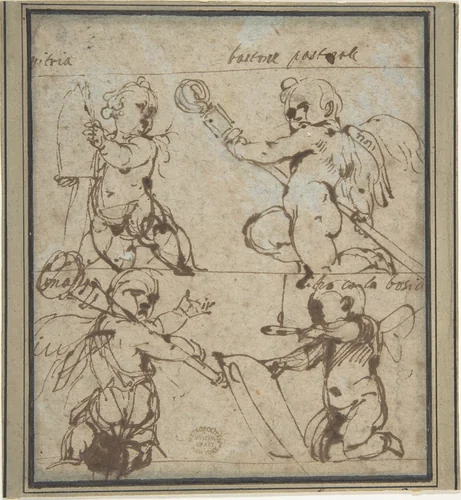
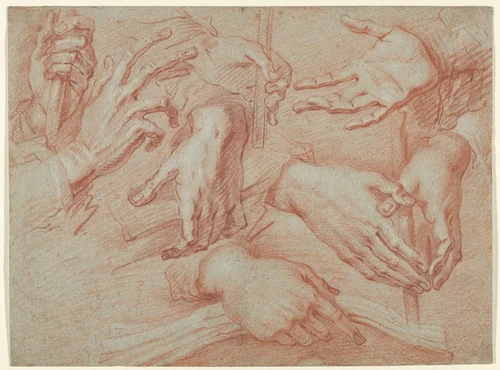
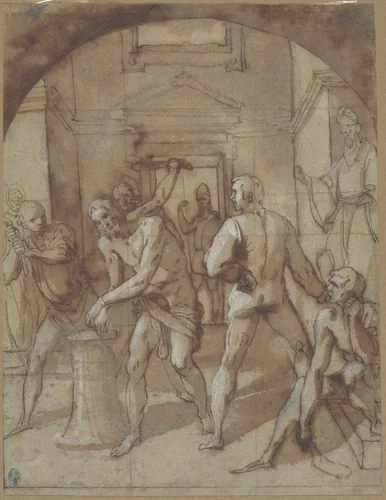
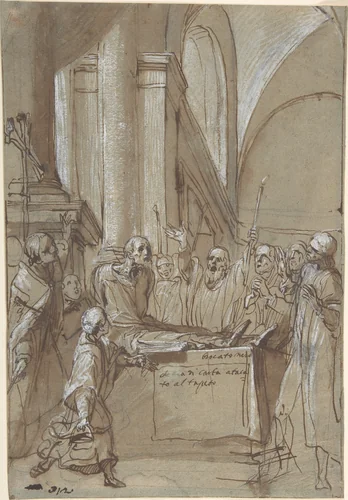
His ability to translate complex narratives into accessible compositions derived directly from his mastery as a draughtsman. Studies like Study of Hands (recto); Study for a Reclining St. Francis (verso) demonstrate a keen, almost surgical, observation of anatomy and posture, essential for transferring these clear compositions into large-scale works. Other meticulous preparatory drawings, such as Putti with a Mitre, Crosier Mace, Book, and Candle, reveal his attention to textural detail and theological symbolism.
Known as a prolific history painter, Crespi also excelled at portraiture, capturing his sitters with a directness that foreshadowed later seventeenth-century realism. His extensive, documented corpus includes major religious commissions; however, his early passing at the age of 31 curtailed what promised to be one of the most significant careers of the Italian Seicento. One might observe that, had he lived another decade, the history of Lombard painting might be written quite differently. Today, the quality of his technical output is preserved institutionally, with works held in major collections including the Metropolitan Museum of Art and the National Gallery of Art. High-quality prints of his Daniele Crespi paintings and drawings, many of which are now in the public domain, allow contemporary audiences to appreciate the elegant clarity he introduced to the Milanese school.
Source: Wikipedia · CC BY-SA 4.0