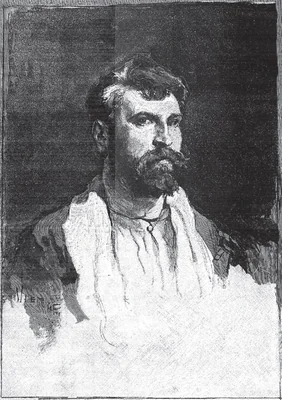
Daniel Urrabieta Vierge
Daniel Urrabieta Vierge (1851-1904) was a pivotal Spanish-born French illustrator and draftsman whose career spanned the critical transition of image reproduction in print media. Vierge’s enduring significance rests not merely on the quality of his draftsmanship, but on his pioneering role in accelerating and perfecting the reproductive processes used for mass-market illustration during the late nineteenth century. He fundamentally redefined the relationship between the artist’s hand and the printed page, effectively revolutionizing the economics and visual standards of illustrated periodicals.
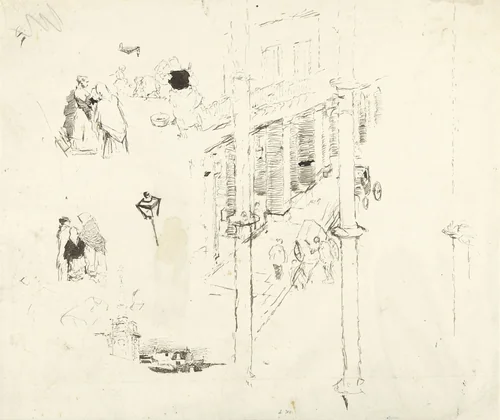
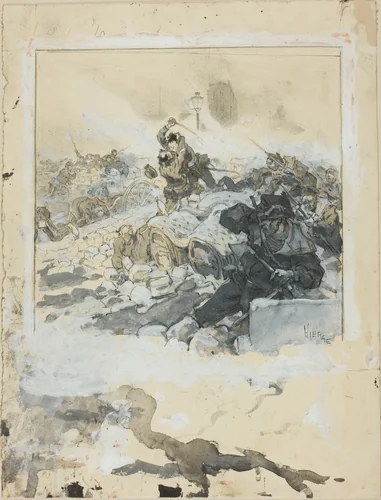
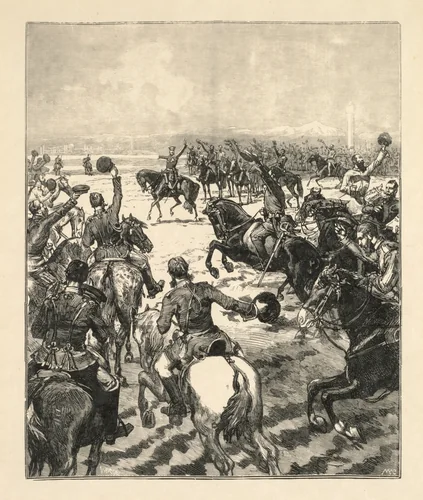
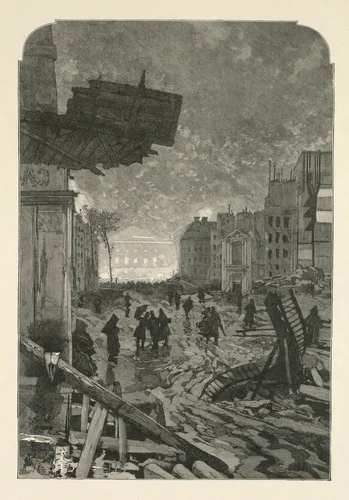
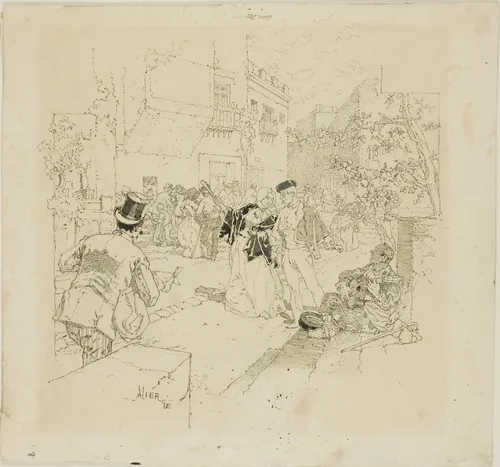
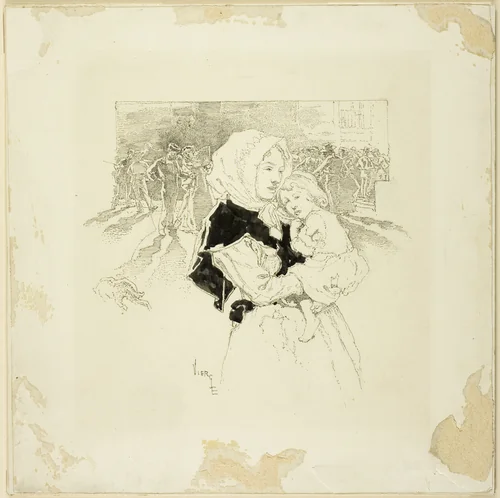
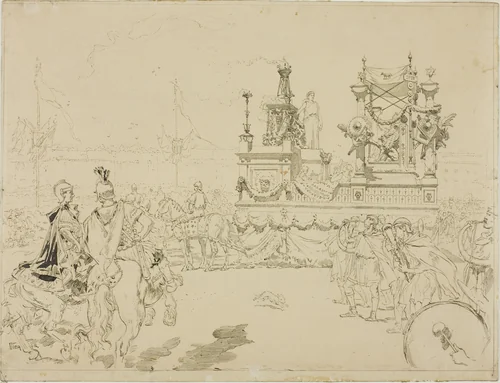
Vierge worked predominantly in pen and ink, capturing the dynamic movement, urban complexity, and historical drama demanded by contemporary journalism. His acute observational skill is evident in works such as Scene from the Suppression of the Paris Commune in May, 1871 and the detailed Gezicht in een straat met groepjes vrouwen, which convey a journalistic immediacy. Historically, achieving this level of spontaneity in print was challenging; drawings were typically translated into print through laborious and often distorting wood engraving. Vierge’s technical breakthroughs, involving early photomechanical methods, allowed the texture, detail, and subtle spontaneity of his original drawings to be transferred directly to the printing plate with unprecedented fidelity. This innovation accelerated publication cycles, secured greater artistic integrity for the illustrator, and popularized the use of high-quality prints in publications worldwide.
Though best known for his prolific output of illustrations and resultant Daniel Urrabieta Vierge prints, the artist also occasionally worked in paint, as documented by the single Napoleanic Battle Scene painting held in institutional collections. That a figure so influential in revolutionizing illustration reproduction is now sometimes overlooked by the broader public speaks volumes about the ephemeral nature of mass-media fame.
Vierge’s legacy is preserved by major international institutions, including the Rijksmuseum, the Art Institute of Chicago, and the Cleveland Museum of Art. Thanks to the longevity of these collections, many of his most important illustrations have entered the public domain, offering access to downloadable artwork for scholars and enthusiasts. His commitment to technical excellence ensured that illustrative art produced during the fin-de-siècle became vastly more accessible, cementing his status as an indispensable figure in the history of graphic art.
Source: Wikipedia · CC BY-SA 4.0