Daniel Marot
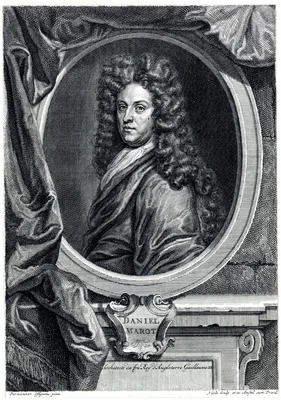
Daniel Marot (1661–1752) was instrumental in establishing the authoritative Late Baroque Louis XIV aesthetic within the Dutch Republic and England during a crucial period of European cultural synthesis. Born in France, Marot fled the nation’s increasingly restrictive climate, eventually becoming the defining taste-maker for the powerful court of William III and Mary II. His career spanned the disciplines of architecture, furniture design, and engraving, positioning him as a comprehensive decorator who conceptualized and orchestrated entire interiors, rather than focusing on isolated objects. He achieved formal recognition in his adopted homeland, becoming a naturalized Dutch citizen in 1709.
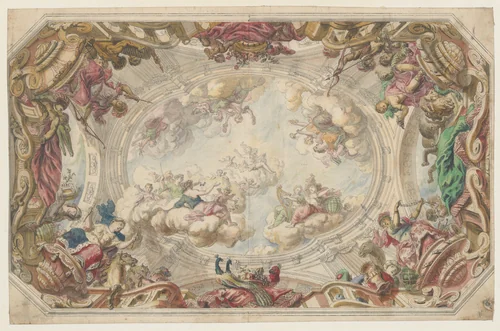
Marot’s design philosophy is characterized by dramatic scale, formal symmetry, and rich ornamentation, successfully translating the opulence of the French royal style for the tastes of powerful Protestant patrons. Though active between 1675 and 1703, his artistic output demonstrates remarkable proficiency across varied media. Major collections, including the Metropolitan Museum of Art and the Cleveland Museum of Art, preserve ten of his textiles, three prints, and two drawings. These include intricate graphic works such as The Arms of William and Mary and large-scale architectural concepts like Design for the Decoration of a Ceiling an Allegory of Victory.
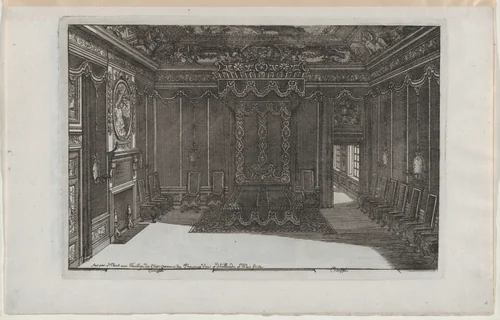
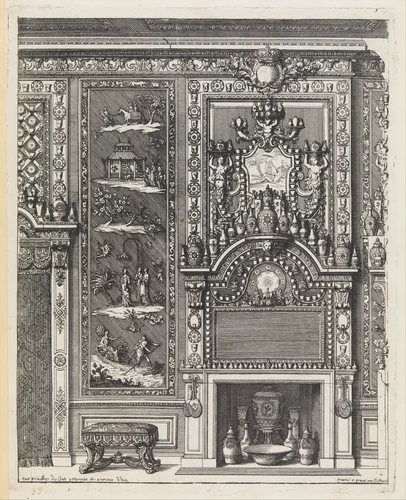
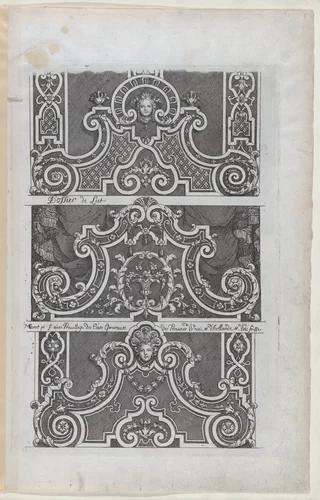
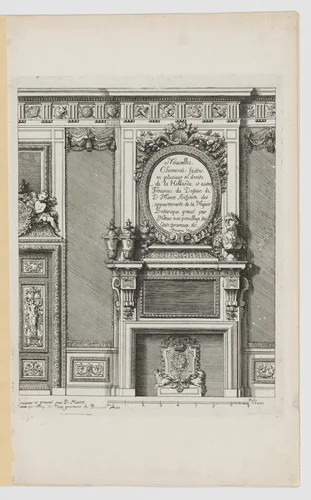
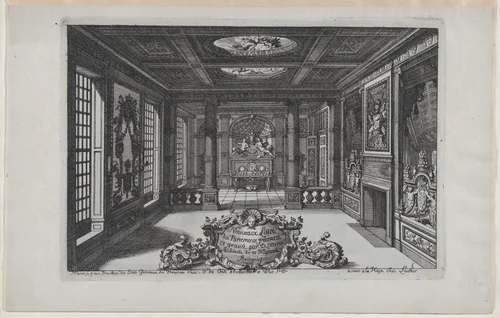
Marot’s enduring historical significance lies perhaps most strongly in his graphic output. His engravings were not merely studies, but working documents intended to disseminate his highly detailed architectural and decorative schemes across Europe. These plates served as indispensable pattern books, allowing foreign craftsmen to reproduce his complex designs for furniture elements, chimney pieces, or textiles. It is notable that while he is lauded for his profound influence on English and Dutch design, much of the furniture attributed to him was constructed by others based purely on his engraved patterns, marking him less as a craftsman and more as the ultimate design visionary of his era.
Today, his detailed plans and preliminary Daniel Marot prints, which provided blueprints for courtly refinement throughout the Netherlands and Britain, are often accessible in the public domain. This ensures that these high-quality prints remain widely available for study by historians and contemporary designers alike.
Source: Wikipedia · CC BY-SA 4.0