Daniel Hudson Burnham
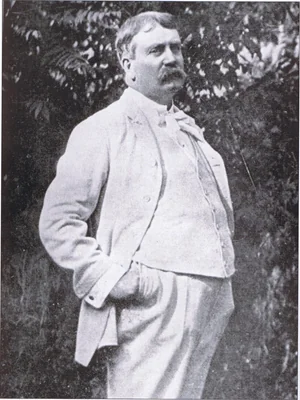
Daniel Hudson Burnham (1846-1912) stands as one of the most formative figures in American architectural history, an urban designer whose foundational adherence to the Beaux-Arts principles helped define modern civic iconography. Known perhaps as the most successful power broker the American architectural profession has ever produced, Burnham’s legacy rests on transforming vast urban spaces, yet his artistic output is equally compelling, revealing the precise visual methodology that underpinned his grand schemes.
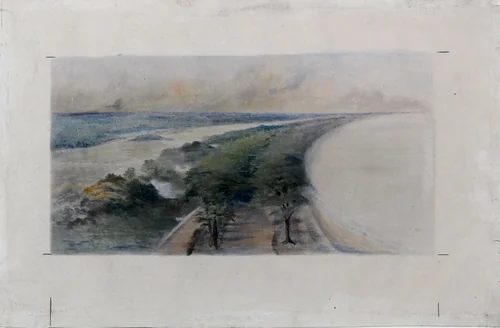
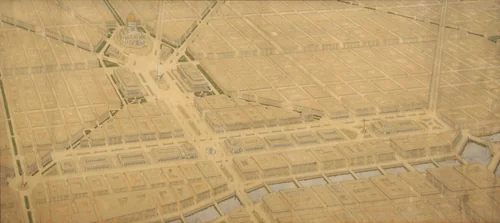
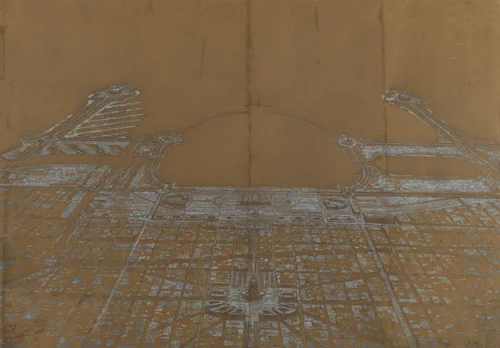
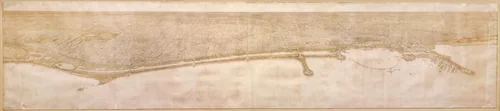
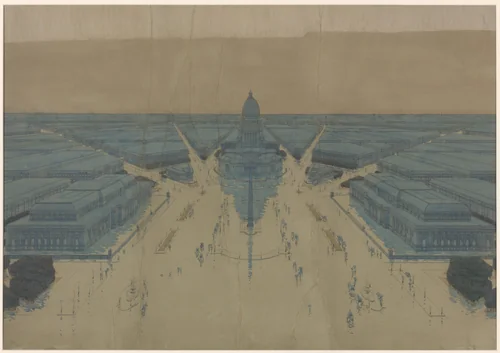
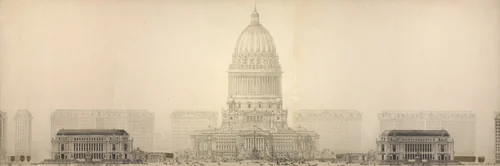
His significant graphic works, collected by institutions such as the Art Institute of Chicago, reveal a duality: the demanding technical precision required for infrastructure planning and the immediacy of personal observation. Burnham’s detailed design sketches, such as South Shore Park, Chicago, Illinois, Design Sketch, served not merely as illustrations but as definitive working documents for monumental urban ambition. This meticulous draftsmanship is evidenced in works like Plate 122 from The Plan of Chicago, 1909, which presents complex infrastructural solutions, specifically addressing the "Railway Station Scheme West of the River Between Canal and Clinton Streets" and its necessary relation with the nascent Civic Center.
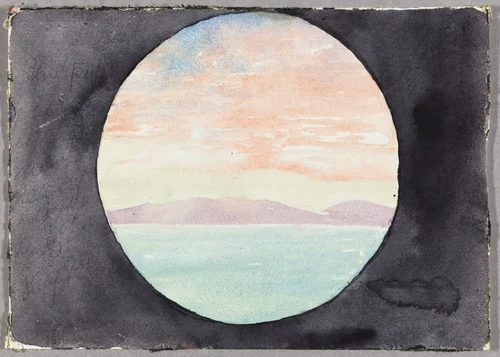
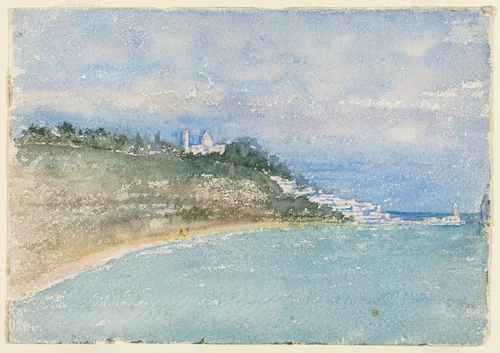
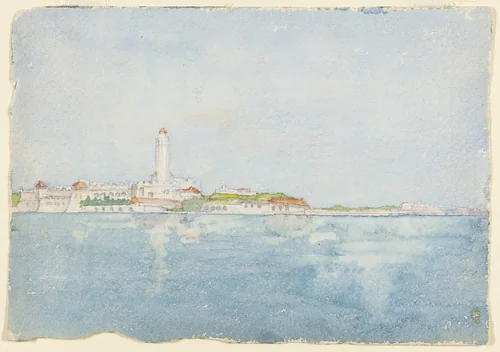
This technical rigor often contrasts with the seven drawings and single Daniel Hudson Burnham painting recorded during his active period between 1891 and 1909. These include expressive travel sketches made while abroad. The drawing Bay of Tunis Through Porthole of Steamship Fürst Bismark, Tunisia, North Africa, Travel Sketch offers a momentary, focused glimpse of the world seen through a framed aperture. It is a compelling example of an architect whose professional habit was the complete command of physical space, yet who allowed himself the limitation of a porthole to frame a scene. This observation hints that even during leisure, Burnham’s highly disciplined mind remained relentlessly engaged in cataloging form and light.
These sketches and plans represent critical primary source material for understanding the comprehensive aesthetic visions of the early twentieth century. Today, many of these design documents, now entering the public domain, are appreciated beyond their functional utility and are studied for their graphic skill. Availability as high-quality prints ensures that the subtlety of Burnham’s line work and the clarity of his vision, whether in rendering a North African port or redesigning a major American city, remains accessible for scholarly and public appreciation.
Source: Wikipedia · CC BY-SA 4.0