D.H. Burnham & Company
D.H. Burnham & Company stands as one of the most historically significant American architectural firms, directly responsible for shaping the early twentieth-century urban skyline and establishing the tenets of large-scale city planning. Active primarily from 1892 to 1908, the Chicago-based organization successfully transitioned from a partnership focused on immediate execution to a corporate machine emphasizing long-range, comprehensive design. Its legacy is preserved not only in its monumental structures, but in the highly detailed, technical drawings that survive, many housed in prestigious collections such as the Art Institute of Chicago.
The company emerged from the tragic end of the seminal partnership Burnham and Root. Following the unexpected death of John Wellborn Root in 1891, the firm was reconstituted under the singular vision of Daniel Hudson Burnham. Root had served as the crucial Chief Consulting Architect for the highly anticipated World’s Columbian Exposition, the massive Chicago fair slated for 1893. Upon Root’s passing, Daniel Burnham absorbed this prestigious title, adding it to his existing responsibilities as Chief of Construction. This consolidation of authority placed Burnham in an unprecedented position to influence both the aesthetic and logistical future of American architecture, leveraging the organization’s efficiency for projects of monumental scale.
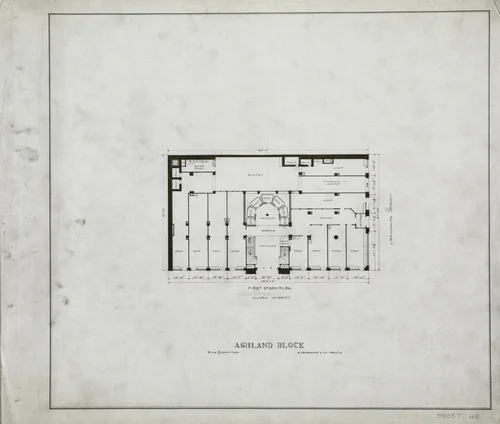
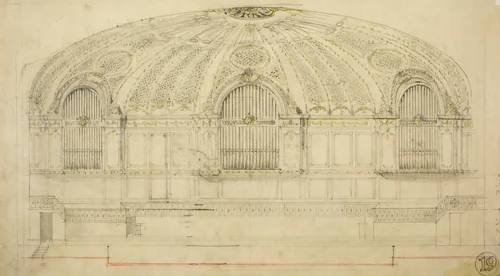
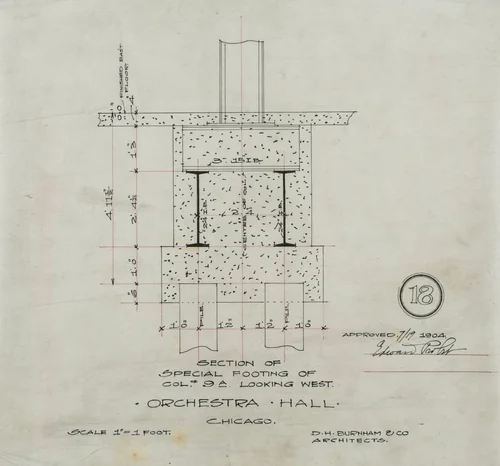
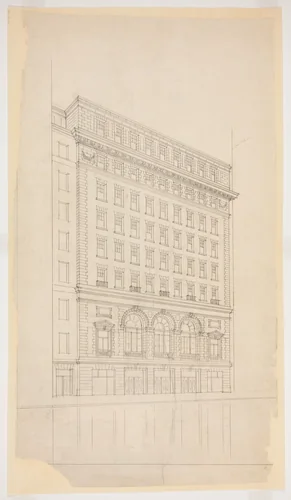
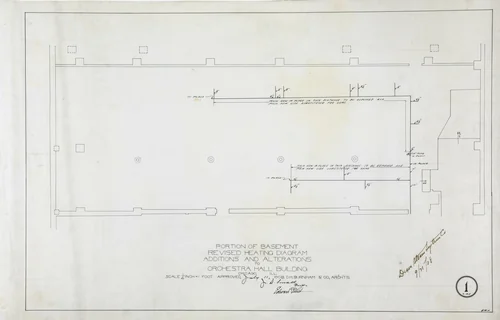
The firm’s output defined the pragmatic elegance of the era, balancing the need for structural innovation with adherence to classical motifs. Projects like the Ashland Block and the seminal Orchestra Hall demonstrate the company’s mastery of functional planning alongside aesthetic grandeur. The surviving schematics, including floor plans, sectional cuts, and perspective studies, reveal a fastidious commitment to engineering precision. The specialized drawings, such as the Orchestra Hall Heating Revisions, illustrate the depth of technical expertise required to manage such complex civic structures during a period of rapid technological change.
Though often characterized by its strict adherence to organizational efficiency, the firm’s subtle artistry is evident in the rendering of these massive projects. Burnham, ever the disciplined pragmatist, believed that clarity of design was paramount to civic health. This focus on clear communication ensures that these historic records, like the high-quality prints sometimes made available to scholars, remain indispensable primary sources for architectural historians. Today, many of these museum-quality plans reside in the public domain, offering royalty-free access to studies that illuminate the birth of the modern American metropolis.
Source: Wikipedia · CC BY-SA 4.0