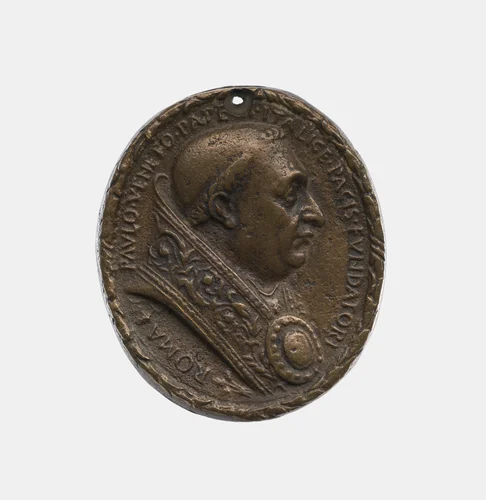
Cristoforo di Geremia
Cristoforo di Geremia (c. 1410-1476) stands as a foundational figure in the history of Renaissance medallic art. Originating in Mantua, his early career encompassed the diverse roles of sculptor, goldsmith, and medallist. While his activity is documented as early as 1437, his definitive artistic impact emerged following his relocation to Rome around 1456, where he remained professionally active until his death.
Rome offered Cristoforo the critical patronage required for his specialized craft, securing commissions from the highest levels of the ecclesiastical court. His most significant production period was executed under Pope Paul II (Pontificate 1464-1471), an avid collector and promoter of classical forms. Cristoforo’s tenure solidified his reputation, marking him as one of the preeminent producers of bronze medallions in the Papal States. These works served not merely as commemorative objects, but as enduring portraits that disseminated the images and authority of the era’s most powerful political and religious figures.
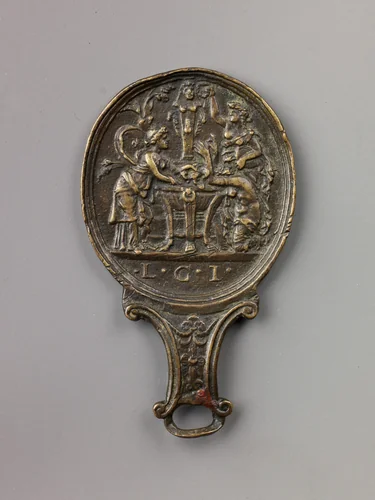
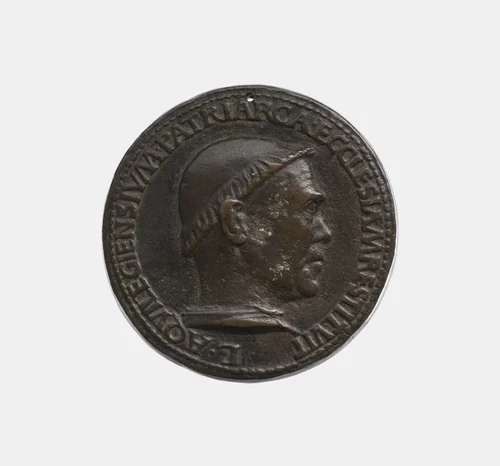
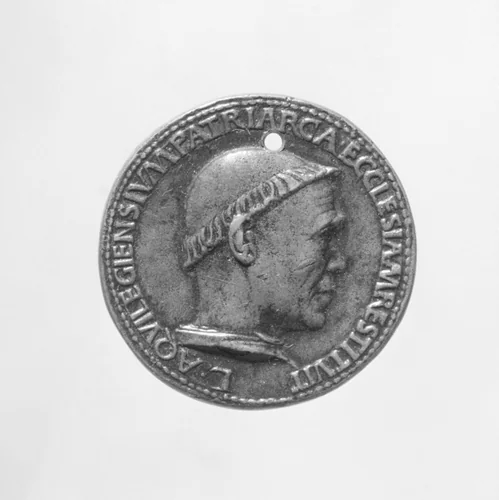
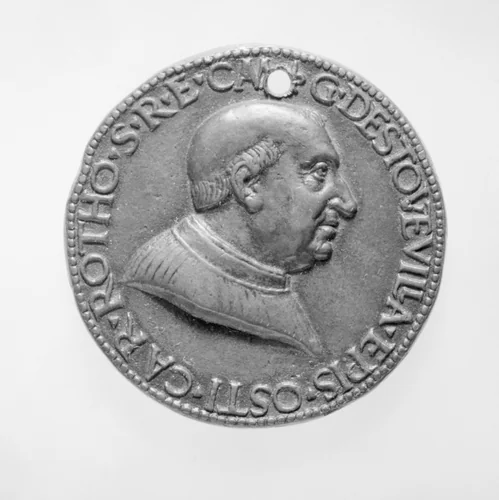
Cristoforo’s surviving oeuvre, which is often classified as museum-quality due to its meticulous detail, is characterized by a crisp, low-relief style and a sophisticated sense of Renaissance naturalism. Notable examples include medals depicting the powerful Cardinal Lodovico Scarampi and the French prelate Guillaume d'Estouteville. The artistry often extended beyond simple portraiture; the reverse sides feature complex allegorical or mythological scenes, such as the compelling relief of Sacrifice to Priapus. His ability to capture both the likeness and the underlying gravitas of his subjects demonstrates the keen political sensitivity necessary for securing and maintaining such high-level patronage in the volatile environment of the Roman Curia.
Though his output included jewelry and other specialized metalwork for noble houses, it is the influential series of papal and aristocratic bronze medals that secures his historical position. His elevation of the medal form contributed directly to its widespread popularity as an artistic medium in the late fifteenth century. Today, scholars and collectors continue to study Cristoforo di Geremia prints and designs, many of which are now accessible as royalty-free downloadable artwork and high-quality prints, allowing his legacy to be appreciated beyond the confines of major collections like the Metropolitan Museum of Art.
Source: Wikipedia · CC BY-SA 4.0